
Temnodontosaurus
Temnodontosaurus platyodon
"Flat-toothed cutting-tooth lizard"
About this species
Temnodontosaurus platyodon was one of the largest ichthyosaurs of the Early Jurassic, a marine reptile about 9 meters long that inhabited the seas of what is now Europe roughly 200 to 183 million years ago. It looked like a mix of dolphin, fish, and lizard, with a streamlined body, a bilobed tail fluke, four flippers, and an elongated snout filled with robust teeth. It was the first ichthyosaur to be scientifically described, based on a specimen found by Joseph and Mary Anning at Lyme Regis (England) between 1811 and 1812. It had the largest relative eyes ever documented in any vertebrate, the size of footballs, adapted for hunting in deep, dimly lit waters. It fed on fish, cephalopods, and even other ichthyosaurs.
Geological formation & environment
The main records of Temnodontosaurus platyodon come from the Blue Lias and Charmouth Mudstone, Lower Jurassic formations (Hettangian to Pliensbachian, ~200–183 Ma) exposed along the Jurassic Coast of Dorset, southern England. The Blue Lias is a succession of limestones and clay shales deposited in a shallow epicontinental sea, rich in ammonites, belemnites, bony fish, and marine reptiles. Constant erosion of the Lyme Regis and Charmouth cliffs continuously exposes new fossils, which allowed Mary Anning, her family, and later generations of collectors to make extraordinary discoveries for more than two centuries. In 2001, the Jurassic Coast was inscribed as a UNESCO World Heritage Site for its paleontological importance. German specimens come from the Posidonienschiefer (Toarcian), another legendary Lagerstätte.
Image gallery


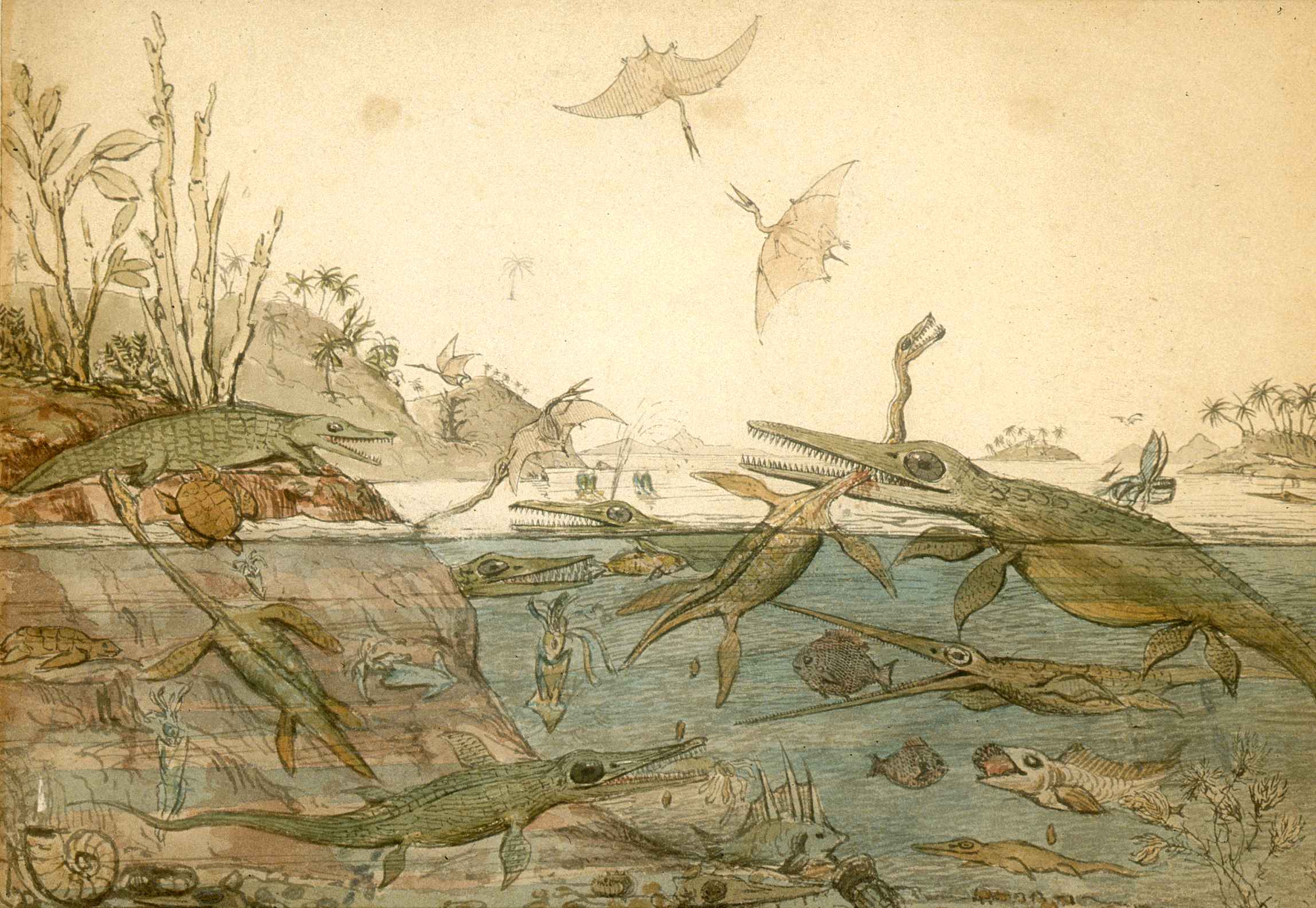
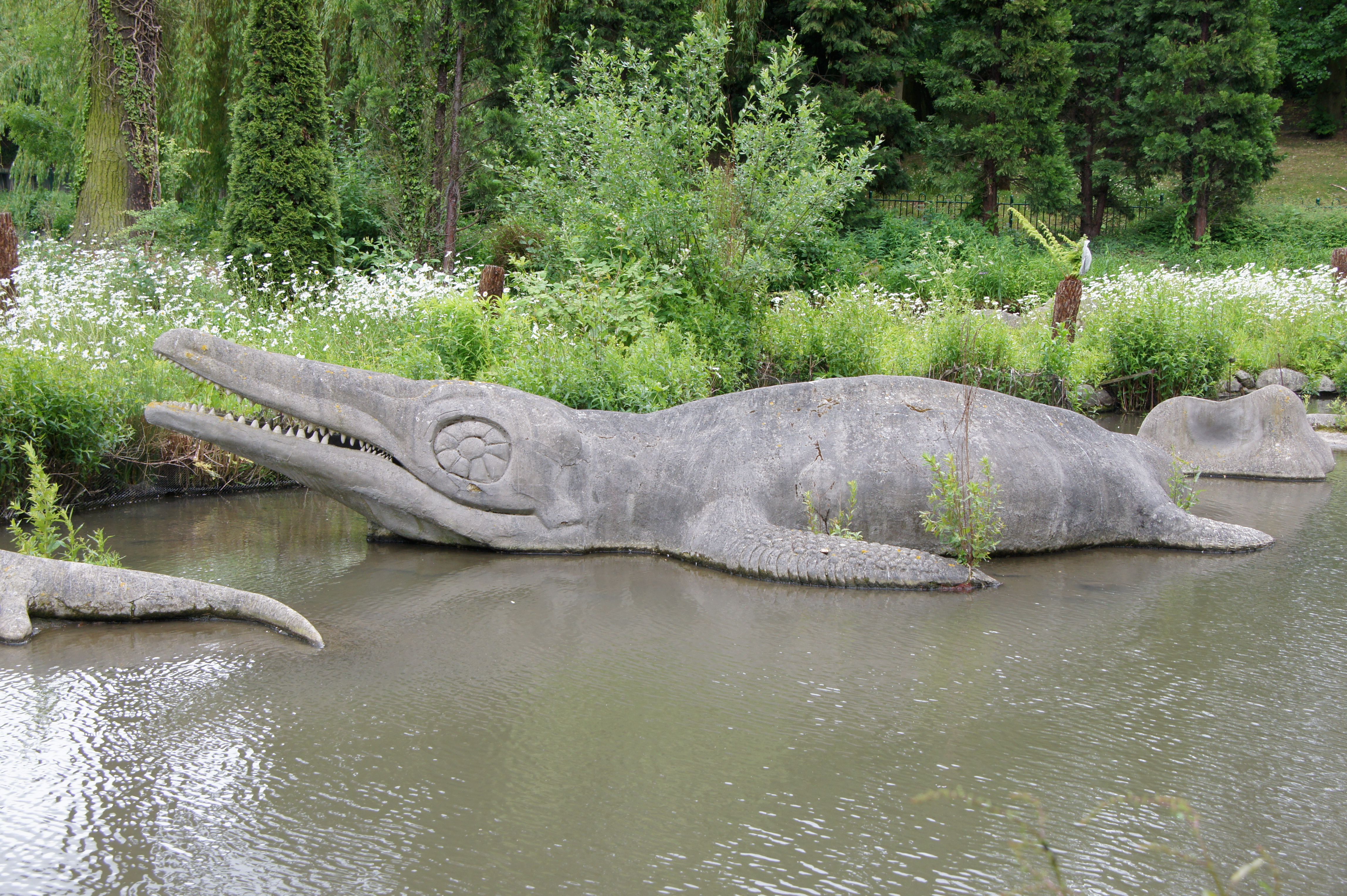


Reconstruction of Temnodontosaurus platyodon by Nobu Tamura, showing the streamlined body, bilobed tail fluke, four flippers, and elongated snout with robust teeth. The modern paleoartistic consensus for the species.
Nobu Tamura, CC BY-SA 3.0
Ecology and behavior
Habitat
Temnodontosaurus platyodon lived in shallow to deep epicontinental seas of the Early Jurassic of Western Europe. The formations where it is found, such as the Blue Lias and Charmouth Mudstone on England's south coast and the Posidonienschiefer in Germany, record a tranquil marine environment, anoxic at the seafloor, rich in cephalopods, bony fish, and other ichthyosaurs. The climate was warm, with average surface water temperatures around 25°C. The Dorset coast, today a site of continuous collecting, was then a calm seafloor where carcasses sank and were rapidly buried, creating the exceptional preservation conditions for which Lyme Regis became world famous. Paleogeography shows the region as part of the European archipelago, a setting rich in diverse marine habitats.
Feeding
Apex pelagic predator. Its large, robust teeth with serrated carinae recently discovered by Bennion et al. (2023) indicate a grip-and-shear feeding specialization, consistent with consuming large prey. Preserved stomach contents include coleoid hooklets (squid-like cephalopods) and, in related specimens of the genus, bones of smaller ichthyosaurs such as Stenopterygius (Serafini et al., 2025). The gigantic eyes (Motani et al., 1999) allowed hunting in deep dark waters or at night. The flippers with serrated edges (Lindgren et al., 2025) reduced noise during attack, suggesting a silent ambush strategy.
Behavior and senses
Likely pelagic behavior, with dives into deep waters to hunt. Ichthyosaurs were viviparous, as shown by the famous German Stenopterygius fossil with embryos inside the body; Temnodontosaurus is assumed to have also given birth in the water, without returning to land. The large ocular volume and preserved serrated teeth suggest high sensory acuity and specialization for active hunting. There is no direct evidence of gregarious behavior, but the coexistence of multiple specimens in exceptional preservation sites (Lagerstätten) suggests the animals frequented specific areas. Analyses of small cranial pathologies in the bones indicate occasional intraspecific combat.
Physiology and growth
Early Jurassic ichthyosaurs were probably homeotherms (warm-blooded) with insulating blubber, as demonstrated in Stenopterygius by Lindgren et al. (2018); the same pattern very likely extends to Temnodontosaurus. Homeothermy explains activity in deep, cold waters. Preserved skin from Stenopterygius showed countershading, with dark back and light belly, a pattern common in modern marine predators. Low-light vision relied on giant eyes with robust sclerotic rings capable of resisting hydrostatic pressure at great depths. Recent pathology studies (Pardo-Pérez et al., 2018) document bone lesions in genus ichthyosaurs, including healed infections and fractures, suggesting longevity and resilience.
Paleogeography
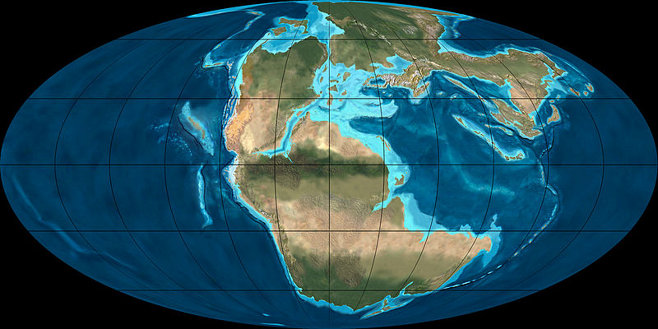
Continental configuration

Ron Blakey · CC BY 3.0 · Jurassic, ~90 Ma
Fóssil sites
Corentin Barbu · CC BY-SA 4.0
During the Hetangiano a Toarciano (~200–183 Ma), Temnodontosaurus platyodon inhabited the fragmenting Pangea. North America and Europe were still close, and the North Atlantic was just beginning to open. Climate was warm and humid globally, with no polar ice caps.
Bone Inventory
The species is known from multiple articulated and nearly complete skeletons preserved in the Blue Lias and Charmouth Mudstone limestone shales of Dorset. The original holotype (part of the skeleton found by the Annings) is at the Natural History Museum, London (NHMUK PV R 1158). A neotype (NHMUK PV OR 2003*) was designated by McGowan in 1974.
Found elements
Inferred elements
Scientific Literature
15 papers in chronological order — from the original description to recent research.
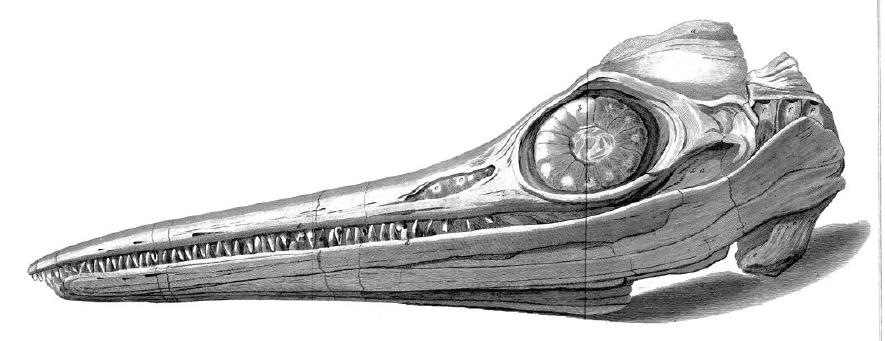
Some account of the fossil remains of an animal more nearly allied to fishes than any of the other classes of animals
Home, E. · Philosophical Transactions of the Royal Society of London
First scientific paper describing the fossil skeleton found by Joseph and Mary Anning at Lyme Regis in 1811 and 1812. Sir Everard Home, an English surgeon and Fellow of the Royal Society, interpreted the animal as an intermediate form between fish and crocodile: biconcave fish-like vertebrae, ribs and skull closer to reptiles, and limbs transformed into paddles. The paper includes the first published drawings of the skull and postcranial skeleton. Home did not propose a formal binomial name, but the specimen became the starting point for all marine reptile paleontology. It was the first widely accepted evidence that entirely extinct creatures, with no living relatives, had existed, contributing to the birth of the scientific concept of extinction. The historical importance of this paper goes far beyond anatomy: it marks the moment when the idea of a deep past inhabited by vanished animals gained scientific authority in London.

Additional notices on the fossil genera Ichthyosaurus and Plesiosaurus
Conybeare, W.D. · Transactions of the Geological Society of London
William Daniel Conybeare, British clergyman and paleontologist, consolidated the genus Ichthyosaurus and differentiated several species, including Ichthyosaurus platyodon, whose name refers to its relatively flat and robust teeth. This paper, written in 1822 with Henry De la Beche, is the formal description underpinning the species' current nomenclature. Conybeare examined the specimens collected by the Annings and compared them with other southwestern English material, establishing diagnostic characters of the skull, dentition, and vertebrae. In later work, Ichthyosaurus platyodon was transferred to the genus Temnodontosaurus, erected by Lydekker in 1889 to house the large cutting-toothed forms distinct from the smaller Ichthyosaurus. This paper therefore marks the moment when the scientific community recognized the diversity of Early Jurassic ichthyosaurs.

Catalogue of the fossil Reptilia and Amphibia in the British Museum (Natural History). Part II: Ichthyopterygia and Sauropterygia
Lydekker, R. · British Museum (Natural History), London
Richard Lydekker, paleontologist at the British Museum, systematically catalogs ichthyosaur and plesiosaur specimens, a titanic task that produced a reference work for all marine reptile paleontology. In this catalog Lydekker erects the genus Temnodontosaurus, from Greek temno (to cut) and odontos (tooth), to accommodate the giant cutting-toothed ichthyosaurs, separating them from the smaller, more gracile forms in Ichthyosaurus. The original epithet platyodon (flat tooth) is transferred into the new combination, formally establishing Temnodontosaurus platyodon. This taxonomic step is fundamental: it recognizes that Early Jurassic ichthyosaurs are not a homogeneous group but include at least two distinct morphological patterns, small surface swimmers and large pelagic predators. Temnodontosaurus remains to this day the type genus of its family, Temnodontosauridae.
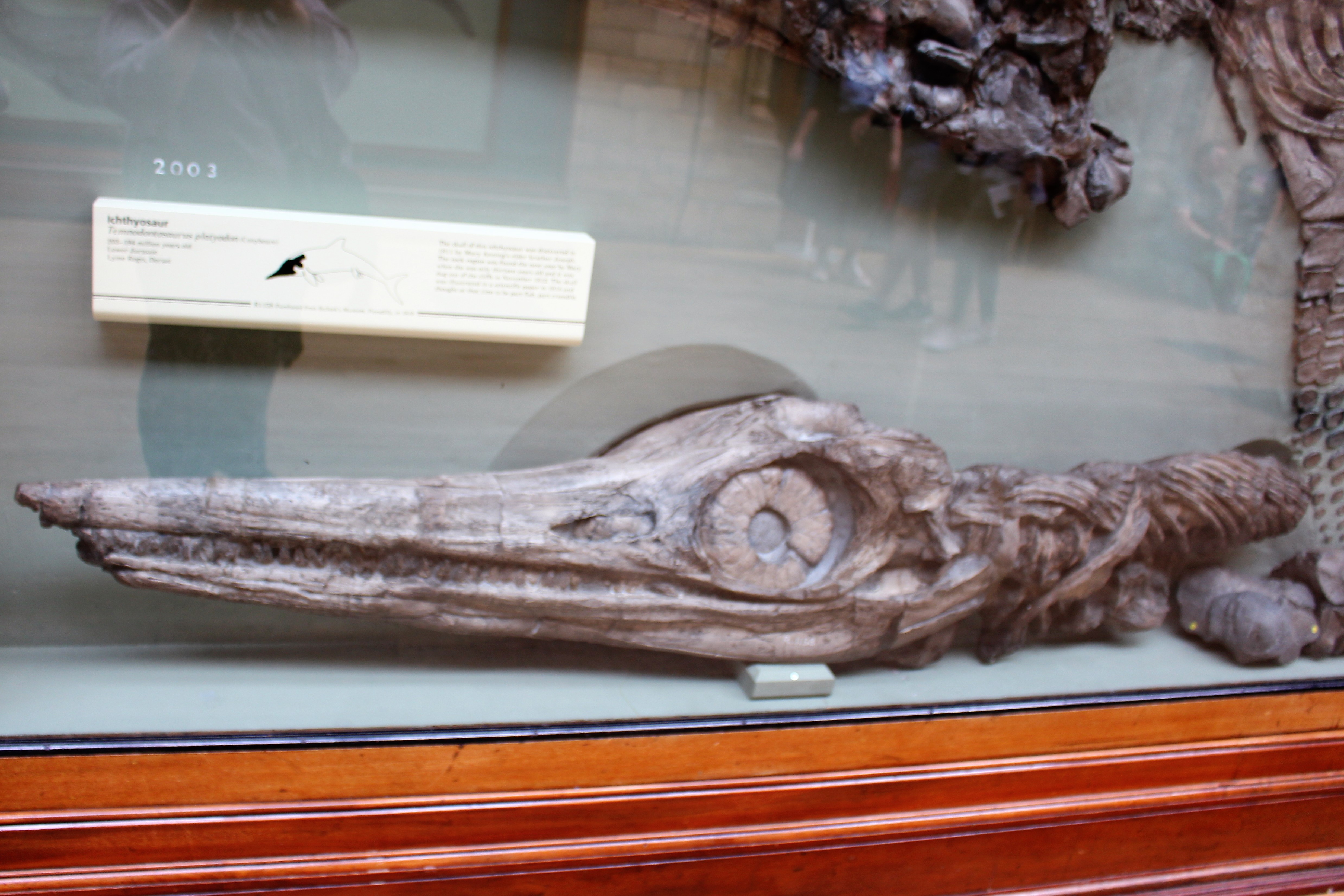
A revision of the longipinnate ichthyosaurs of the Lower Jurassic of England, with descriptions of two new species (Reptilia: Ichthyosauria)
McGowan, C. · Life Sciences Contributions, Royal Ontario Museum
Christopher McGowan, paleontologist at the Royal Ontario Museum and world authority on ichthyosaurs, reviews all long-flippered ichthyosaurs from the Lower Jurassic of England. It is the first modern study with cladistic taxonomic rigor of the species. McGowan designates a neotype for Temnodontosaurus platyodon (NHMUK PV OR 2003*), a skeleton sold by Mary Anning to Thomas Hawkins in 1832 and now at the Natural History Museum in London, because the original holotype had become non-diagnostic over more than a century. He also establishes the family Temnodontosauridae, still recognized today. McGowan redescribes in detail the skull, dentition, and limb characters, fixing the criteria used to this day to identify the species. This paper is the foundation of all modern literature on the genus and was essential for Temnodontosaurus to stop being a wastebasket of indeterminate forms and become a taxonomically testable group.
Temnodontosaurus risor is a juvenile of T. platyodon
McGowan, C. · Journal of Vertebrate Paleontology
McGowan reanalyzes specimens assigned to the species Temnodontosaurus risor, characterized by a smaller and proportionally more globose skull, and concludes they represent juveniles of Temnodontosaurus platyodon. The central evidence is cranial proportions and the relative size of the orbit, which in ichthyosaurs decreases through ontogeny, a pattern also seen in modern reptiles and birds. The paper is a classic case of how ontogenetic differences can generate false species in paleontology. By synonymizing T. risor with T. platyodon, McGowan reduces the number of valid species in the genus and at the same time enriches knowledge of the animal's growth: we now have material from several age stages for the same species. The work is a methodological reference for other cases of synonymy in ichthyosaurs and reinforces the importance of allometric analysis in these groups.
Large eyeballs in diving ichthyosaurs
Motani, R., Rothschild, B.M. & Wahl, W. · Nature
Ryosuke Motani and colleagues measured sclerotic rings in ichthyosaurs and demonstrated that Temnodontosaurus had the largest eyes ever documented in any vertebrate, with a diameter greater than 25 centimeters, the size of footballs. The authors applied optical models used for modern diving animals, such as sperm whales and giant squid, and concluded these eyes were adapted for vision in dim environments: either in the deep ocean or during nocturnal hunting. The finding has enormous implications for the species' ecology. Instead of hunting at the surface like dolphins, Temnodontosaurus probably dove into deep waters in pursuit of cephalopods and other pelagic animals. The high visual sensitivity also supports the hypothesis that the animal was an active predator, not merely an opportunistic scavenger. This Nature paper is cited in virtually all modern literature on ichthyosaur ecology.
The Ichthyosauria
Maisch, M.W. & Matzke, A.T. · Stuttgarter Beiträge zur Naturkunde, Serie B
Comprehensive phylogenetic monograph of the order Ichthyosauria, reviewing almost all known genera from the Triassic to the end of the Cretaceous. Michael Maisch and Andreas Matzke, both at the Staatliches Museum für Naturkunde in Stuttgart, produce what became one of the major references in the field. Temnodontosaurus platyodon is redescribed and placed in the family Temnodontosauridae within Parvipelvia, near the base of post-Triassic ichthyosaurs. The authors propose reproducible diagnostic characters and discuss the evolutionary transition between basal ichthyosaurs (with poorly developed tails) and derived ichthyosaurs (with a fully formed bilobed tail fluke). The work is particularly valuable because it compiles anatomical data scattered across more than 150 years of European literature, much of it in German and French, finally providing a unified systematic view of the group. It remains an obligatory reference for any ichthyosaur taxonomic study.

Ichthyopterygia (Handbook of Paleoherpetology Part 8)
McGowan, C. & Motani, R. · Verlag Dr. Friedrich Pfeil, Munich
Definitive monograph on Ichthyopterygia, the large clade that includes all ichthyosaurs. It is a volume in the Handbook of Paleoherpetology series, published by the German press Pfeil, considered the most comprehensive treatise ever written on ichthyosaur reptiles. Christopher McGowan and Ryosuke Motani provide a complete taxonomic and anatomical review of all known species. Temnodontosaurus platyodon is redescribed in detail from multiple specimens in the United Kingdom and continental Europe, with comparative diagnoses, distribution maps, stratigraphic context, and updated phylogenetic analyses. The authors also discuss the relationship between Temnodontosaurus and related genera such as Leptonectes and Suevoleviathan. The work serves as a consolidation milestone of knowledge up to the start of the 21st century, before the explosion of new discoveries in Germany, Chile, and the United Kingdom in the 2010s.


A longirostrine Temnodontosaurus (Ichthyosauria) with comments on Early Jurassic ichthyosaur niche partitioning and disparity
Martin, J.E., Fischer, V., Vincent, P. & Suan, G. · Palaeontology
Jeremy Martin, Valentin Fischer, and colleagues describe a French specimen of Temnodontosaurus with a particularly elongated snout, earning it the designation of longirostrine form. Comparison with Temnodontosaurus platyodon (with a more robust rostrum) and with other species of the genus allows the authors to discuss morphological and ecological diversity within Temnodontosauridae. They argue that different species of the genus occupied distinct ecological niches: T. platyodon appears specialized for cutting large prey, while longirostrine forms were better adapted for catching fast fish and cephalopods. The paper is important for understanding the ecological radiation of large Early Jurassic ichthyosaurs and shows that European seas of the time hosted several specialized predators coexisting. The authors also conduct a morphological disparity analysis, showing that Temnodontosaurus is one of the most diverse genera in cranial shape across the whole group.


A revision of Temnodontosaurus crassimanus (Reptilia: Ichthyosauria) from the Lower Jurassic (Toarcian) of Whitby, Yorkshire, UK
Swaby, E.J. & Lomax, D.R. · Historical Biology
Emily Swaby and Dean Lomax revise the species Temnodontosaurus crassimanus, a giant ichthyosaur from the Toarcian Whitby Mudstone Formation in Yorkshire (England). The species had been described in the 19th century and its validity was questioned. The authors compare in detail the skull, forelimbs, and body proportions with Temnodontosaurus platyodon and conclude that T. crassimanus is morphologically distinct (especially in its more robust humerus), while sharing postcranial characters diagnostic of the genus. The paper is important for the field because it confirms the validity of another species of the genus and refines taxonomic boundaries. For T. platyodon specifically, the value is comparative: by better understanding what distinguishes T. crassimanus, we have clearer criteria to identify T. platyodon in the fossil record. The generation of Lomax and collaborators has been decisive in modernizing the taxonomy of British ichthyosaurs.


Anatomy and phylogenetic relationships of Temnodontosaurus zetlandicus (Reptilia: Ichthyosauria)
Laboury, A., Bennion, R.F., Thuy, B., Weis, R. & Fischer, V. · Zoological Journal of the Linnean Society
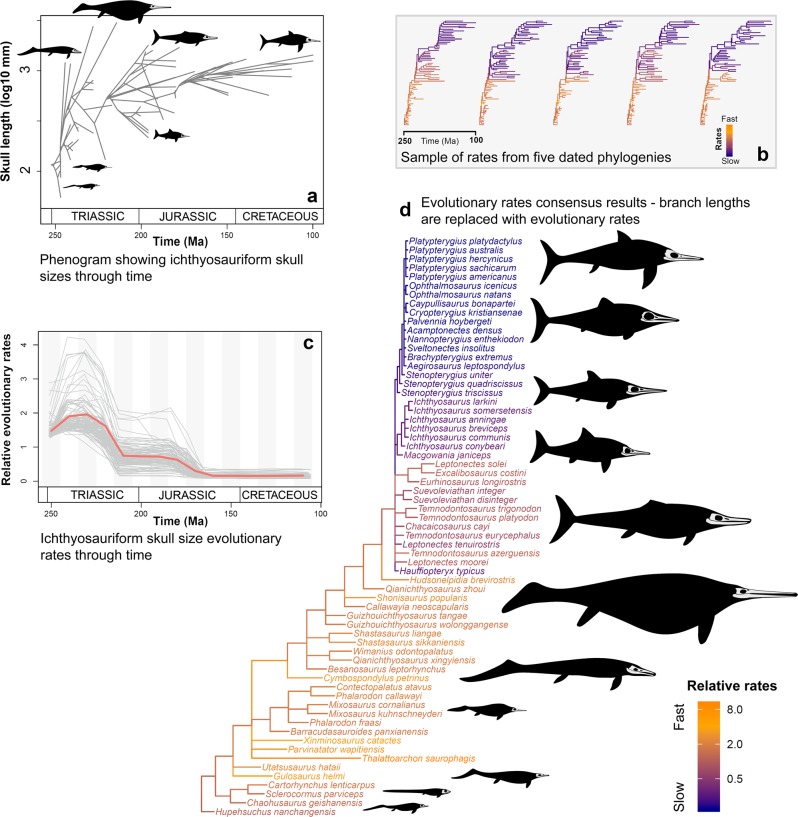
Antoine Laboury, Valentin Fischer, and colleagues perform a detailed anatomical redescription of Temnodontosaurus zetlandicus based on specimens from Yorkshire and Luxembourg, and carry out the broadest phylogenetic analysis of the genus to date. The results show that Temnodontosaurus, as currently defined, is not monophyletic: it is a polyphyletic taxon grouping forms apparently not directly related. Only four species form a monophyletic group, T. platyodon, T. trigonodon, T. zetlandicus, and T. nuertingensis, with T. platyodon being one of the anchors of the clade. This means the type species remains valid, but several forms previously assigned to the genus must eventually be reallocated. The paper represents the state of the art of the genus's systematics and signals larger taxonomic revisions in the coming years. For a general audience the message is clear: Temnodontosaurus platyodon is a real and well-grounded species, while the genus as a whole is still under active scientific debate.


Craniodental ecomorphology of the large Jurassic ichthyosaur Temnodontosaurus
Bennion, R.F., Maxwell, E.E., Lambert, O. & Fischer, V. · Journal of Anatomy
Rebecca Bennion, Erin Maxwell, and colleagues carry out a comparative craniodental analysis of seven Temnodontosaurus species, including T. platyodon, using geometric morphometrics and detailed tooth analysis. They discover heterodonty patterns (different teeth at different positions in the same mouth) and, for the first time in ichthyosaurs, serrated teeth with both true and false denticles, similar to those of archaic cetaceans. Results show distinct feeding strategies within the genus: T. platyodon, with elongated robust snout and large teeth, appears specialized for grip-and-shear feeding, while T. eurycephalus (with deeper snout) is adapted for grip-and-tear. The finding is significant because it demonstrates ecological partitioning among congeneric species, analogous to modern cetaceans, and broadens our understanding of T. platyodon's role as a pelagic predator of large prey.


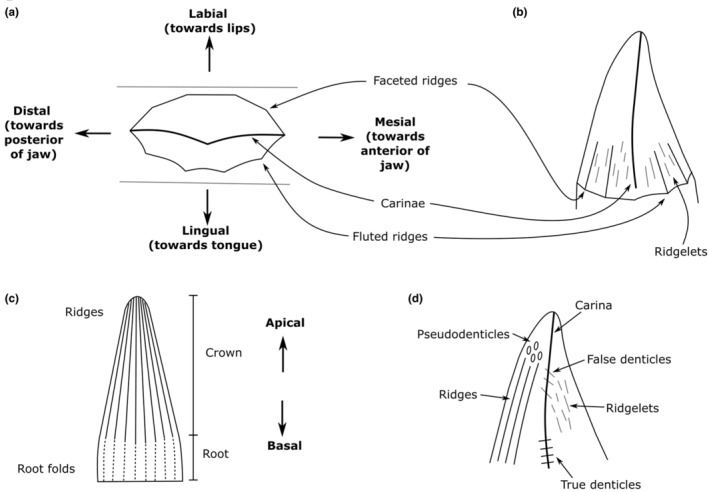
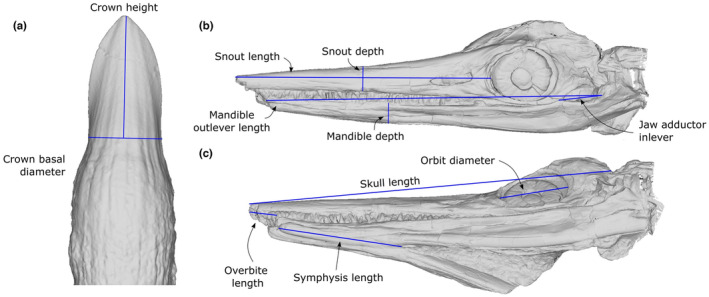
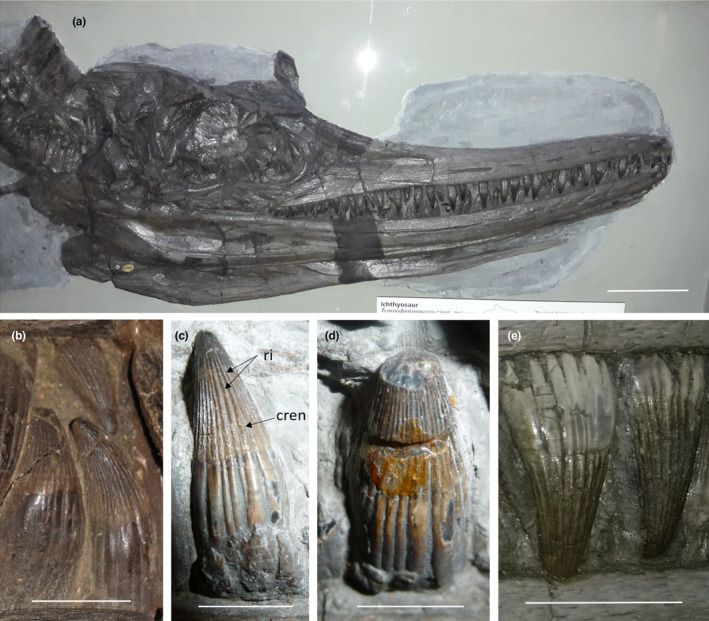
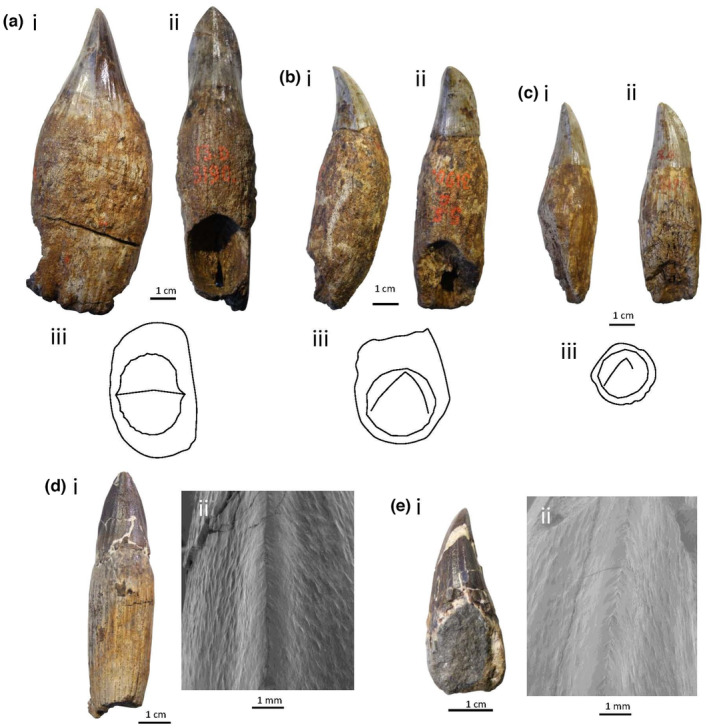
Excavating the 'Rutland Sea Dragon': The largest ichthyosaur skeleton ever found in the UK
Larkin, N.R., Lomax, D.R., Evans, M., Nicholls, E., Dey, S., Boomer, I. et al. · Proceedings of the Geologists' Association
Nigel Larkin, Dean Lomax, and team describe the discovery and excavation of the Rutland Sea Dragon, the largest ichthyosaur skeleton ever found in the UK, about 10 meters long with a skull of roughly one ton. It was found in February 2021 by Joe Davis of the Rutland Water Conservation Team during the draining of a lagoon. Excavation took place from August to September that year. Although the specimen was provisionally identified as Temnodontosaurus trigonodon, the paper compares it in detail with Temnodontosaurus platyodon, the type species of the genus, reviewing cranial proportions, dentition, and stratigraphy. It is a landmark of contemporary British paleontology and proof that discoveries of major magnitude are still to be made on English soil, even after more than two centuries of collecting. The paper also documents modern field methodology including block preservation, CT scanning, and 3D digital reconstruction.


Adaptations for stealth in the wing-like flippers of a large ichthyosaur
Lindgren, J. et al. · Nature
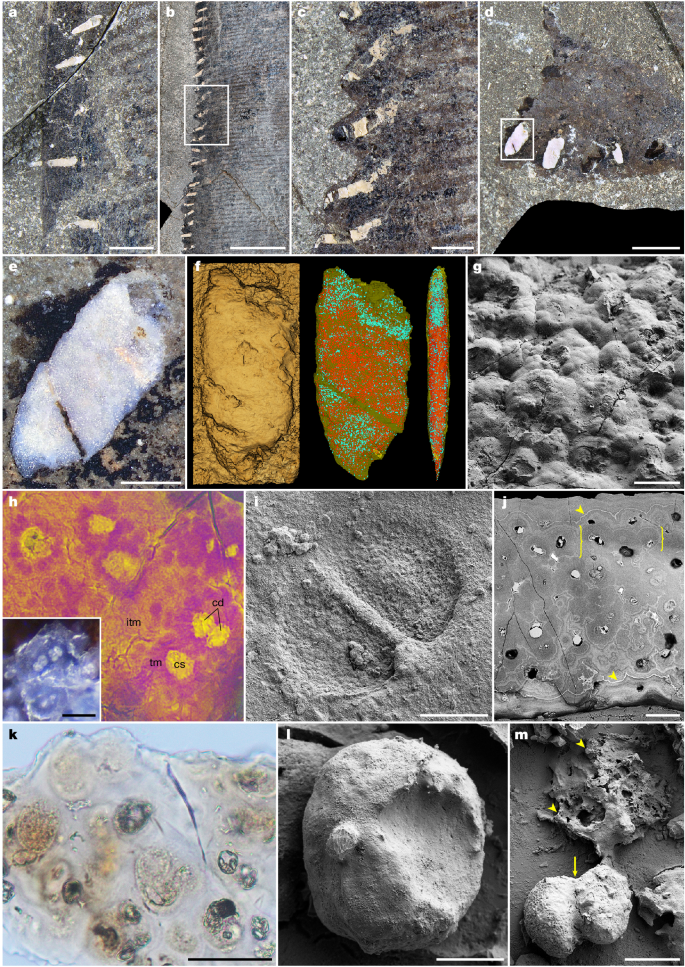
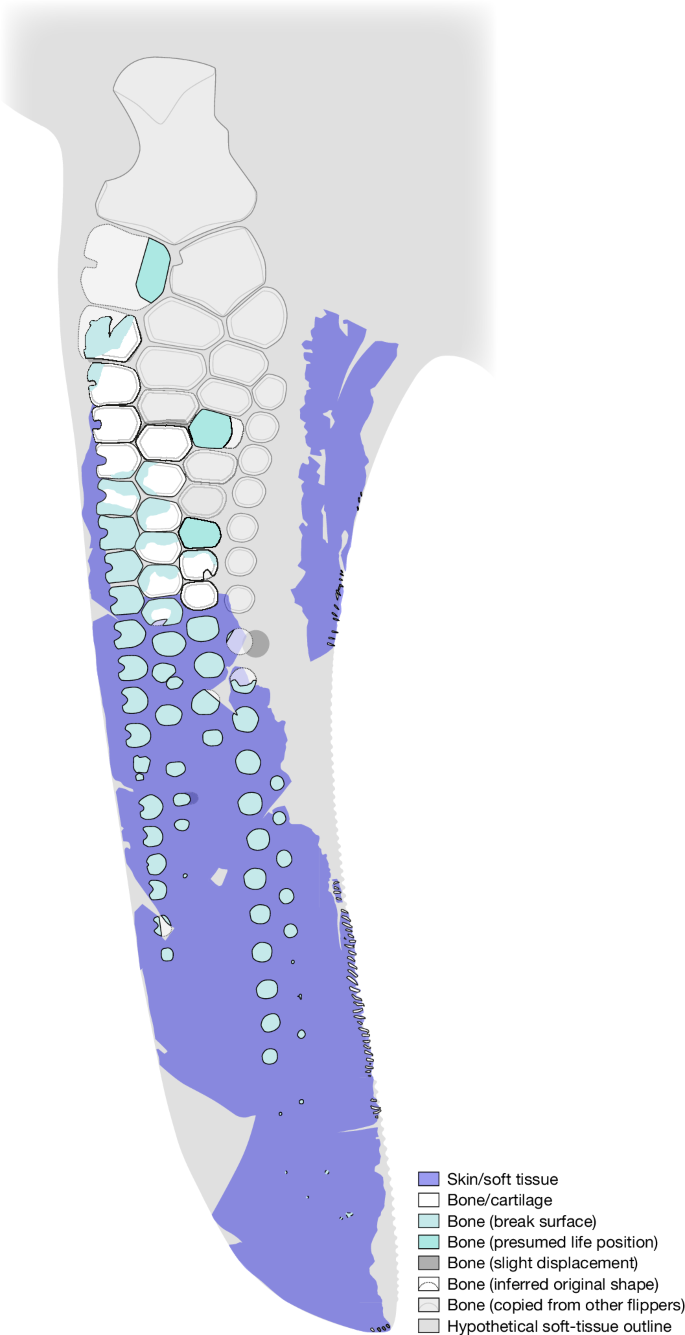
Johan Lindgren and team describe a one-meter-long forelimb of Temnodontosaurus preserving soft tissues, found in southern Germany. The flipper shows a wing-like planform and a serrated trailing edge reinforced by previously unknown cartilaginous elements the authors name chondroderms (cartilage reinforced with calcium). They interpret these features as adaptations to reduce hydrodynamic noise during silent hunting in low-light environments, analogous to the serrated feathers of owls. The finding is unique among aquatic vertebrates, living or extinct, and complements Motani et al. (1999)'s classic result on the giant eyes. Combining giant eyes (low-light vision) and silent flippers, Temnodontosaurus emerges as an ambush predator ultra-specialized for deep waters of the Early Jurassic, a kind of 'owl of the ancient seas.' It is the most impactful publication on the genus in the 2020s.

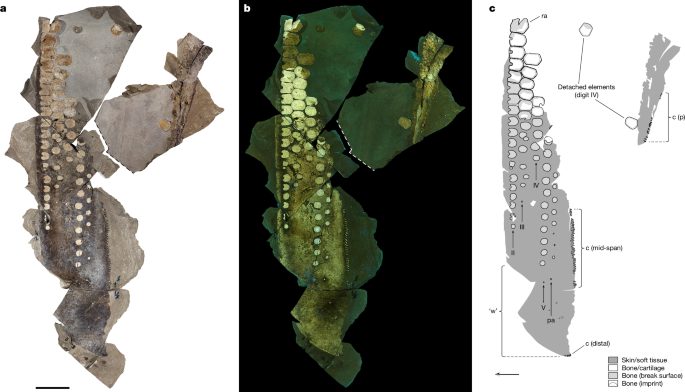
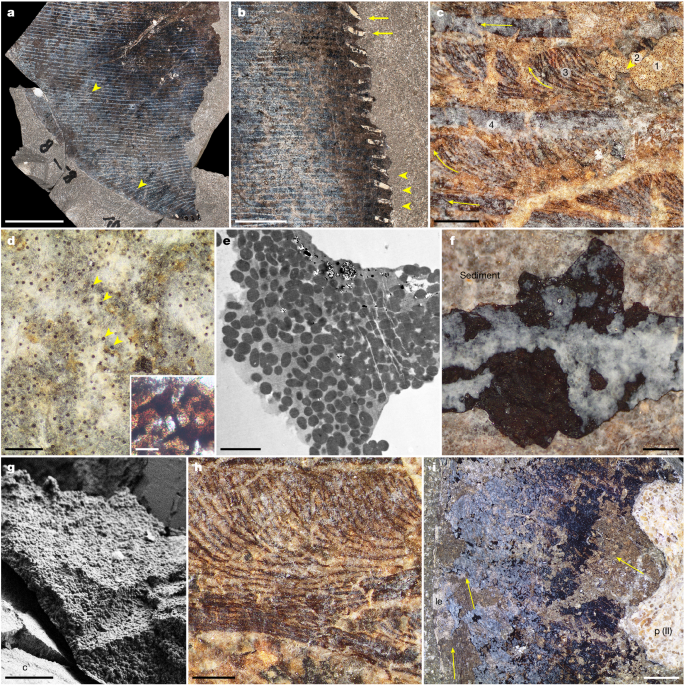
Temnodontosaurus bromalites from the Lower Jurassic of Germany: hunting, digestive taphonomy and prey preferences in a macropredatory ichthyosaur
Serafini, G., Miedema, F., Schweigert, G. & Maxwell, E.E. · Papers in Palaeontology
Giovanni Serafini and colleagues revise bromalites (fossilized stomach contents and regurgitated material) attributed to Temnodontosaurus from the Posidonia Shale (Lower Jurassic, Germany), including material also comparable to T. platyodon. One specimen preserves coleoid hooklets (cephalopods related to squid) and remains of at least four neonatal Stenopterygius in the stomach region. A second fossil represents a juvenile Stenopterygius about 1.6 meters long consumed whole and later regurgitated. This evidences Temnodontosaurus as an Early Jurassic apex predator able to consume other ichthyosaurs regularly, a trend also documented in T. platyodon through stomach contents preserved at Lyme Regis. The authors describe digestive taphonomy, including acid etching marks on the bones, and argue that the genus dismembered large prey before consuming them. It is one of the strongest ecological findings on the group in recent decades.

Famous museum specimens
Espécime dos Anning (NHMUK PV R 1158)
Natural History Museum, Londres
The first scientifically recognized ichthyosaur skeleton. Skull found by Joseph Anning in the autumn of 1811; skeleton discovered by Mary Anning (then 12 years old) in 1812. Bought by Henry Hoste Henley for 23 pounds and later incorporated into the British Museum in 1819 for about 47 pounds. It is the historical specimen from which Conybeare described the species in 1822.
Neotipo (NHMUK PV OR 2003*)
Natural History Museum, Londres
Articulated skeleton found by Mary Anning in July 1832, sold to Thomas Hawkins for 210 pounds and later acquired by the British Museum in 1834. Designated as the neotype of Temnodontosaurus platyodon by McGowan in 1974, after the original holotype became diagnostically insufficient.
Espécime do Lyme Regis Museum
Lyme Regis Museum, Dorset
Skull of Temnodontosaurus platyodon on display at the museum dedicated to Mary Anning in the town where the species was discovered. An important visual reference for the public, allowing a close look at the characteristic cutting teeth and the enormous orbit.
In cinema and popular culture
Temnodontosaurus platyodon has a discreet presence in film and television, notable for a species with such historical importance. The probable reason is twofold: ichthyosaurs in general are less charismatic to the wider public than theropod dinosaurs or giant reptiles, and the discovery's narrative is strongly tied to Mary Anning rather than the animal itself. The most visible recent appearance was in Ammonite (2020), with Kate Winslet playing Anning; the film uses the Temnodontosaurus skeleton as a symbolic opening element, directly referencing the historical discovery. BBC documentaries about Mary Anning, such as Mary Anning and the Dinosaur Hunters (2017), feature digital reconstructions of the animal in its marine habitat. In Sea Monsters: A Prehistoric Adventure (2007), the film's focus is the Cretaceous, but Temnodontosaurus appears in the tie-in video game as a playable creature. Beyond that, the species appears in educational illustrations, children's books about Mary Anning, and museum exhibits, especially at the Natural History Museum in London and the Lyme Regis Museum. Popular culture tends to foreground the discoverer; science continues to use the animal as a methodological anchor for all modern paleontology.
Classification

Discovery
Fun fact
Temnodontosaurus platyodon had the largest relative eyes of any documented vertebrate, the size of footballs (over 25 cm in diameter), adapted to see in the dark of deep waters. And it was discovered by a 12-year-old girl named Mary Anning in 1811, on the coast of Lyme Regis, a discovery that helped found modern paleontology.
Last reviewed: April 24, 2026