ONE BRANCH MADE IT
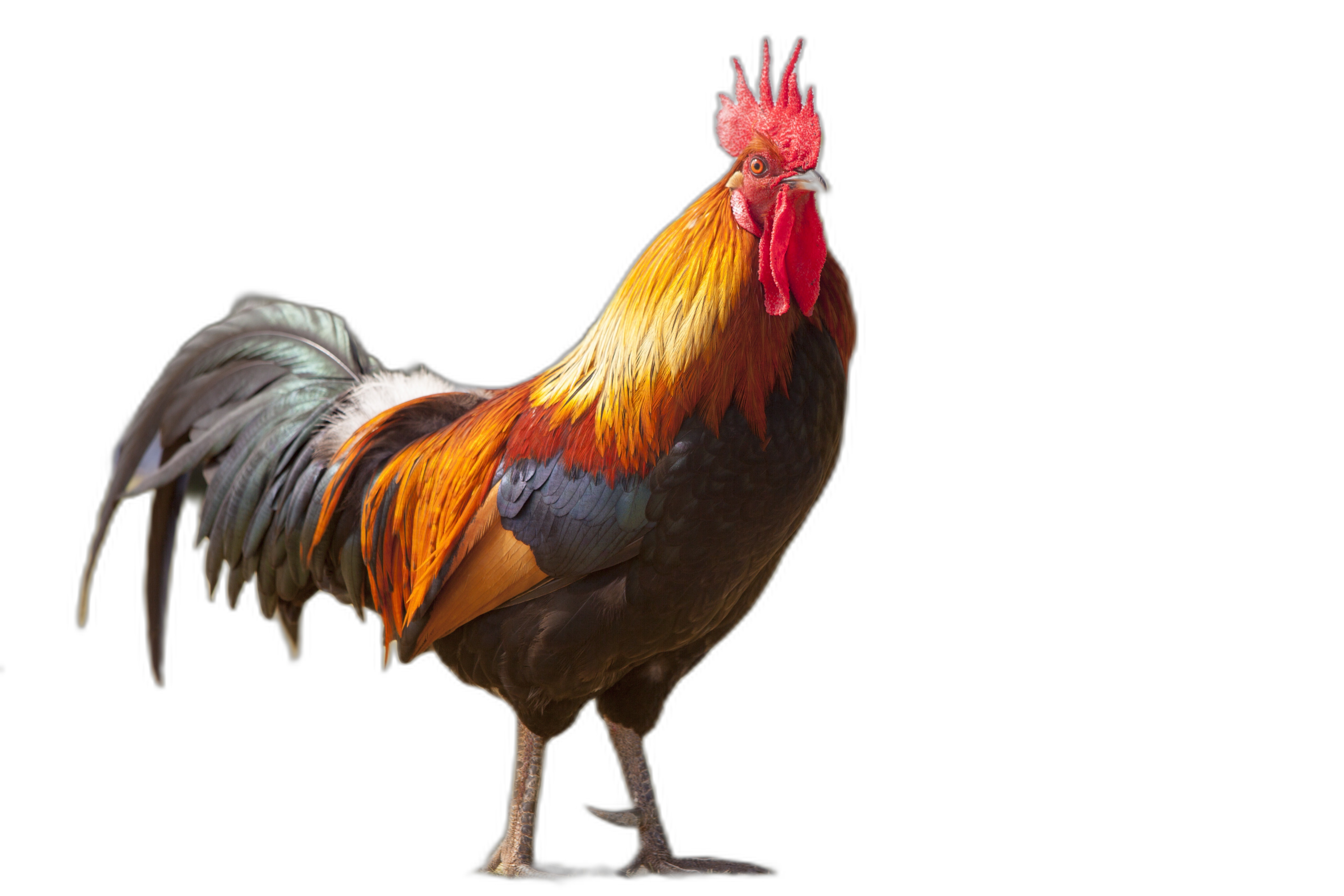
Most branches in this tree end 66 million years ago, when the meteor hit. One of them, Avialae, kept going. The chicken on your plate is a dinosaur.
Read how crown-group birds survived the K-Pg →
Tyrannosauroidea
The Royal Family
Tyrannosaurs dominated Laurasia (North America and Asia) during the last 30 million years of the Cretaceous. They started small and feathered: Yutyrannus, discovered in 2012 in China, was 9 meters long and covered in filamentous down. Only in the final 15 million years of the Mesozoic did they evolve into the gigantism of the classic tyrannosaurids, with massive skulls, banana-shaped teeth, and reduced two-fingered arms. This tree brings together the eight tyrannosaur species in our database, organized into two major branches: Albertosaurinae (slimmer, faster predators) and Tyrannosaurinae (robust crushers, including T. rex and Tarbosaurus).
Comparison
T. rex and Tarbosaurus: what is alike and what is different?
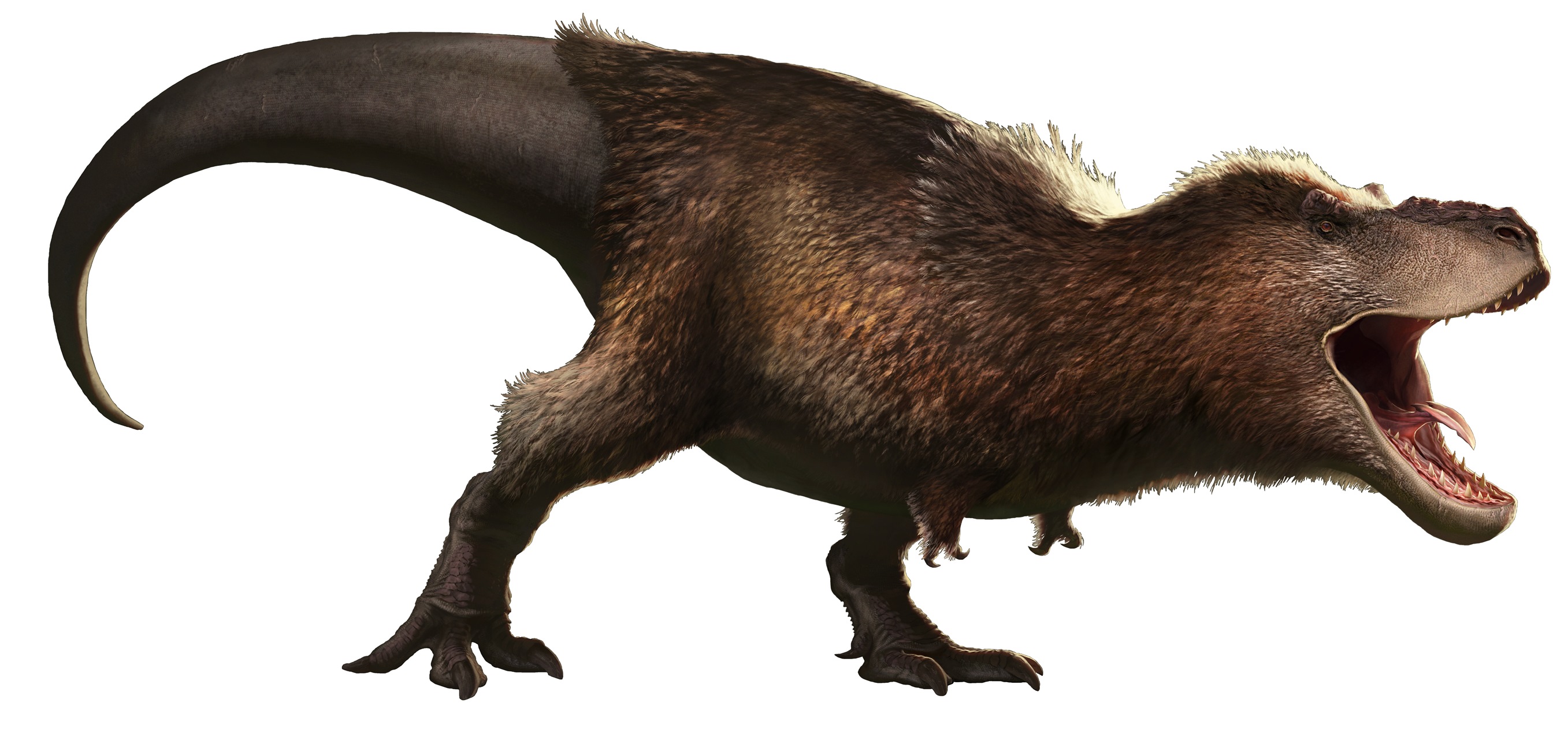
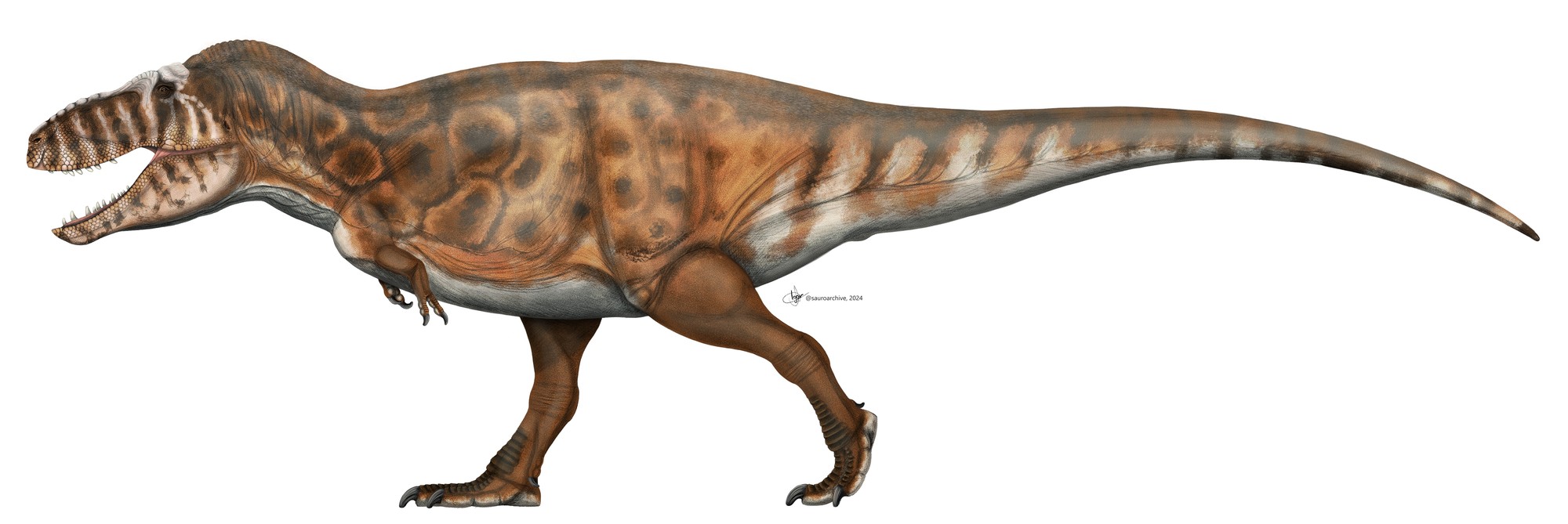
Tarbosaurus bataar, from Mongolia, and Tyrannosaurus rex, from North America, are the two largest tyrannosaurs ever found. They lived almost at the same geological time, on continents separated by a shallow sea. For decades, Tarbosaurus was classified as a species of T. rex ("Tyrannosaurus bataar"). Today, most paleontologists separate them into distinct genera, but the similarities remain striking: both have massive skulls, banana-shaped teeth, vestigial two-fingered arms, and occupied the same ecological niche. The differences appear when you look up close.
| Feature | Tyrannosaurus rex | Tarbosaurus bataar |
|---|---|---|
| Age | 68–66 Ma (Maastrichtian) | 70–68 Ma (early Maastrichtian) |
| Where it lived | Western Laurasia (USA, Canada) | Eastern Laurasia (Mongolia, China) |
| Length | up to 12 m | up to 10 m |
| Weight | up to 8 tonnes | up to 5 tonnes |
| Skull | 1.5 m, broad at the back, reinforced for a crushing bite | 1.3 m, narrower and more elongated, with fused bones |
| Vision | Strong binocular vision: 55° overlap field, among the widest of any dinosaur | Reduced binocular vision: orbits more lateral, less overlap |
| Arms | Two digits, ~1 m long | Two digits, proportionally smaller than those of T. rex |
| Bite force | The greatest ever measured in a land animal: ~35,000 N | Smaller in absolute terms, but still capable of crushing bones |
| Main prey | Triceratops, Edmontosaurus, Ankylosaurus | Saurolophus, Therizinosaurus, sauropods |
| Environment | Humid coastal forests, alluvial plains | Semi-arid plains, seasonal fluvial environments |
| Relationship | Both within clade Tyrannosaurini (inside Tyrannosaurinae). They are the closest living relatives ever found. | |
Summary: geographic siblings. Tarbosaurus is the Asian version, slightly smaller and lighter, adapted to drier environments. T. rex is the North American version, heavier, with superior stereoscopic vision and the most powerful bite ever recorded. The two sit atop the food chain of their respective continents in the final breath of the Cretaceous.
Dromaeosauridae
The Feathered Raptors
Dromaeosaurs are the non-avian dinosaurs closest to modern birds. All had feathers (confirmed by fossils in multiple members of the clade), a raised sickle claw on the second toe, a stiffened tail for balance in agile maneuvers, and a relatively large brain. Our database includes five species that show the group's diversity: from the tiny Microraptor with four wings to the six-meter Utahraptor. Forget the Velociraptor of cinema: the real one was the size of a turkey.
Ornithischia
The Ornamented Herbivores
Ornithischia is one of the two major branches of dinosaurs. All were herbivores and developed the most extravagant ornaments of the Mesozoic: dorsal plates (stegosaurs), full body armor with tail clubs (ankylosaurs), hollow cranial crests for vocalization (hadrosaurs), 25 cm cranial domes (pachycephalosaurs), and horns with frills (ceratopsians). This tree brings together all the ornithischians in our database, organized into three major sub-clades: Thyreophora (the armored ones), Ornithopoda (the lateral-jaw herbivores), and Marginocephalia (the skull-ornamented ones).
Stegosauria
The Dorsal Plates
Stegosaurs appeared in the Middle Jurassic and lived until the Early Cretaceous, with two alternating rows of plates or spines along the back and tail spikes, called the thagomizer, used for active defense. They are distinguished by a small, elongated skull, simple teeth for soft vegetation, and hips higher than the shoulders. Huayangosaurus, the most basal of the group, still had teeth at the front of the snout; the derived Stegosauridae lost these teeth and developed ever more elaborate plates. Studies show that Stegosaurus plates were richly vascularized, suggesting a thermoregulatory or display function, not armor.
Ankylosauria
The Living Tanks
Ankylosaurs were the most armored dinosaurs: osteoderms (bony plates embedded in the skin) covered the entire body, including the eyelids in some species. The group splits into two major branches. Nodosauridae (including Borealopelta, Edmontonia, Sauropelta) had aligned armor with prominent lateral spikes, without a tail club. Ankylosauridae (including Ankylosaurus, Euoplocephalus, Pinacosaurus, Zuul) developed a massive tail club of fused bone, an active weapon capable of breaking a T. rex's tibia, according to recent biomechanical studies. Minmi, from Australia, belongs to a basal lineage called Parankylosauria, separated from the two main branches more than 150 million years ago.
Ceratopsia
The Horns and the Frills
Ceratopsians started small and bipedal, like Psittacosaurus, and evolved into the large quadrupedal herbivores with elaborate horns and frills of the Late Cretaceous of Laurasia. The group splits into two basal lineages (Psittacosauridae and Protoceratopsidae, without true horns) and the large family Ceratopsidae, which developed real bony horns. Within Ceratopsidae there are two branches: Centrosaurinae (short frill, prominent nasal horn, members such as Nasutoceratops, Pachyrhinosaurus, Styracosaurus) and Chasmosaurinae (long frill, long supraorbital horns, members such as Chasmosaurus, Kosmoceratops, Torosaurus, and the iconic Triceratops). The skull of Triceratops exceeds 2.5 m, among the largest of any land animal.