
Megalosaurus
Megalosaurus bucklandii
"Buckland's great lizard"
About this species
Megalosaurus bucklandii holds a unique place in science history: it was the first dinosaur to be formally described, by William Buckland in 1824, eighteen years before Richard Owen coined the word Dinosauria. It lived in the Middle Jurassic of England, around 168 to 164 million years ago, in the coastal areas that today correspond to Oxfordshire and Gloucestershire. It was a medium to large theropod, about 9 meters long and a little over 1 metric ton in body mass. Bipedal, with short but robust forelimbs and recurved serrated teeth, it was the apex predator of its ecosystem. No complete skeleton has ever been found; the species is known from isolated bones in the Taynton Limestone Formation, especially the dentary OUM J13505, designated lectotype in 1990.
Geological formation & environment
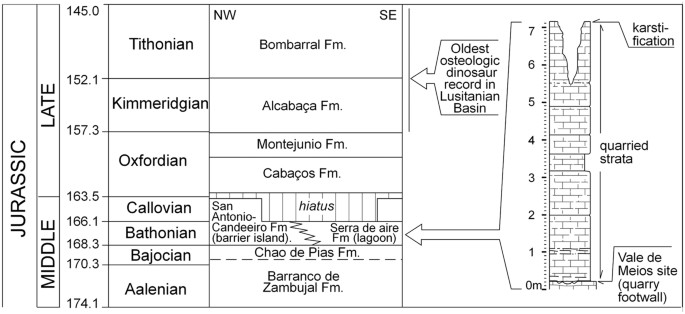
The Taynton Limestone Formation, informally known as the Stonesfield Slate, crops out in Oxfordshire and Gloucestershire, southern England, and dates to the Bathonian (Middle Jurassic, ~168-166 Ma). It consists of oolitic limestones, calcareous sandstones, and fine shales deposited in a shallow marine environment with periodic continental input. This mixture explains the exceptional preservation of marine fossils (fish, turtles, aquatic pterosaurs) and terrestrial ones (dinosaurs, crocodiles, cynodonts). The Stonesfield quarries were commercially worked for 'slate' until 1911 and produced more than 110 theropod specimens, making them the most productive British theropod locality of any geological age. In addition to Megalosaurus bucklandii, the formation preserves the sauropod Cetiosaurus oxoniensis and a diverse fauna of reptiles and fish.
Image gallery
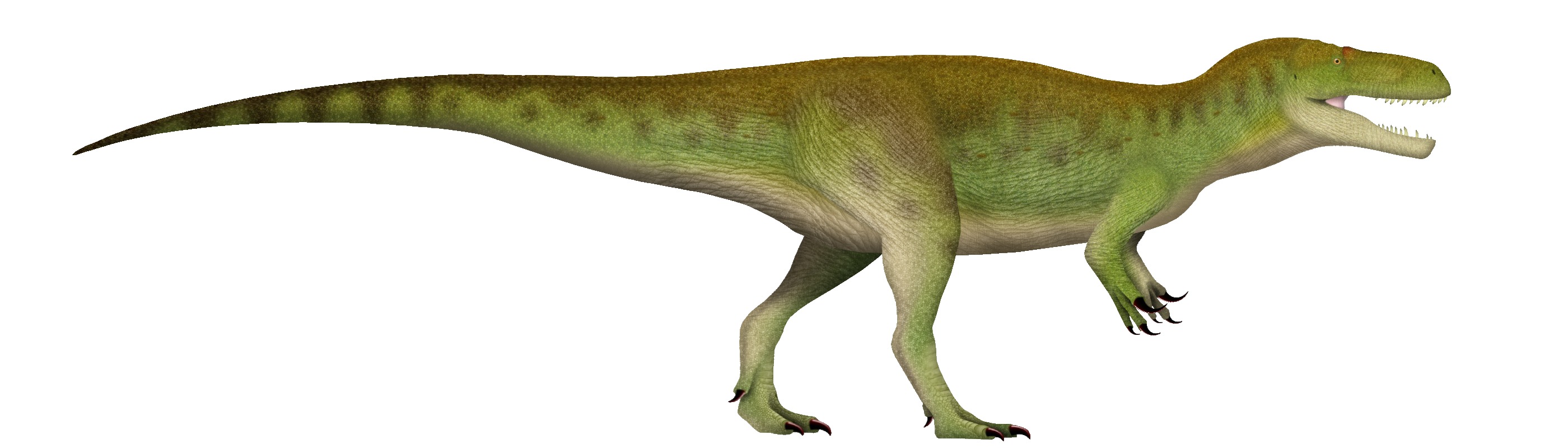


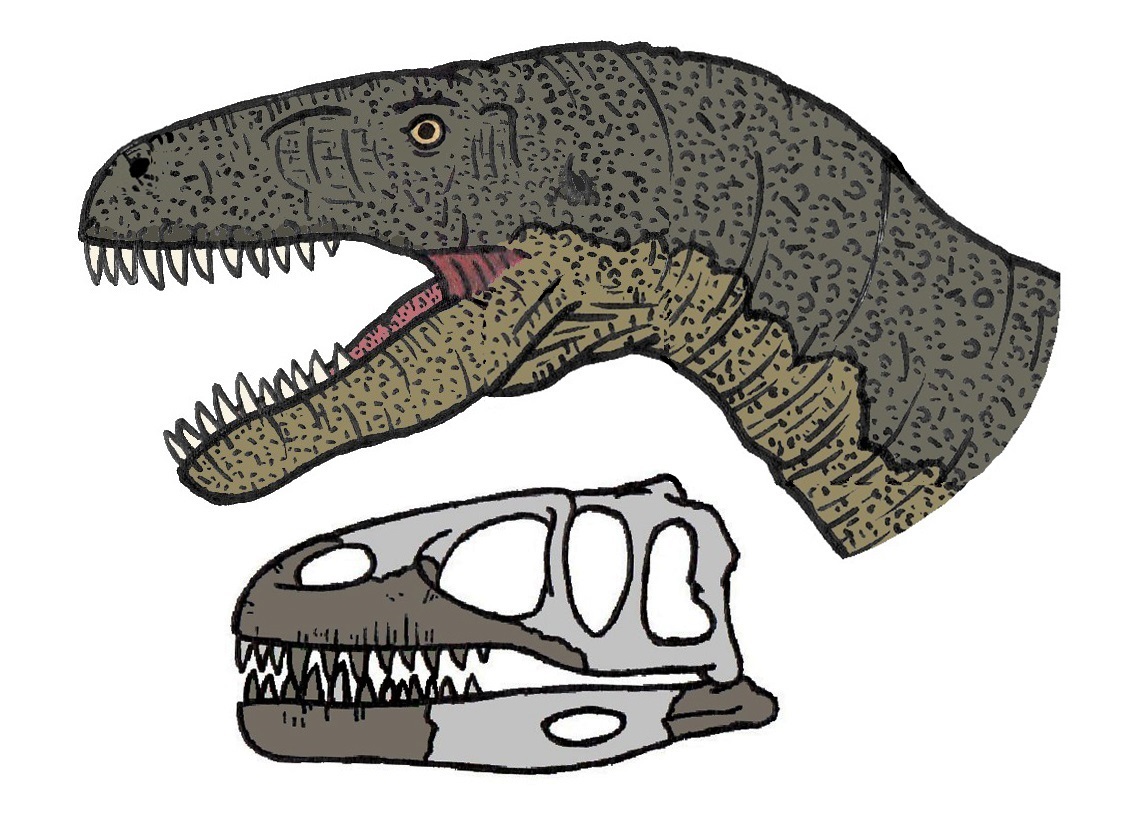


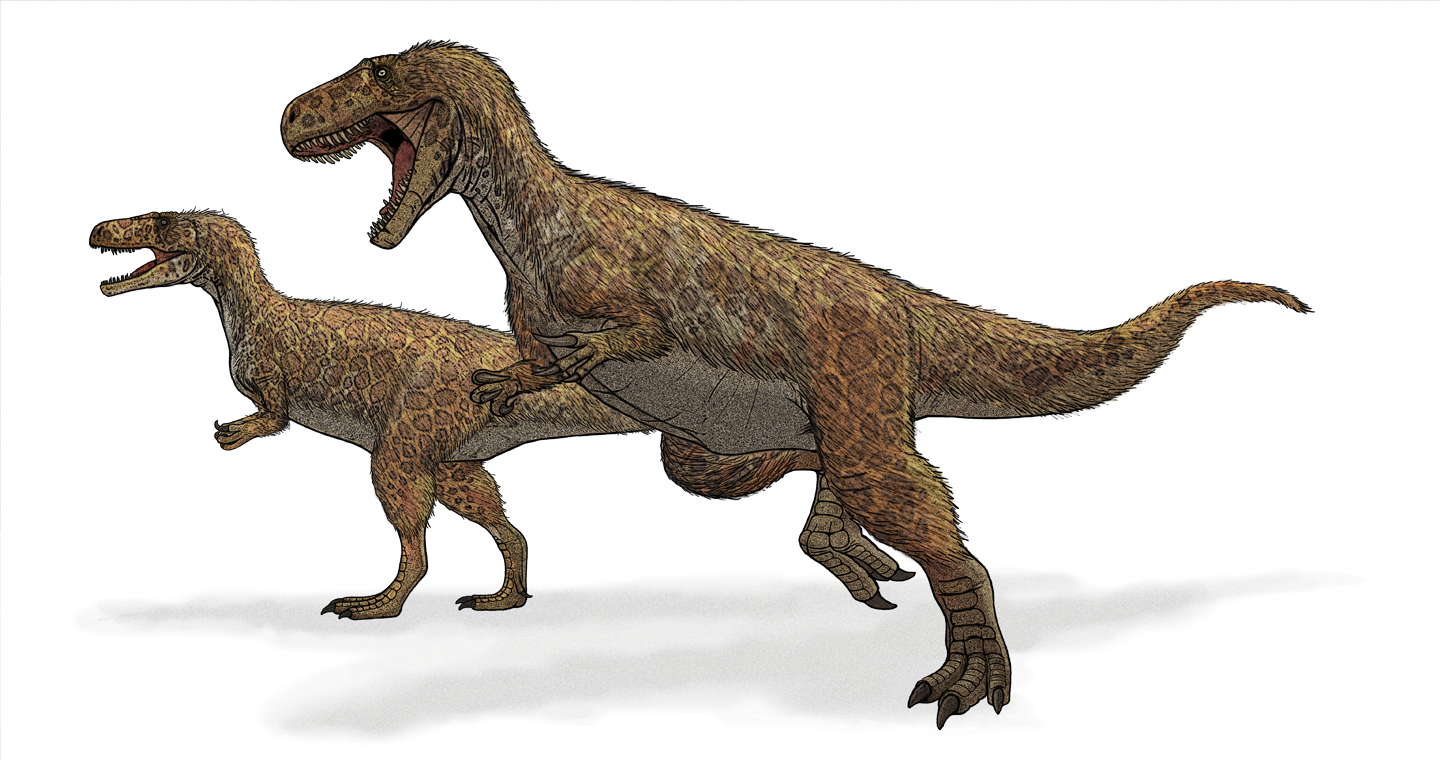


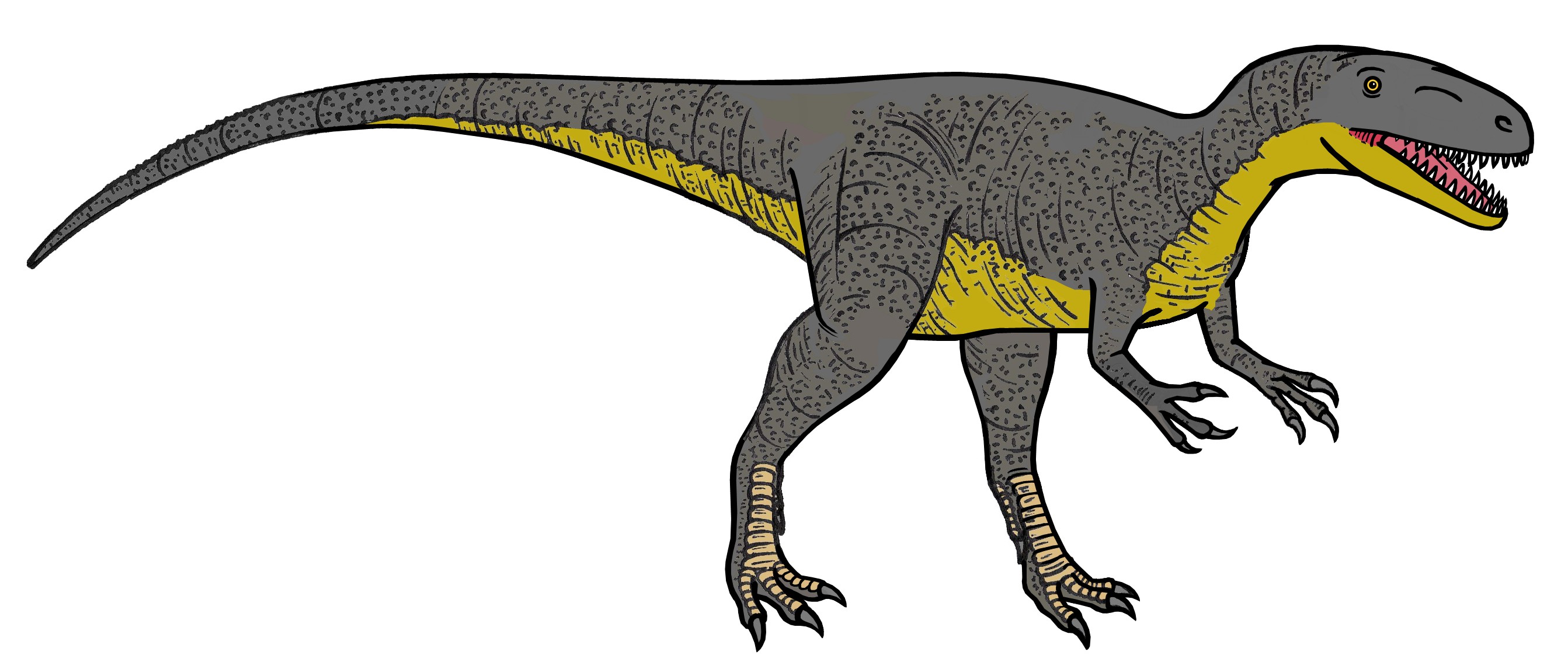
Life reconstruction of Megalosaurus bucklandii in walking posture, integrating evidence from modern redescriptions and the macroevolutionary analyses of Nicholl et al. (2023).
TotalDino, CC BY-SA 4.0
Ecology and behavior
Habitat
Megalosaurus inhabited the islands and coastal margins of the European archipelago that covered southern England during the Bathonian (Middle Jurassic), around 168-164 million years ago. The region consisted of low coastal plains, shallow carbonate platforms, brackish lagoons, primitive mangrove swamps, and conifer and cycad forests. The climate was warm subtropical, with seasonal rainfall and mean annual temperatures estimated above 20°C. The Taynton Limestone Formation, where the fossils are found, represents sedimentation in a shallow marine setting with periodic continental input, which explains the exceptional mix of marine fossils (fish, turtles, pliosaurs) and terrestrial ones (dinosaurs, crocodiles, pterosaurs). Megalosaurus coexisted with the sauropod Cetiosaurus oxoniensis, with ornithischians such as Lexovisaurus and Callovosaurus, and with smaller theropods, all documented by bone material or footprints at Ardley (Day et al., 2004).
Feeding
Megalosaurus was the apex predator of its ecosystem. At around 9 meters long and a little over 1 metric ton, it dominated in mass any other carnivore in the Taynton Limestone Formation. The teeth, labiolingually compressed and serrated on both edges, are classically adapted for slicing flesh, described in detail by Hendrickx et al. (2015). Prey likely included juvenile sauropods (Cetiosaurus), small and medium-sized ornithischians, and possibly carrion available on lagoon margins after mortality events. The relatively robust dentary suggests powerful bites, though not as specialized as those of later tyrannosaurids. Tooth marks attributed to Megalosaurus on bones from the same formation are rare but present, suggesting top of the trophic chain. The biomechanical analysis by Nicholl et al. (2023) indicates hindlimbs adapted for firm-ground locomotion, consistent with hunting on coastal plains of medium substrate.
Behavior and senses
Little is known about the social behavior of Megalosaurus because no associated bone beds have been found and the material represents isolated individuals. The Ardley trackways, however, show stable linear travel, without signs of herds or aggressive interaction (Day et al., 2004). Comparative analysis with close theropods such as Torvosaurus and with modern crocodilians and birds suggests it was probably solitary or lived in small temporary family groups. Estimated walking speed is 5-6 km/h, with maximum running speed probably between 15 and 20 km/h for a 1-ton adult. Reproduction likely followed the general theropod pattern: laying eggs in vegetation or sand nests, with possible minimal parental care, inferred by phylogenetic bracketing from crocodilians (oldest sister group) and birds (descendants of theropods). Tooth marks on bones are not sufficiently documented to confirm or refute cannibalism.
Physiology and growth
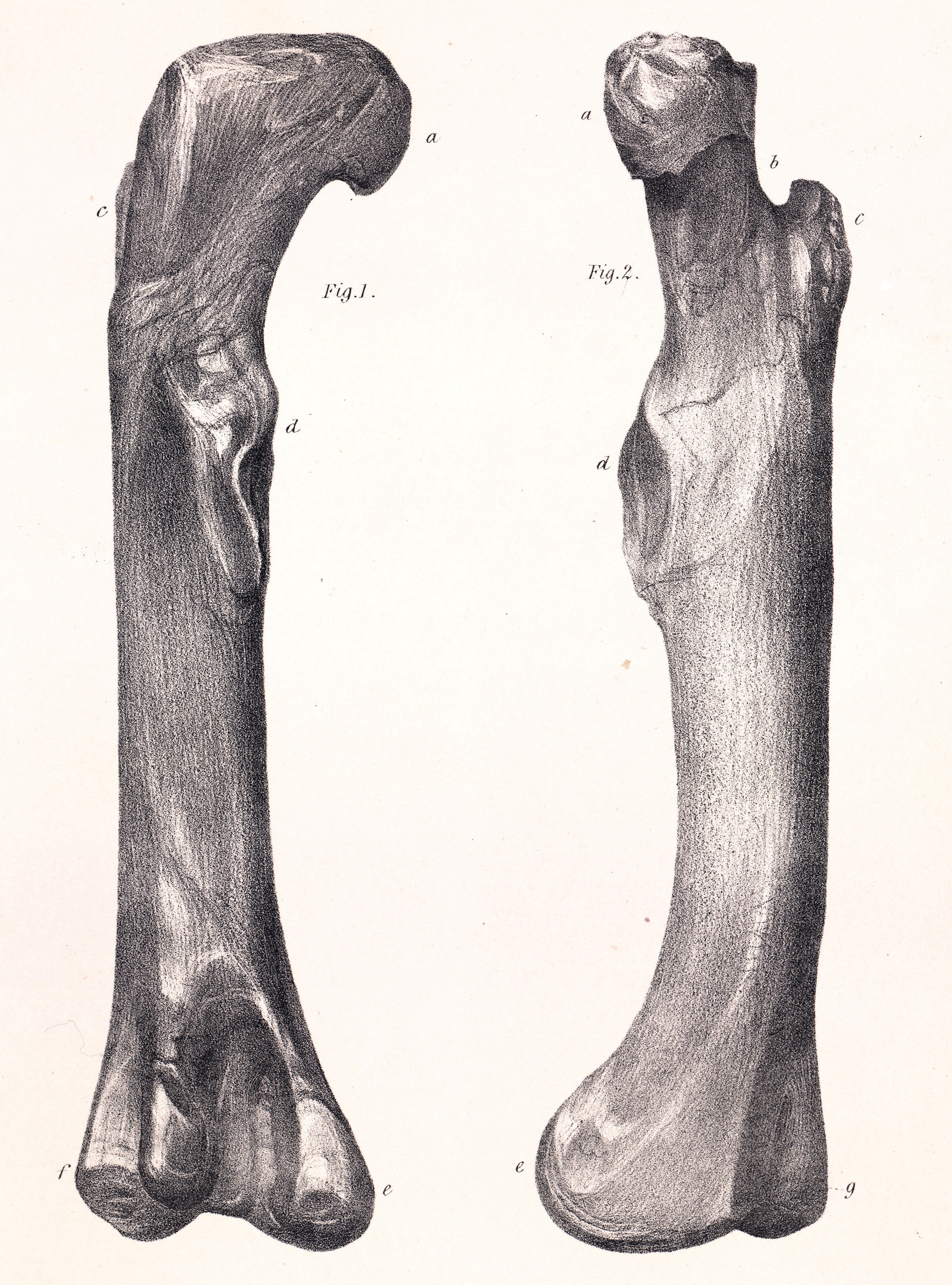
Direct histological studies of Megalosaurus bones are limited by the fragmentary nature of the material and its preservation, but studies on close megalosaurids indicate intermediate to endothermic metabolism, similar to that of other Middle Jurassic theropods. The femur NHMUK PV OR 31806 (803 mm) allowed Benson (2010) to estimate body mass at approximately 943 kg via allometric scaling. The macroevolutionary analysis by Nicholl et al. (2023) characterizes the hindlimbs as the relatively conservative morphology of a basal megalosauroid, with a robust ilium, proportionally massive femur, and straight tibia, adapted for load-bearing and locomotion on firm ground. The presence of filamentous feathers (protofeathers) is possible but not directly documented; the sister group Coelurosauria has confirmed feathers, suggesting that Megalosaurus may have had mixed integumentary cover of scales and feathers, especially in juveniles.
Paleogeography
Continental configuration

Ron Blakey · CC BY 3.0 · Jurassic, ~90 Ma
Fóssil sites
Eotyrannu5 · CC BY-SA 4.0
During the Batoniano (~168–164 Ma), Megalosaurus bucklandii inhabited the fragmenting Pangea. North America and Europe were still close, and the North Atlantic was just beginning to open. Climate was warm and humid globally, with no polar ice caps.
Bone Inventory
Despite more than 200 years of collecting at Stonesfield, no complete or articulated skeleton of Megalosaurus bucklandii has ever been found. The species is known from isolated bones from multiple individuals. Benson (2010) concluded that only material from the Bathonian of Oxfordshire and Gloucestershire can be confidently referred to the species; for a long time the genus worked as a wastebasket taxon for large European theropods.
Found elements
Inferred elements
Scientific Literature
15 papers in chronological order — from the original description to recent research.
Notice on the Megalosaurus or great Fossil Lizard of Stonesfield
Buckland, W. · Transactions of the Geological Society of London, Series 2, Volume 1
The founding paper of dinosaur paleontology. William Buckland, a Reader at Oxford, presented on 20 February 1824 to the Geological Society of London the formal description of bones collected in the Stonesfield quarries of Oxfordshire. The fossils included a jaw fragment with teeth, vertebrae, ribs, and parts of the femur, ilium, and scapula. Buckland interpreted the animal as a gigantic carnivorous reptile, comparable to a colossal crocodile, perhaps 40 feet long. The name Megalosaurus, already informally used by James Parkinson in 1822, was officially established here. Five lithographic plates, drawn by Mary Morland (Buckland's future wife), accompany the text and include the famous dentary OUM J13505 with teeth in position. The paper predates by eighteen years Richard Owen's creation of the term Dinosauria in 1842. All subsequent paleontology traces its origin to this publication.
Report on British Fossil Reptiles, Part II
Owen, R. · Report of the British Association for the Advancement of Science
Richard Owen, the greatest comparative anatomist of the 19th century, coins the term Dinosauria in 1842, anchored in three already-described genera: Megalosaurus, Iguanodon, and Hylaeosaurus. The work diagnostically defines the group through characters such as sacral vertebra fusion, upright limb posture, and gigantic body size. Owen interpreted dinosaurs as giant warm-blooded reptiles with columnar limbs, the dominant image for decades and the basis for Benjamin Waterhouse Hawkins' Crystal Palace sculptures in 1854. For Megalosaurus, Owen proposed a quadrupedal reconstruction with a scapular hump, a model now recognized as mistaken but historically central. By creating a taxonomic category, the paper transformed isolated fossils into a coherent biological group and founded dinosaur paleontology as an autonomous field within Victorian comparative anatomy.
On the upper jaw of Megalosaurus
Huxley, T.H. · Quarterly Journal of the Geological Society
Thomas Henry Huxley, Darwin's bulldog and one of the greatest Victorian anatomists, publishes in 1869 a detailed description of the Megalosaurus maxilla. The paper marks a transition: Huxley begins to challenge Owen's quadrupedal view and argues that theropod dinosaurs were bipedal with clear affinities to birds. For him, the serrated pattern of Megalosaurus teeth indicated active carnivorous habits, distinct from crocodilians. It is during this period that Huxley argues birds evolved from theropods, a thesis that would only be scientifically rehabilitated a century later, after John Ostrom rediscovered Deinonychus. The work inaugurates a British tradition of comparative anatomy placing Megalosaurus at the center of debates on bird origins, a topic that will dominate dinosaur paleontology to this day.
Problematic Theropoda: carnosaurs
Molnar, R.E. · In: Weishampel, Dodson & Osmólska (eds.) The Dinosauria, University of California Press
Ralph Molnar writes the chapter on problematic theropods in the volume The Dinosauria, edited by Weishampel, Dodson, and Osmólska, the standard reference of dinosaur paleontology. His main contribution for Megalosaurus is the formal designation of the right dentary OUM J13505, an original piece from Buckland's 1824 publication, as the species lectotype. This choice stabilizes the nomenclature after more than 150 years in which the entire syntype series was referred to loosely, and diagnoses the genus based on specific dentary characters. Molnar also describes the wastebasket status of the genus: since the 19th century, any large European theropod from the Jurassic or Early Cretaceous had been named as Megalosaurus or one of its many species, creating taxonomic chaos that would only be systematically cleaned up by Benson in the 2000s.

A Middle Jurassic dinosaur trackway site from Oxfordshire, UK
Day, J.J., Norman, D.B., Gale, A.S., Upchurch, P. & Powell, H.P. · Palaeontology
Day and colleagues describe in detail the extraordinary Ardley Quarry track site in Oxfordshire, discovered in 1997 just a few kilometers from where Buckland had collected the original Megalosaurus bones. The site preserves more than 40 continuous dinosaur trackways in the White Limestone Formation, directly overlying the Taynton Limestone; some individual theropod footprints are up to 70 cm long and belong to trackways extending up to 180 meters. The authors attribute the theropod tracks to a Megalosaurus-type trackmaker based on temporal coincidence, size, and tridactyl foot anatomy. Biomechanical analysis of strides indicates stable walking around 5 km/h, consistent with hunting on coastal plains. The research demonstrates that Megalosaurus coexisted with large sauropods (Cetiosaurus oxoniensis) in the same coastal environment.
The taxonomic status of Megalosaurus bucklandii (Dinosauria, Theropoda) from the Middle Jurassic of Oxfordshire, UK
Benson, R.B.J. · Palaeontology
Roger Benson, then a PhD student at Cambridge, publishes the first modern taxonomic reassessment of Megalosaurus bucklandii. The work confirms the validity of the lectotype dentary OUM J13505 and identifies two autapomorphies (unique diagnostic characters): a longitudinal groove on the ventrolateral surface of the dentary and a slit-like anterior Meckelian foramen. Benson also performs the first critical inventory of all material referred to the species in British collections, challenges poorly documented historical references, and considers the possibility that the Stonesfield material represents two distinct theropod morphotypes. This work paves the way for the definitive taxonomic cleanup he will publish two years later. It is the first modern step to remove Megalosaurus from its nearly two-century status as a wastebasket taxon.

An assessment of variability in theropod dinosaur remains from the Bathonian (Middle Jurassic) of Stonesfield and New Park Quarry, UK and taxonomic implications for Megalosaurus bucklandii and Iliosuchus incognitus
Benson, R.B.J. · Palaeontology
Benson returns to the question left open in 2008 and applies rigorous morphometric analysis to over 110 theropod specimens from the Stonesfield and New Park quarries in Gloucestershire. The sample is exceptional: Stonesfield alone is the most productive British theropod locality of any age. The result corrects the preliminary 2008 hypothesis: observed morphological variation falls within the expected range of intraspecific, sexual, and ontogenetic variation, and all large theropod material from these formations belongs to a single species, Megalosaurus bucklandii. Iliosuchus incognitus, a small ilium, is treated separately as a smaller theropod. This work establishes the sample as a single biological unit and makes possible the complete redescription published in 2010. It is the taxonomic cleanup that enabled Megalosaurus to be studied as a biological organism.


A description of Megalosaurus bucklandii (Dinosauria: Theropoda) from the Bathonian of the UK and the relationships of Middle Jurassic theropods
Benson, R.B.J. · Zoological Journal of the Linnean Society
The definitive redescription of Megalosaurus bucklandii, 186 years after the original publication. Benson provides complete osteological description of all referable material, confirms taxon validity based on dentary autapomorphies, and restricts the species to Bathonian material from Oxfordshire and Gloucestershire. Historical references to French specimens and other European localities are deemed unfounded or too fragmentary for confident assignment. Phylogenetic analysis places Megalosaurus in Megalosauridae (the family that bears its name), close to Torvosaurus and Afrovenator. Body mass is estimated at ~943 kg based on femoral scaling (NHMUK PV OR 31806, 803 mm long). Benson also reorganizes Middle Jurassic theropod phylogeny, identifying Megalosauridae, Piatnitzkysauridae, and Spinosauridae as distinct clades within Megalosauroidea. It is the modern reference work on the species.
The phylogeny of Tetanurae (Dinosauria: Theropoda)
Carrano, M.T., Benson, R.B.J. & Sampson, S.D. · Journal of Systematic Palaeontology
Carrano, Benson, and Sampson produce the most comprehensive phylogenetic analysis to date of Tetanurae, the major clade including all theropods more derived than Ceratosaurus. The matrix scores 61 taxa for 351 morphological characters. For Megalosaurus, the result is historic: the species is recovered as sister to Torvosaurus within the new subfamily Megalosaurinae, both forming the most basal branch of Megalosauridae. The analysis also formally defines Megalosauria as the clade comprising Megalosaurus, Spinosaurus, and their descendants, and creates Afrovenatorinae to accommodate Afrovenator, Eustreptospondylus, Magnosaurus, and allies. The work cements Megalosaurus's place in theropod phylogeny for the first time on rigorous grounds. The genus ceases to be a floating taxon and takes a stable position in the evolutionary tree of predatory dinosaurs.

The dentition of megalosaurid theropods
Hendrickx, C., Mateus, O. & Araújo, R. · Acta Palaeontologica Polonica
Hendrickx, Mateus, and Araújo produce the most detailed analysis ever made of megalosaurid dentition, including Megalosaurus bucklandii. The paper, published open access in Acta Palaeontologica Polonica, documents tooth morphology in detail: labiolingually compressed shape, denticles proportionally smaller than in carcharodontosaurids, heterodonty pattern (smaller and more curved anterior teeth, longer and more serrated lateral teeth), and distribution of mesial and distal carinae. The authors provide quantitative criteria for identifying isolated megalosaurid teeth at other localities, a critical advance because teeth are often the only fossils preserved in coastal deposits. The work also demonstrates that Megalosaurus dentition is diagnostic within Megalosaurinae, allowing it to be distinguished from close taxa such as Torvosaurus based solely on isolated teeth.


Ichnological evidence of megalosaurid dinosaurs crossing Middle Jurassic tidal flats
Razzolini, N.L., Belvedere, M., Marty, D., Paratte, G., Lovis, C., Cattin, M. & Meyer, C.A. · Scientific Reports
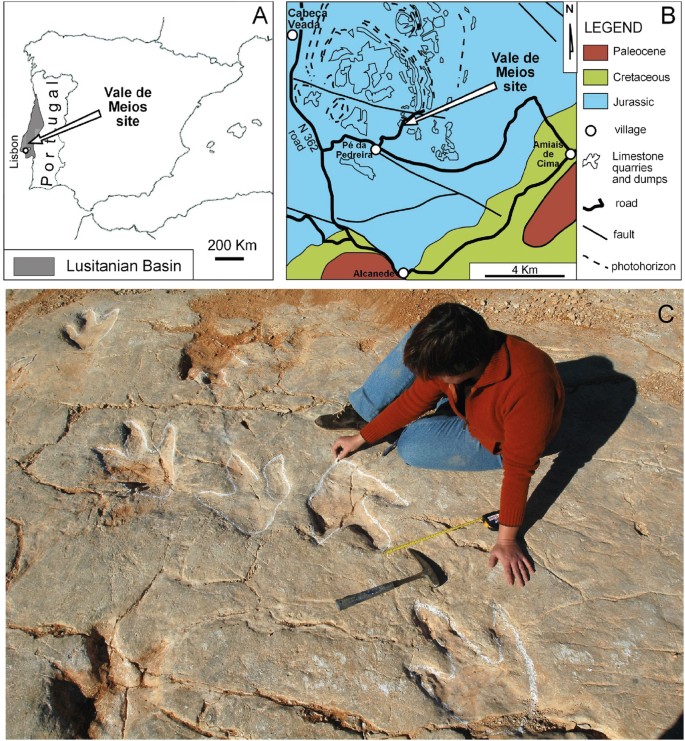
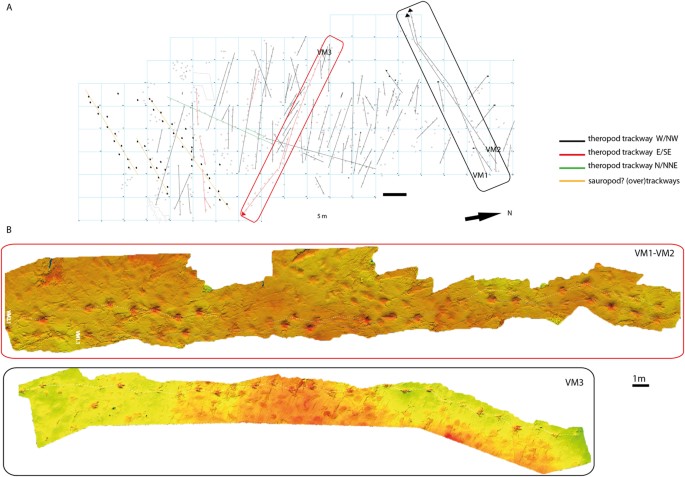
Razzolini and colleagues describe large theropod trackways on Middle Jurassic tidal flats in Switzerland, preserved in laminated micritic limestones. Age and track size are consistent with a megalosaurid-type trackmaker, possibly close to or contemporaneous with Megalosaurus bucklandii. The tracks record an animal walking on moist substrate, with consistent depth and lengths between 40 and 60 cm. Biomechanical analysis estimates speeds of 6 to 10 km/h, comparable to those obtained at Ardley. The paper is important because it documents megalosaurid behavior in coastal Tethyan environments, an ecosystem shared with the English Megalosaurus, and suggests wide distribution of megalosaurid-type theropods across Middle Jurassic European marginal basins. Published in Scientific Reports, it is a reference for the coastal paleoenvironment of the species.
New light on the history of Megalosaurus, the great lizard of Stonesfield
Naish, D. · Archives of Natural History
Darren Naish, paleontologist and historian of science, reviews the historical trajectory of Megalosaurus from Buckland's original description in 1824 to the 20th century. The focus is the Crystal Palace reconstruction, completed by Benjamin Waterhouse Hawkins in 1854 under Richard Owen's guidance, and immortalized as the first public attempt to reconstruct a dinosaur at life size. Naish analyzes what fossil evidence Owen had at hand (fragmentary bones described by Buckland, a few Wealden vertebrae, comparative crocodile material), and shows that the sculpture's scapular hump may have come from three Altispinax dunkeri vertebrae rather than Megalosaurus material. The article also discusses how representations of the animal have changed over 200 years, from the Victorians' mammal-like quadrupedal posture to the modern bipedal form post-1970. It is an essential contribution to understanding Megalosaurus's symbolic place in scientific and popular culture.


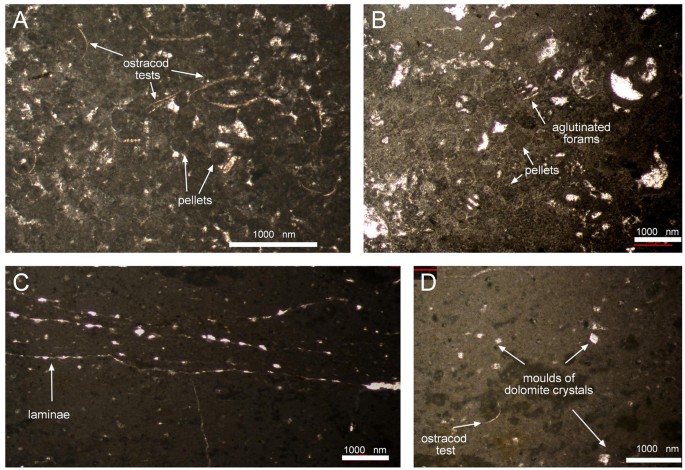
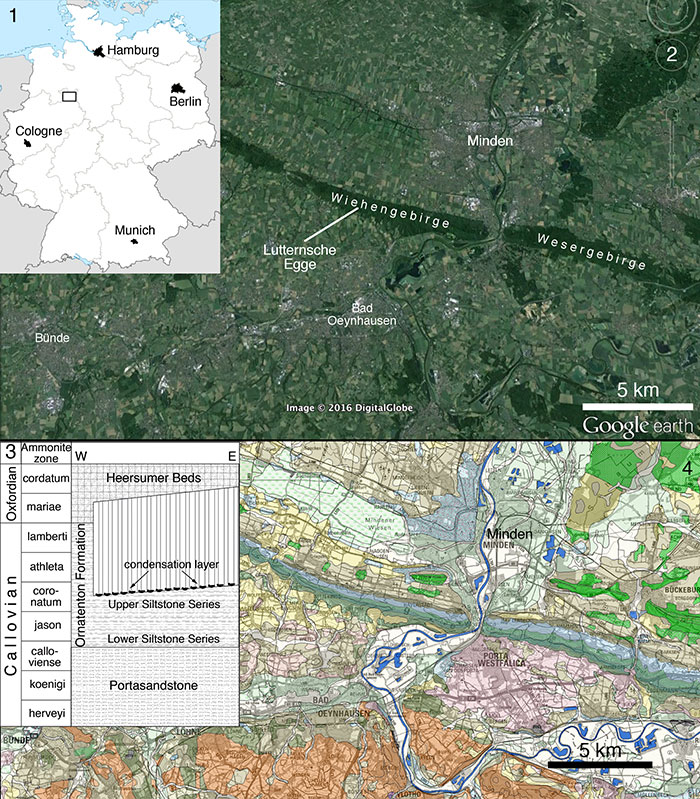
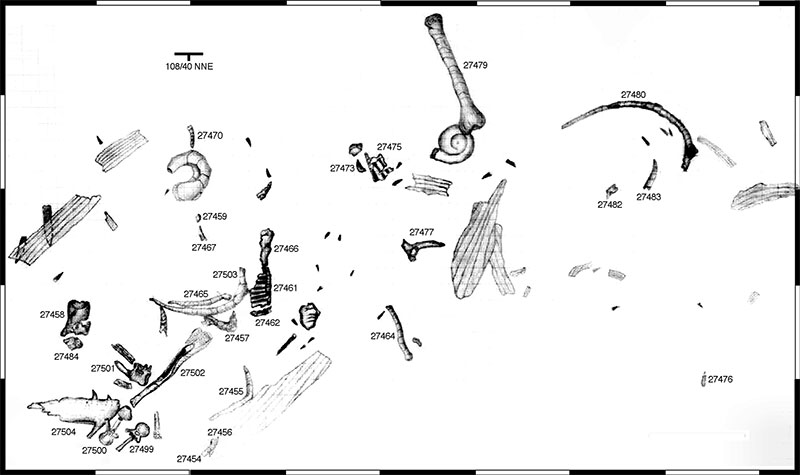
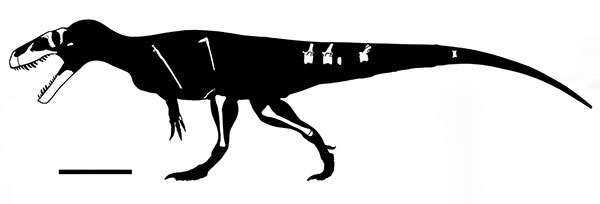
A new megalosaurid theropod dinosaur from the late Middle Jurassic (Callovian) of north-western Germany: implications for theropod evolution and faunal turnover in the Jurassic
Rauhut, O.W.M., Hübner, T. & Lanser, K.-P. · Palaeontologia Electronica
Rauhut, Hübner, and Lanser describe Wiehenvenator albati, a new large megalosaurid from northern Germany, from the Ornatenton Formation (Callovian, late Middle Jurassic). With an estimated 1.25 m skull and body length between 8 and 10 m, it is the largest known theropod of the European Middle Jurassic. Phylogenetic analysis places it in Megalosaurinae, the same clade as Megalosaurus bucklandii and Torvosaurus, reinforcing Carrano et al.'s (2012) interpretation. The discovery has two important implications for Megalosaurus: (1) it shows that the lineage of large theropods represented by Megalosaurus was not restricted to Oxfordshire, but extended across Jurassic Europe; (2) it documents at least 10 million years of evolutionary success for megalosaurines in the emergent continental areas of the European archipelago. Published open access, it is a reference for the paleobiogeography of the species.


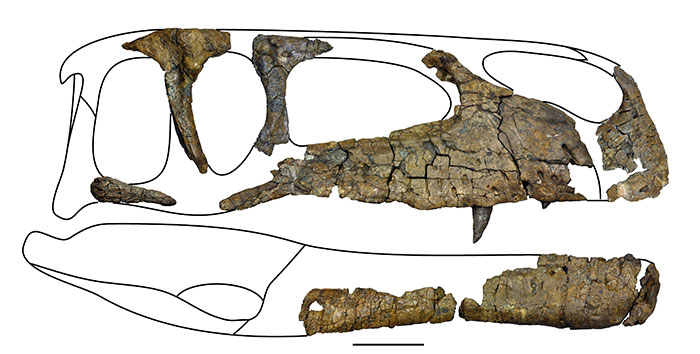
A large sized megalosaurid (Theropoda, Tetanurae) from the Late Jurassic of Uruguay and Tanzania
Soto, M., Toriño, P. & Perea, D. · Journal of South American Earth Sciences
Soto, Toriño, and Perea describe fragmentary but significant material of large megalosaurids in Uruguay (Tacuarembó Formation) and Tanzania (Tendaguru Formation), both from the Late Jurassic. The specimens show morphology consistent with Megalosauridae and indicate that this clade, of which Megalosaurus bucklandii is the type member, reached global distribution before the end of the Jurassic. The find is relevant because it shows that the family founded in the Bathonian of the UK spread to Gondwana, probably via Laurasia and the European island arc. For Megalosaurus, the paper is contextually important: the English species is the basic morphological reference used to identify the South American and African material. Without a well-described Megalosaurus bucklandii (Benson 2010), the generic attribution of these isolated fossils would be impossible. The paper illustrates the role of the original holotype as a comparative anchor in global paleontology.

Macroevolutionary patterns in the pelvis, stylopodium and zeugopodium of megalosauroid theropod dinosaurs and their importance for locomotor function
Nicholl, C., Rayfield, E.J. & Bates, K.T. · Royal Society Open Science
Nicholl, Rayfield, and Bates analyze the macroevolutionary evolution of pelvis, femur, and tibia elements in megalosauroids, including Megalosaurus bucklandii as a reference taxon. The study, published open access in Royal Society Open Science, combines morphometric data, phylogenetic analysis, and biomechanical modeling to understand how different locomotor strategies evolved in this clade. Megalosaurus is interpreted as a representative of the relatively conservative hindlimb morphology of basal megalosauroids, with robust ilium, proportionally massive femur, and straight tibia, adapted for firm-ground locomotion. The analysis shows that derived lineages such as Spinosauridae evolved much more divergent limb morphologies, associated with specialization for semi-aquatic environments. It is the most complete modern work on Megalosaurus locomotor biomechanics and provides quantitative estimates of walking speed and bone stress.


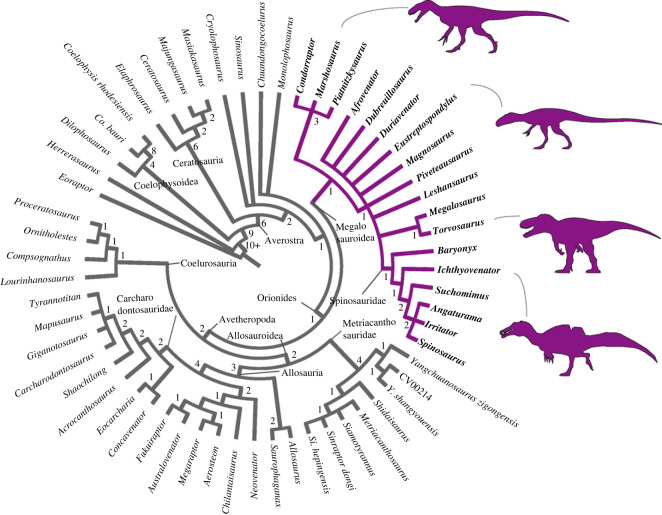
![Evolutionary history of character 263 (ilium, vertical ridge on lateral surface of blade dorsal to acetabulum) and the ancestral state reconstruction. Illustration of the left ilium in lateral view: ( a ) Masiakasaurus FMNH PR 2485; ( b ) Piatnitzkysaurus MACN-Pv-CH 895; ( c ) Siamotyrannus PW 9-1. ( d ) Phylogenetic tree of Tetanurae showing the reconstruction of ancestral character state for each node. ( a ) modified from [ 80 ] and ( c ) modified from [ 6 ]. Not to scale. ib, iliac blade; ip,](/images/species/megalosaurus-bucklandii/papers/b6859369ef-11.jpg)
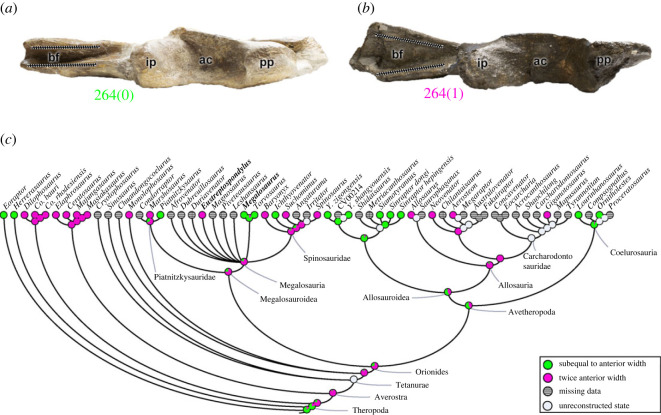
![Evolutionary history of character 265 (ilium, height of lateral wall of brevis fossa relative to medial wall) and the ancestral state reconstruction. Illustration of the right ilium in lateral view: ( a ) Megalosaurus OUMNH J.13560; ( b ) Spinosaurus FSAC-KK 11888. ( c ) Phylogenetic tree of Tetanurae showing the reconstruction of ancestral character state for each node. ( b ) Based on the three-dimensional digital model provided by Sereno et al. [ 16 ]. Not to scale. bf, brevis fossa; lwbf, lat](/images/species/megalosaurus-bucklandii/papers/b6859369ef-13.jpg)
Famous museum specimens
OUM J13505 (lectótipo)
Oxford University Museum of Natural History, Oxford
Right dentary from the lower jaw, acquired in October 1797 by Christopher Pegge at the Stonesfield quarries and later incorporated into the Oxford collection. It was figured by Mary Morland in 1824 in Buckland's publication and designated lectotype by Molnar in 1990. It is the reference type specimen for the whole species and, by extension, for the concept of Dinosauria.
OUM J13576 (sacro)
Oxford University Museum of Natural History, Oxford
Articulated sacrum preserving the five fused sacral vertebrae, a diagnostic character of Dinosauria according to Owen (1842). Collected at Stonesfield and part of Buckland's original syntype series. It is one of the most important specimens at the Oxford University Museum and is displayed publicly together with the dentary and other founding bones.
NHMUK PV OR 31806 (fêmur)
Natural History Museum, London
Isolated femur 803 mm long, used by Benson (2010) to estimate the species body mass at approximately 943 kg through allometric scaling. The specimen represents the largest confirmed individual of Megalosaurus bucklandii and is housed at the Natural History Museum in London.
In cinema and popular culture
Megalosaurus occupies a singular place in culture: despite being the first scientifically described dinosaur, its presence in mainstream cinema is almost nonexistent. Its cultural footprint is in other media. In 1853, Charles Dickens opens the novel Bleak House with the famous image of the 12-meter Megalosaurus walking up Holborn Hill in flooded London, the first appearance of a dinosaur in fiction literature. In 1854, the Crystal Palace sculptures, made by Benjamin Waterhouse Hawkins under Richard Owen's guidance, inaugurated the world tradition of life-sized reconstructions and placed Megalosaurus as a main figure alongside Iguanodon and Hylaeosaurus. In cinema, its appearances are rare: it was included in educational documentaries such as Dinosaurs! (1987, Smithsonian) and in school materials, but was never a blockbuster lead. Eustreptospondylus, classified for decades as a species of Megalosaurus, appears in the BBC series Walking with Dinosaurs (1999), but already as a separate genus. This absence from mass cinema has an explanation: Megalosaurus was identified too early, when science did not yet know what a dinosaur was; and it was quickly overshadowed by more iconic forms such as Tyrannosaurus, Velociraptor, and Triceratops. It remains, however, the absolute historical reference: without Megalosaurus, there would have been no Dinosauria.
Classification
Discovery
Fun fact
Megalosaurus bucklandii is the first dinosaur formally described in the history of science. When Buckland named it in 1824, the word 'dinosaur' did not yet exist: it would only be invented by Richard Owen 18 years later, in 1842, precisely to accommodate Megalosaurus, Iguanodon, and Hylaeosaurus in a new category.
Last reviewed: April 24, 2026