
Fish Bird
Ichthyornis dispar
"Different fish-bird"
About this species
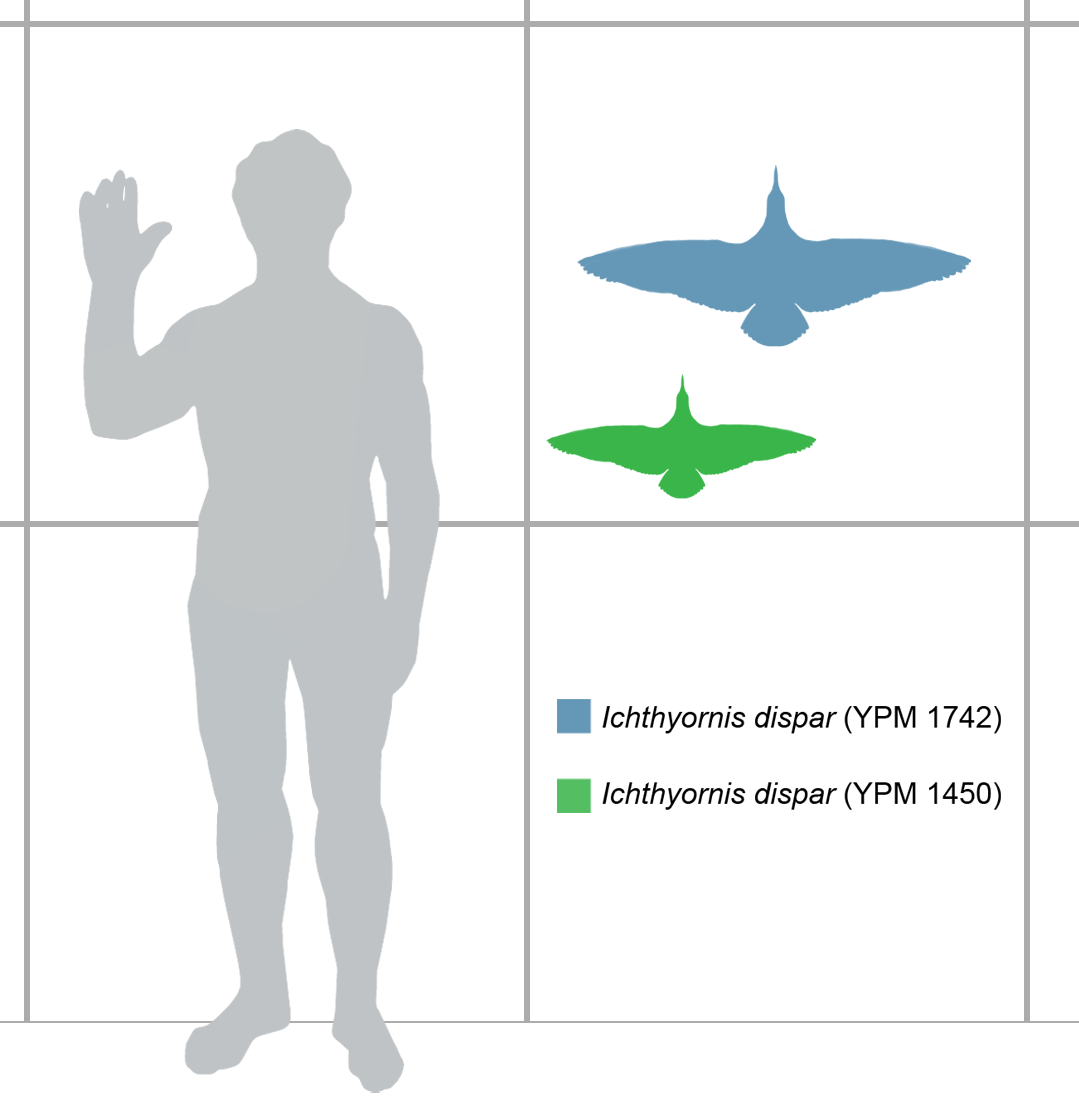
Ichthyornis dispar was a Late Cretaceous seabird that lived on the coasts and islands of the Western Interior Seaway, the vast epicontinental sea that split North America in two between 95 and 83 million years ago. About 60 centimeters long and roughly the weight of a large modern gull, it had fully modern wings, a keeled sternum anchoring robust pectoral muscles, and active flight capability. Yet it retained a striking ancestral trait: small, sharp teeth in its jaws, adapted to grip slippery fish. Described by Othniel Charles Marsh in 1872, it was presented as living proof of Darwinian theory, just thirteen years after the publication of On the Origin of Species. It disappeared in the K-Pg extinction.
Geological formation & environment
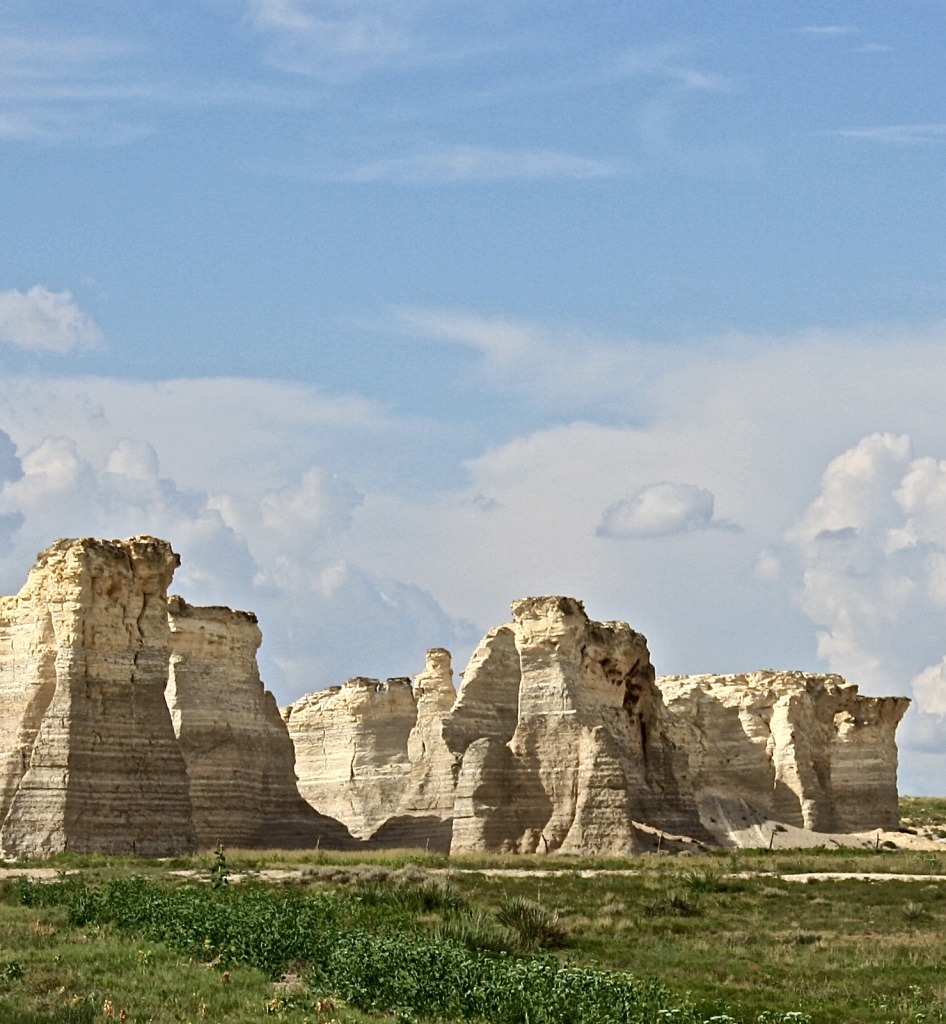
The Niobrara Formation, specifically the Smoky Hill Chalk Member, is a Cretaceous limestone succession deposited in the Late Cretaceous Western Interior Seaway, between roughly 87 and 82 million years ago (Coniacian-Campanian). Located mainly in Kansas and adjacent states (Nebraska, Colorado, South Dakota), the formation preserves chalk layers formed by accumulation of calcareous plankton in a warm, shallow sea. The fauna includes giant mosasaurs, plesiosaurs, Archelon sea turtles, Xiphactinus and Bonnerichthys fish, and the toothed birds Ichthyornis and Hesperornis. It is a classic locality of American paleontology and the basis of the historic expeditions of Edward Drinker Cope and Othniel Charles Marsh during the Bone Wars.
Image gallery




Modern reconstruction of Ichthyornis dispar incorporating cranial data from Field et al. (2018): beak-shaped premaxilla, teeth retained in maxilla and dentary, modern wings, and dense plumage.
Wikimedia Commons, CC BY-SA 4.0
Ecology and behavior
Habitat
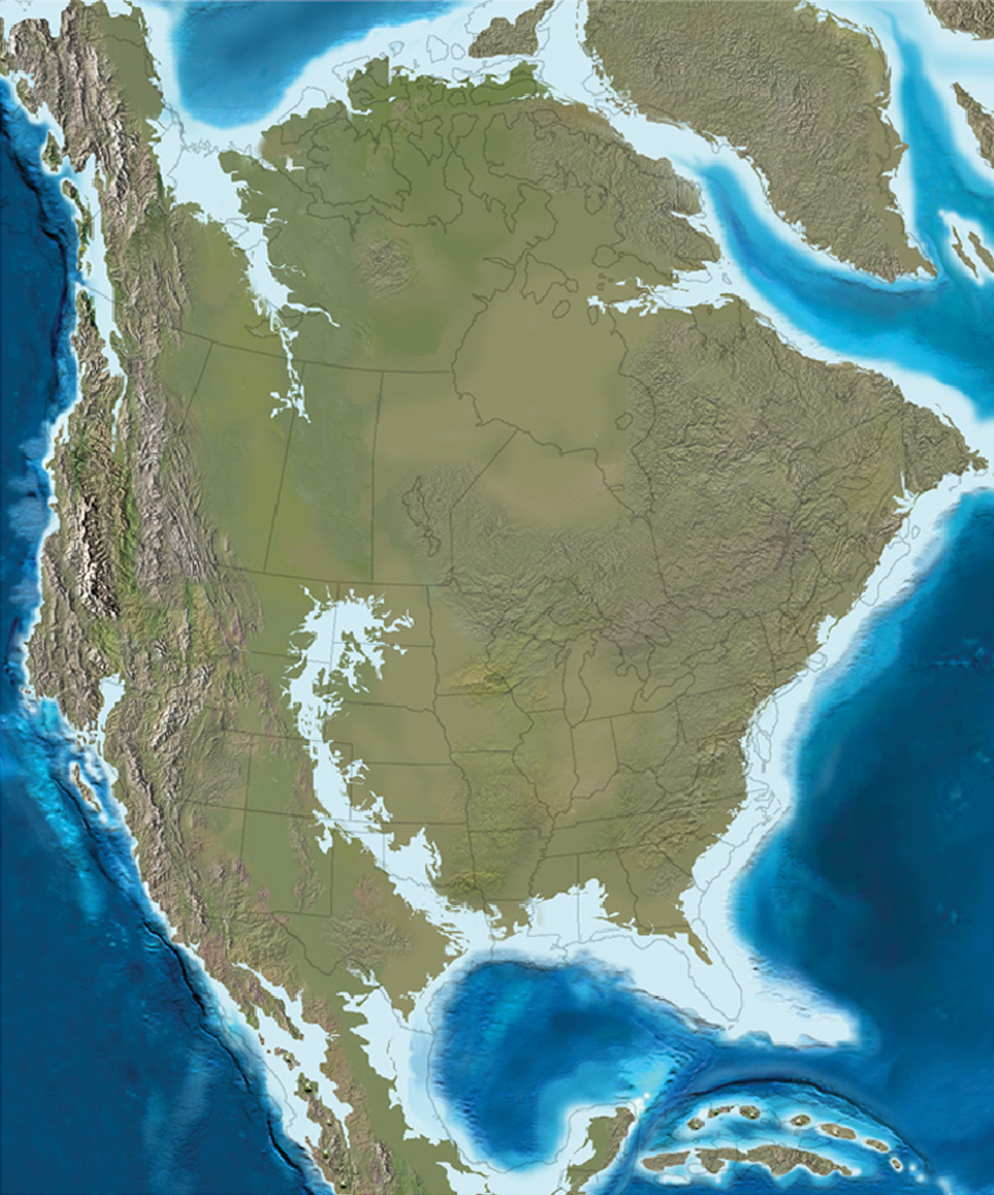
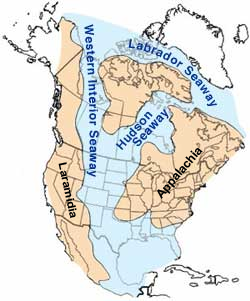
Ichthyornis dispar lived on the coasts, islands, and open seas of the Western Interior Seaway, the vast epicontinental sea that divided North America into two landmasses (Laramidia to the west, Appalachia to the east) between 100 and 66 million years ago. The waters were warm and shallow, with surface temperatures around 30 degrees Celsius. The Niobrara Formation, the main fossil site of the taxon, records a marine ecosystem with mosasaurs, plesiosaurs, Archelon turtles, Xiphactinus fish, and the diving bird Hesperornis.
Feeding
It was a specialized piscivore, feeding on small to medium pelagic fish caught in shallow dives or surface fishing, like modern gulls. Small, sharp teeth, distributed on the maxilla and dentary (but absent in the already beak-shaped premaxilla, according to Field et al. 2018), were adapted to grip slippery prey until swallowing. Total dependence on pelagic fish schools of the Western Interior Seaway made the taxon vulnerable to the ecological collapse of the K-Pg impact.
Behavior and senses
Active flyer with a lifestyle similar to modern gulls, alternating gliding flight over water, shallow dives to catch fish, and resting on coastal islands. The wings had remige feather asymmetry typical of modern flying birds, and the robust keeled sternum supported powerful pectoral musculature. It probably nested in colonies on low islands, though no nesting site has been discovered to date. It may have undertaken seasonal migrations along the Western Interior Seaway.
Physiology and growth
Endothermic, with high metabolism typical of modern flying birds. It had fully modern wings with asymmetric remige feathers, Y-shaped furcula, robust keeled sternum, and pneumatic bones to reduce body weight. It retained, however, the ancestral character of small teeth in the maxilla and dentary, with wave-like dental replacement similar to other archosaurs. Neurocranium reconstruction by Torres et al. (2021) shows a brain with proportionally more developed olfaction than modern crown birds.
Paleogeography
Continental configuration

Ron Blakey · CC BY 3.0 · Cretáceous, ~90 Ma
Fóssil sites
Matt Martyniuk (Dinoguy2), CC BY-SA 3.0
During the Coniaciano-Campaniano (~95–83 Ma), Ichthyornis dispar inhabited Laramidia, the western half of present-day North America, separated from the east by the Western Interior Seaway, a shallow sea dividing the continent. The continents were in very different positions: India was drifting toward Asia, Antarctica was still connected to Australia, and South America was an isolated island.
Bone Inventory
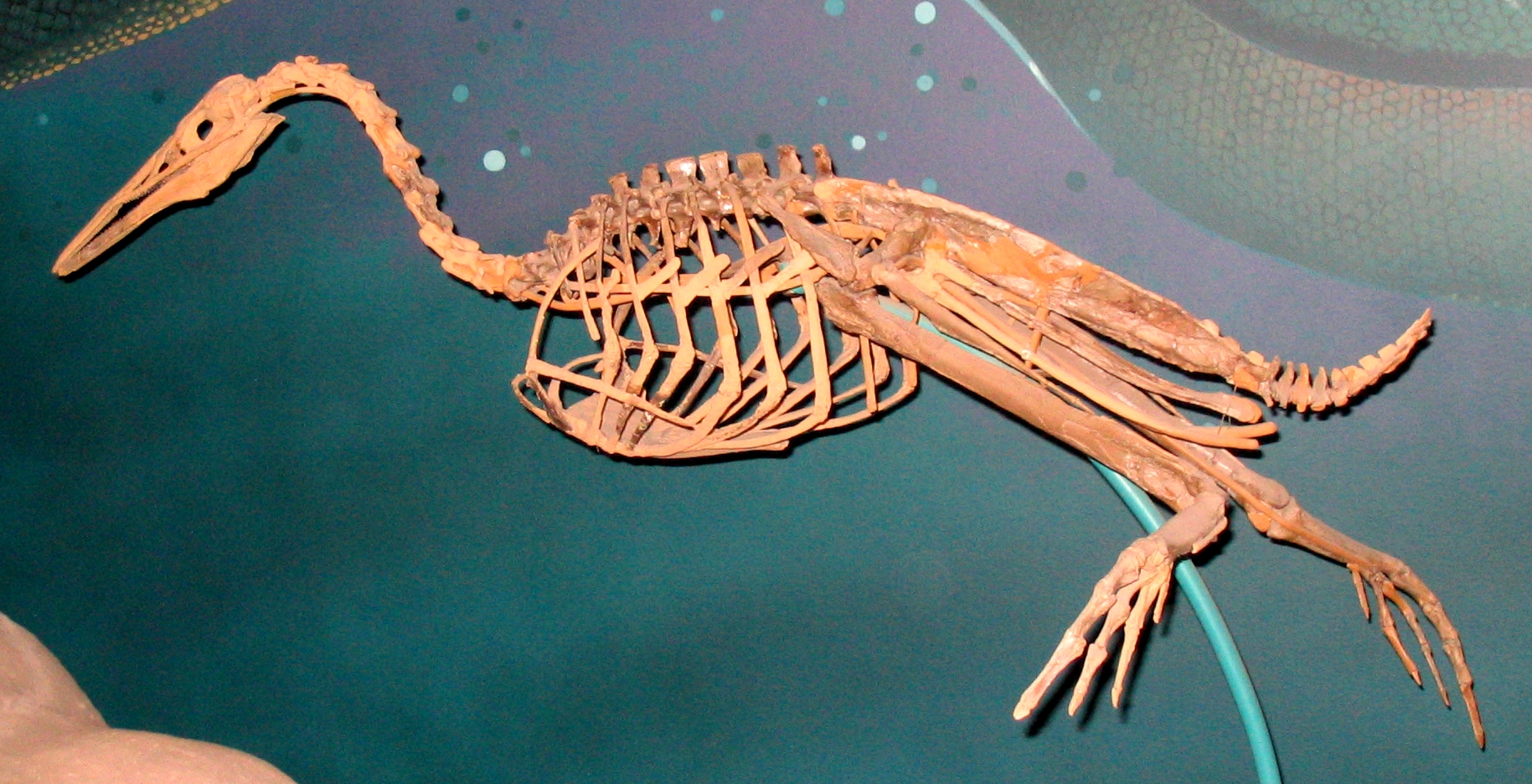
Several excellent specimens contribute to high collective completeness. Yale Peabody fossils (over 80 individuals catalogued by Clarke 2004) cover the entire postcranial skeleton, and the three-dimensional skull described by Field et al. (2018) filled the last major anatomical gap. Feathers, soft tissues, and coloration were not preserved.
Found elements
Inferred elements
Scientific Literature
15 papers in chronological order — from the original description to recent research.
Notice of a new and remarkable fossil bird
Marsh, O.C. · American Journal of Science, ser. 3, vol. 4: 344
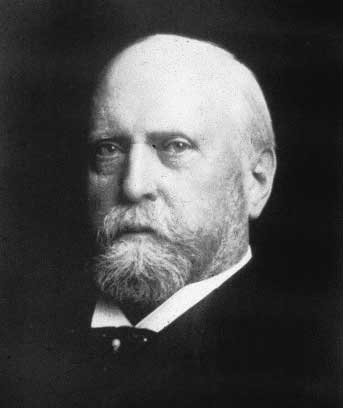
Marsh formally names Ichthyornis dispar based on material collected by Benjamin Franklin Mudge in Kansas. Marsh initially interpreted some isolated fragments as belonging to a distinct reptile due to the archaic toothed jaw, only realizing weeks later that the bones formed part of the same bird skeleton. The note is brief, but marks the beginning of Mesozoic bird studies in North America and paves the way for the 1880 monograph. The name Ichthyornis means fish bird, referring to the amphicoelous vertebrae resembling those of fish.

On a new sub-class of fossil birds (Odontornithes)
Marsh, O.C. · American Journal of Science, ser. 3, vol. 5: 161-162
After recognizing that Ichthyornis and Hesperornis preserved true teeth, Marsh erects the subclass Odontornithes to group toothed birds of the American Mesozoic. The paper positions these taxa as direct paleontological evidence for evolutionary theory, indicating a mosaic transition between dinosaurian reptiles and modern birds. Although the Odontornithes grouping is not monophyletic under modern systematics, the publication consolidated Ichthyornis's importance in the debate on the origin of birds and directly influenced the thinking of Thomas Huxley and Charles Darwin.


Odontornithes: a monograph on the extinct toothed birds of North America
Marsh, O.C. · Memoirs of the Peabody Museum of Yale College / U.S. Geological Exploration of the Fortieth Parallel, vol. 7
Marsh publishes the definitive monograph on toothed Cretaceous birds of North America. The folio volume features 34 lithographed plates and bone-by-bone descriptions based on over 77 individuals of Ichthyornis and 50 of Hesperornis. This work established Ichthyornis as a gull-sized bird with modern wings, keeled sternum, and teeth in both jaws. Charles Darwin personally wrote to Marsh thanking him for the publication, describing the work as the best support for evolutionary theory produced in the previous twenty years. It remains a primary reference even after Clarke's (2004) revision.


Notes on the osteology and relationships of the fossil birds of the genera Hesperornis, Hargeria, Baptornis, and Diatryma
Lucas, F.A. · Proceedings of the United States National Museum, vol. 26: 545-556
Lucas, then director of the US National Museum, conducts a critical revision of the osteology of North American fossil birds and contests several points of Marsh's synthesis. The paper clarifies that Hesperornis and Ichthyornis do not belong to a single natural group, anticipating by almost a century Clarke's (2004) conclusion that Odontornithes is not monophyletic. Lucas also details that the keeled sternum and Y-shaped furcula of Ichthyornis place the taxon much closer to modern birds than Hesperornis, which would have evolved diving capability secondarily.

A new partial mandible of Ichthyornis
Gingerich, P.D. · Condor, vol. 74: 471-473
Philip Gingerich, then a young paleontologist starting the career that would make him a reference in Eocene mammals, describes a new fragment of Ichthyornis mandible. The paper details for the first time the configuration of dental alveoli and the presence of replacement teeth in development, a trait retained from the ancestral theropod body plan. The analysis supported that Ichthyornis teeth renewed in waves, as in other archosaurs, rather than being replaced individually as in mammals. The paper represents a small but important refinement between Marsh's monograph and Clarke's modern revision.


The fossil record of birds
Olson, S.L. · Avian Biology, vol. 8: 79-238 (Academic Press)
Storrs Olson, of the Smithsonian, writes the greatest synthesis of the avian fossil record of the 20th century. The chapter dedicates significant space to Ichthyornis and Hesperornis, definitively separating the two lineages Marsh had grouped in Odontornithes. Olson positions Ichthyornis as a close sister taxon to crown Aves, while Hesperornithes would branch off earlier. The work lays the foundations for the modern systematics of Mesozoic birds and anticipates by almost 20 years the conclusions of Clarke (2004). It is mandatory reading to understand the evolution of paleontological thought on bird origins between 19th-century monographs and the cladistic revolution.

Mesozoic Birds: Above the Heads of Dinosaurs
Chiappe, L.M. & Witmer, L.M. (eds.) · University of California Press, Berkeley, 536 pp.
Chiappe and Witmer edit the reference volume on Mesozoic birds. The chapter dedicated to Ornithurae details Ichthyornis's pivotal role as the immediate sister taxon to crown birds, with fully modern wings, keeled sternum, and Y-shaped furcula, but retained dentition. The book consolidates the consensus that Ichthyornis represents the most advanced evolutionary stage between avian dinosaurs and modern birds in the Cretaceous. It also serves as a bridge between 20th-century works and the definitive revision published by Clarke two years later, in 2004, remaining today the most comprehensive reference on the topic.

Morphology, phylogenetic taxonomy, and systematics of Ichthyornis and Apatornis (Avialae: Ornithurae)
Clarke, J.A. · Bulletin of the American Museum of Natural History, no. 286: 1-179
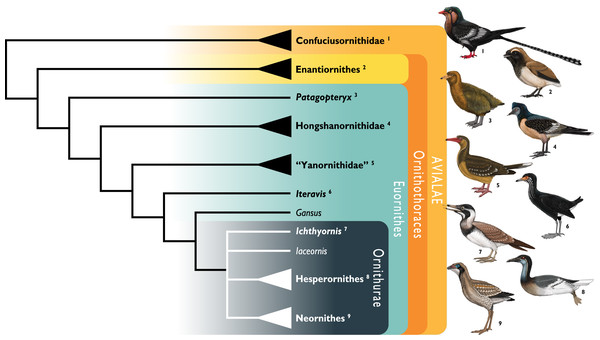
Julia Clarke revises in detail 81 Yale Peabody specimens of Ichthyornis and Apatornis, synthesizing 130 years of research in a 179-page monograph. Clarke concludes there is only one valid Ichthyornis species (I. dispar), rather than the eight previously proposed. Her phylogenetic analysis of 202 morphological characters and 24 taxa demonstrates that Marsh's Ichthyornithiformes is not monophyletic: I. dispar stands as the immediate sister taxon to crown Aves. The paper establishes the current consensus on the taxon's phylogenetic position and provides the comparative basis for all subsequent work, including the skull rediscovery by Field et al. (2018).


Mass extinction of birds at the Cretaceous-Paleogene (K-Pg) boundary
Longrich, N.R., Tokaryk, T. & Field, D.J. · Proceedings of the National Academy of Sciences, vol. 108(37): 15253-15257
Longrich, Tokaryk, and Field analyze fossil bird remains from the latest Maastrichtian of North America and demonstrate that most lineages, including Ichthyornithes and Hesperornithes, went extinct at the K-Pg event. The paper establishes that the K-Pg was a selective evolutionary filter: only crown Aves, with toothless beaks and the ability to exploit seeds and debris in the post-impact period, survived. Ichthyornis's specialized piscivory, fully dependent on healthy marine ecosystems, helps explain why the taxon did not cross the boundary. It is mandatory reference for understanding why modern birds survived and Ichthyornis did not.
Avian Evolution: The Fossil Record of Birds and its Paleobiological Significance
Mayr, G. · Wiley-Blackwell, Chichester, 312 pp.
Gerald Mayr, of the Senckenberg Research Institute, publishes the most up-to-date synthesis on avian evolution. The book discusses in detail Ichthyornis's pivotal role: a bird of fully developed active flight, with modern wings and keeled sternum, yet with retained dentition that evidences the mosaic character of avian body plan evolution. Mayr also explores hypotheses for why Ichthyornis is exclusive to North America: the Western Interior Seaway functioned as a closed ecosystem and the taxon would have regional ecological specialization. This work is the current reference in graduate courses on bird evolution.

Complete Ichthyornis skull illuminates mosaic assembly of the avian head
Field, D.J., Hanson, M., Burnham, D., et al. · Nature, vol. 557: 96-100
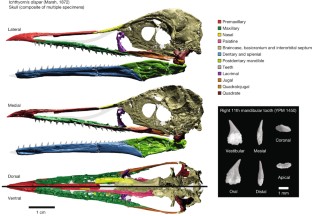
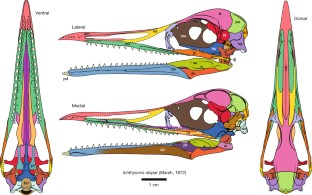
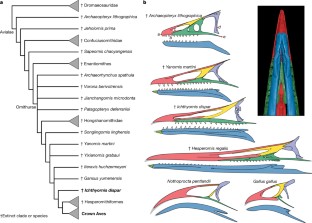
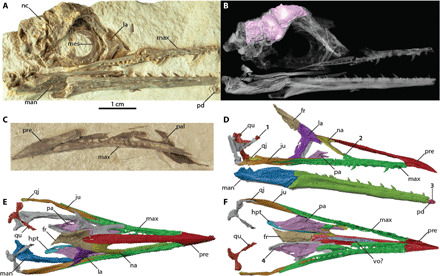
Field and collaborators present the first complete three-dimensional skull of Ichthyornis dispar, scanned by high-resolution computed tomography from specimen ALMNH PV2002.0010. The paper published in Nature reveals mosaic assembly of the avian head: the premaxilla was already beak-shaped, but the rest of the skull retained a temporal region typical of non-avian theropods, with strong bite muscles. Posterior teeth were retained mainly in the maxilla and dentary. This result redefines understanding of avian beak evolution and shows that the modern beak emerged before complete tooth loss. It is the most important discovery about Ichthyornis in the 21st century.
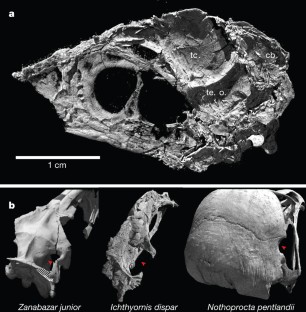
Early evolution of modern birds structured by global forest collapse at the end-Cretaceous mass extinction
Field, D.J., Bercovici, A., Berv, J.S., et al. · Current Biology, vol. 28(11): 1825-1831
Daniel Field and collaborators investigate the ecological structure of the K-Pg extinction for birds. Combining paleobotanical data (pollen and spores from the K-Pg boundary) with molecular phylogeny of crown Aves, they demonstrate that global forest destruction was the main filter: arboreal birds and pelagic fish specialists were decimated, while small ground-dwelling birds with generalist beaks survived. The paper positions Ichthyornis as a victim of the marine ecological collapse, given its total dependence on pelagic fish schools of the Western Interior Seaway. Combined with Field et al. (2018) on the skull, it closes the understanding of Ichthyornis's role in avian evolution.
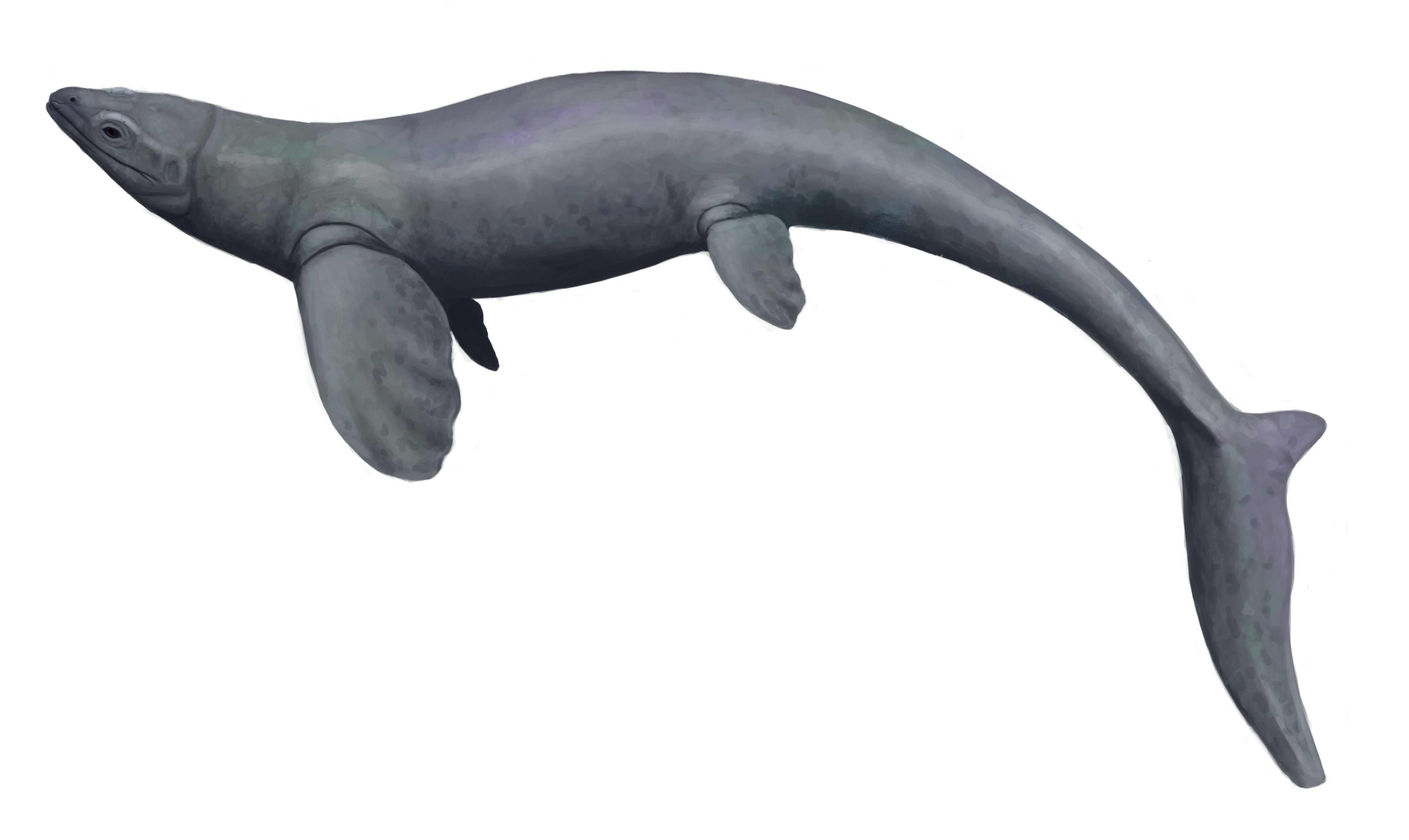
A new clade of basal Early Cretaceous pygostylian birds and developmental plasticity of the avian shoulder girdle
Wang, M., Stidham, T.A. & Zhou, Z. · Proceedings of the National Academy of Sciences, vol. 115(42): 10708-10713
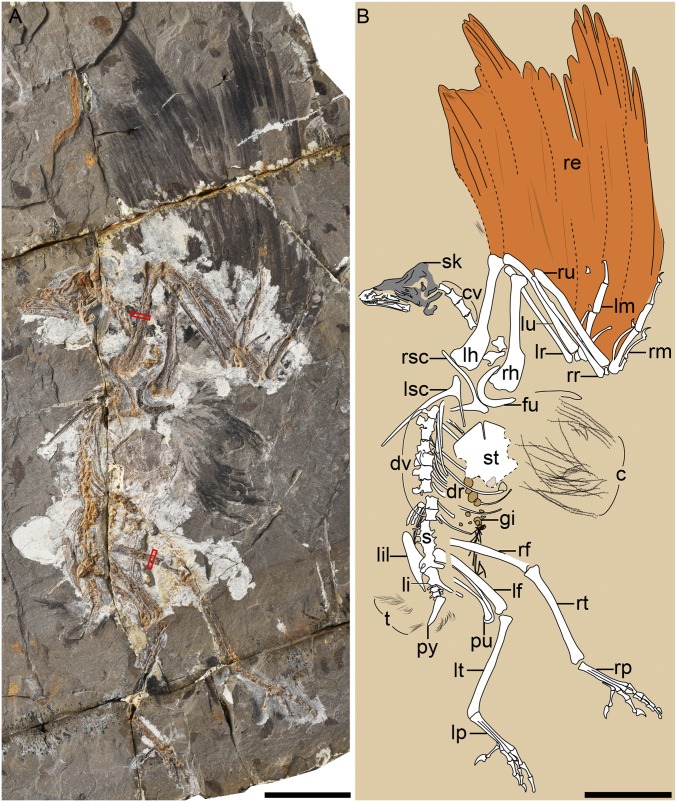
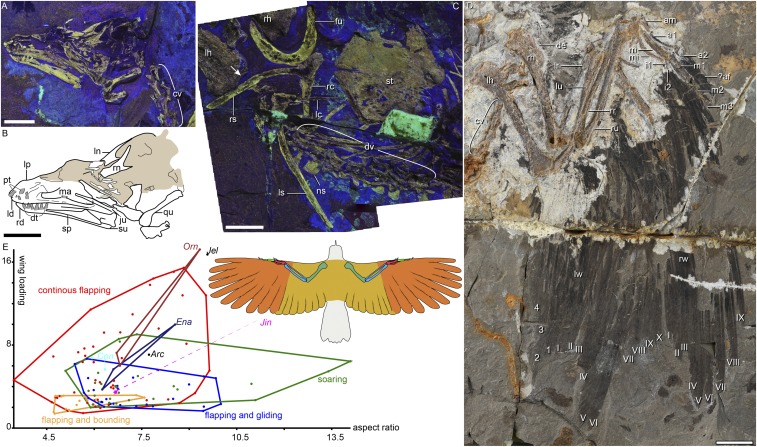
Wang, Stidham, and Zhou analyze new finds from the Chinese Early Cretaceous and conduct a comprehensive phylogenetic analysis of Pygostylia. The paper places Ichthyornis as the immediate sister taxon to crown Aves, confirming the position established by Clarke (2004) and refined by Field et al. (2018). The analysis also documents developmental plasticity of the shoulder girdle in Mesozoic birds, showing that the keeled sternum configuration and Y-shaped furcula of Ichthyornis emerged by convergence or independent retention in multiple lineages. It is the most robust phylogenetic paper involving Ichthyornis in the 2010s decade.

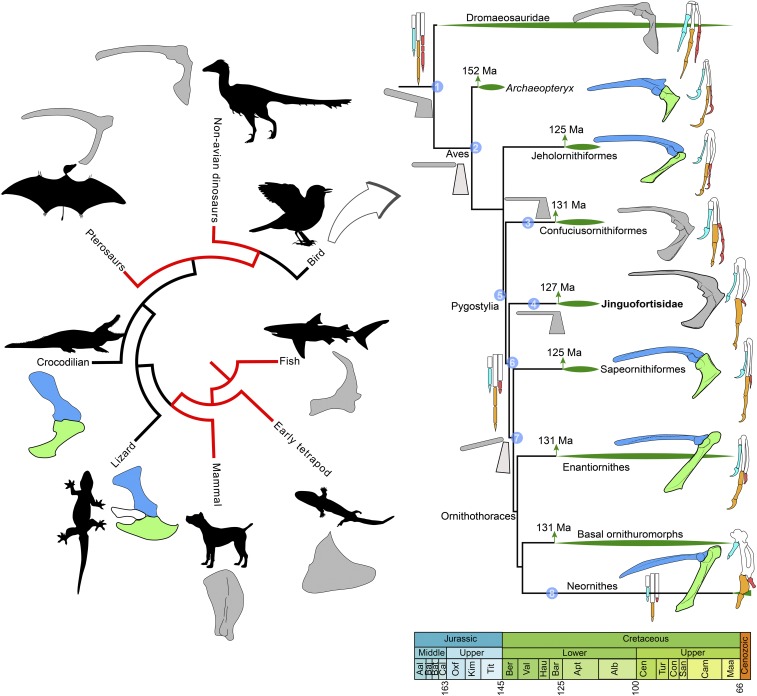
Bird neurocranial and body mass evolution across the end-Cretaceous mass extinction: the avian brain shape left other dinosaurs behind
Torres, C.R., Norell, M.A. & Clarke, J.A. · Science Advances, vol. 7(31): eabg7099
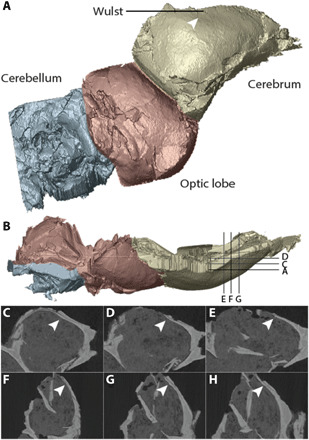
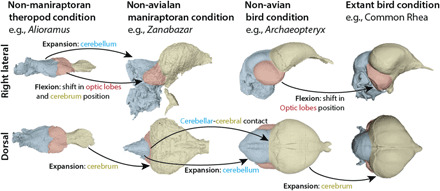
Torres, Norell, and Clarke use computed tomography to reconstruct the Ichthyornis dispar neurocranium and compare brain shape with modern birds and other dinosaurs. The paper published in Science Advances shows that the brain shape characteristic of crown birds, with expanded cerebral lobes and developed cerebellum, evolved after the K-Pg extinction. Ichthyornis preserved an intermediate configuration with a more elongated brain and a more prominent olfactory region than modern birds. The results help explain why crown birds survived the impact while Ichthyornis did not: cognitive and sensory advantage may have been a decisive factor in the K-Pg evolutionary filter.
Forty new specimens of Ichthyornis provide unprecedented insight into the postcranial morphology of crownward stem group birds
Benito, J., Chen, A., Wilson, L.E., et al. · PeerJ, vol. 10: e13919
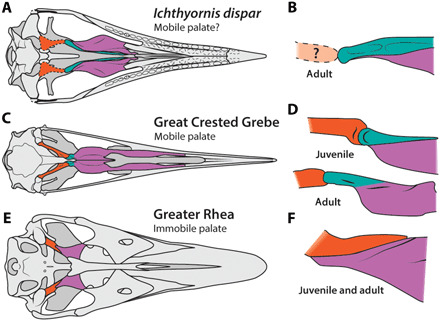
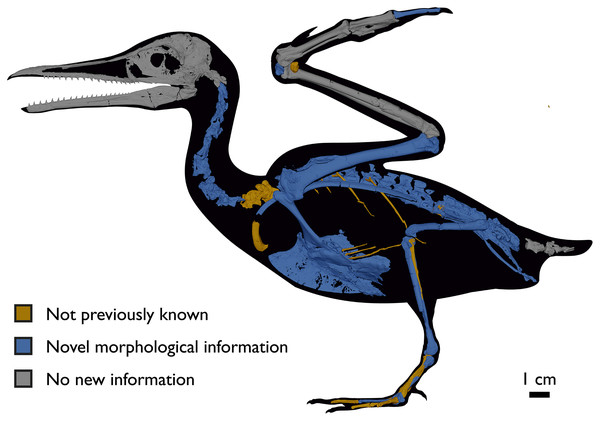
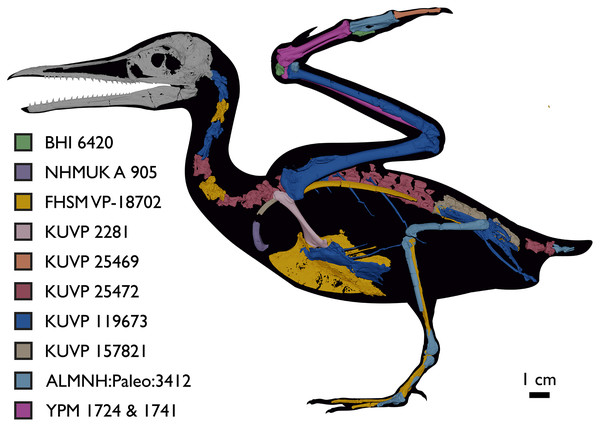
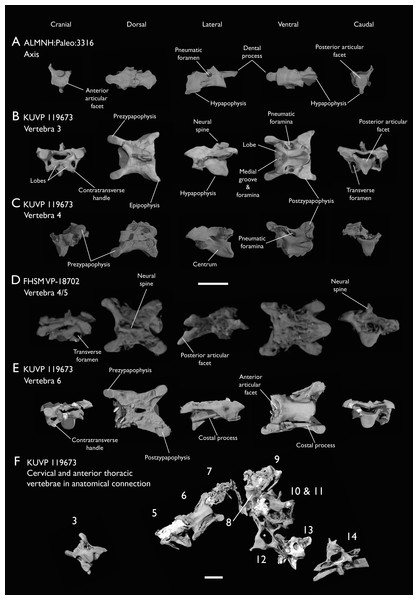
Benito and collaborators describe 40 new postcranial specimens of Ichthyornis dispar, including previously unknown pelvic and hindlimb material. The paper published in PeerJ refines the osteology of the species at an unprecedented scale since Marsh (1880) and Clarke (2004), with implications for understanding locomotion, flight, and phylogenetic position. The authors confirm that Ichthyornis dispar is the only valid species in the genus, but detect morphological variation sufficient to question whether geographically distinct populations exist. It is the most complete postcranial study of the 21st century on the taxon and updates knowledge from Clarke's monumental revision.

Famous museum specimens
YPM 1450 (holótipo)
Yale Peabody Museum of Natural History, New Haven, Connecticut, EUA
Holotype of Ichthyornis dispar, collected by Benjamin Franklin Mudge in the Niobrara Formation, Kansas, and described by Othniel Charles Marsh in 1872. It is the reference specimen for the taxon and part of the Yale Peabody collection, the basis of over 80 individuals catalogued by Clarke (2004).
ALMNH PV2002.0010
Alabama Museum of Natural History, Tuscaloosa, EUA
Central specimen of the Field et al. (2018) study, published in Nature, which presented the first complete three-dimensional skull of Ichthyornis dispar via computed tomography. The discovery revealed the mosaic assembly of the avian head and redefined understanding of beak evolution in birds.
KU 119673
Biodiversity Institute, University of Kansas, Lawrence, EUA
Relevant specimen from the Kansas University collection, part of the material analyzed in modern phylogenetic revisions. Collected in the Niobrara Formation, Kansas, it contributes important postcranial data for comparative analyses such as Benito et al. (2022).
In cinema and popular culture
Ichthyornis dispar occupies a unique place in popular science: it is remembered more as Darwinian proof than as a fictional character. Its gull-like silhouette with toothed beak became a visual icon of the transition between dinosaurs and modern birds, present in museums, textbooks, and documentaries worldwide. In cinema, it is rarely a protagonist, but appears frequently in productions about the North American Late Cretaceous, such as When Dinosaurs Roamed America (Discovery, 2001) and BBC's Sea Monsters (2003), in Western Interior Seaway environments alongside mosasaurs and plesiosaurs. Prehistoric Planet (Apple TV+, 2022) features similar toothed birds with unprecedented visual quality, incorporating post-2018 discoveries. The PBS Eons educational channel dedicated an entire episode to toothed birds in 2018, shortly after the publication of the three-dimensional skull by Field and collaborators in Nature. The cultural relevance of Ichthyornis grows whenever the discussion about why birds survived the K-Pg resurfaces.
Classification
Discovery
Fun fact
Othniel Charles Marsh presented Ichthyornis in 1872 as living proof of Darwinian evolutionary theory, just 13 years after the publication of On the Origin of Species. It was an extraordinary animal: it had modern wings, flew like a gull, but kept teeth in its jaws. Charles Darwin personally wrote to Marsh in 1880 saying that his monograph on toothed birds was the best support for evolutionary theory produced in the previous two decades. Ichthyornis did not cross the K-Pg extinction, precisely because it was a specialist piscivore dependent on pelagic fish schools of the Western Interior Seaway that collapsed after the impact.
Last reviewed: April 25, 2026