
Western Bird
Hesperornis regalis
"Royal western bird"
About this species
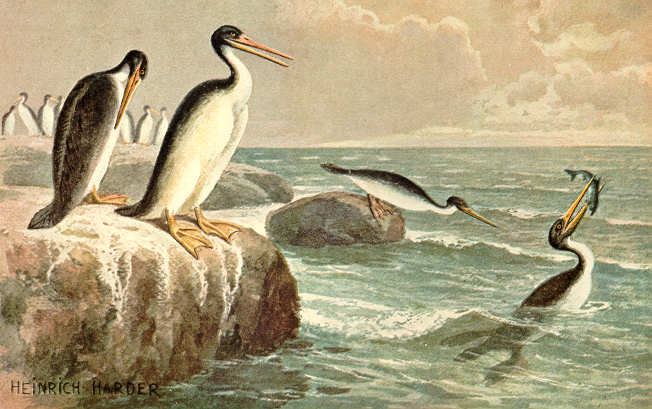
Hesperornis regalis was a giant aquatic bird of the Late Cretaceous that lived around 84 to 78 million years ago in the Western Interior Seaway, the vast epicontinental sea that split North America in two. It reached about 1.8 meters in length, with an estimated weight near 9 kilograms (estimate based on length and diving morphology). It did not fly: the wings were vestigial, reduced to a short humerus without functional radius or ulna. To compensate, it had huge lobed feet, a specialized tarsometatarsal joint for lateral strokes, and dense bones. Unlike modern birds, it still retained recurved teeth set in grooves, a legacy of non-avian theropod ancestors. Functionally it was the Cretaceous equivalent of a penguin or imperial diver, but with toothed jaws. The original description came from Othniel Charles Marsh in 1872, during the heat of the Bone Wars, from Niobrara Chalk material of Kansas.
Geological formation & environment
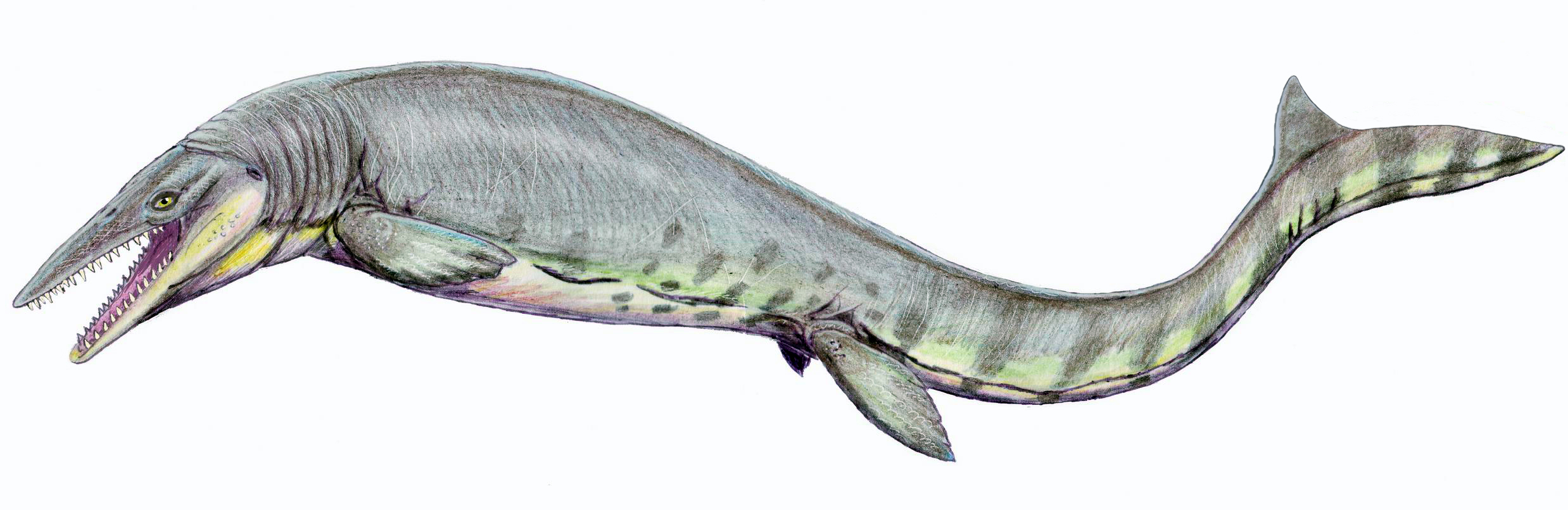
The Niobrara Chalk Formation, specifically its Smoky Hill Chalk Member, is the source unit of Hesperornis regalis specimens. It crops out widely in western Kansas and Nebraska, with an age from the Coniacian to the early Campanian (about 87 to 82 Ma). It was deposited at the floor of the Western Interior Seaway, the warm epicontinental sea that covered central North America. The fine-grained chalk layers formed from the accumulation of coccoliths of calcareous algae, with exceptional preservation of marine vertebrates. The same formation produced Tylosaurus, Cretoxyrhina, Pteranodon and Ichthyornis dispar.
Image gallery




Life reconstruction of Hesperornis regalis by Nobu Tamura, white background, showing the modern diving posture, reduced wings pressed against the body and toothed jaws. Hero image of the species on the site.
Nobu Tamura, CC BY 3.0
Ecology and behavior
Habitat
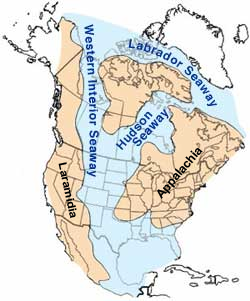
Hesperornis regalis lived in the Western Interior Seaway, the epicontinental sea that split North America into two continental masses (Laramidia to the west, Appalachia to the east) during the Late Cretaceous. It inhabited coasts and shallow open sea, with warm waters full of bony fish schools. Associated fauna included mosasaurs (Tylosaurus, Platecarpus), giant sharks (Cretoxyrhina), pterosaurs (Pteranodon) and the other toothed bird of the inland sea, Ichthyornis dispar. The climate was warm and stable, without polar ice.
Feeding
It was a piscivorous specialist. The recurved teeth set in continuous grooves were adapted to hold living fish during diving, without cutting or chewing. Fossilized regurgitate pellets described by Wilson and colleagues (2011) confirm an exclusively piscivorous diet, consuming medium-sized bony fish. Hunting behavior involved extended dives in coastal waters, chasing schools with powerful strokes of the lobed feet, similar to modern grebes and cormorants.
Behavior and senses
It probably lived like modern penguins: spent most of its life in the water, coming on land only to breed. Inferences based on ecological parallels with modern seabirds suggest colonial nesting on coastal sites, possibly on isolated islands or peninsulas to reduce predation by terrestrial theropods. The hindlimb joint morphology shows it was extremely awkward on land, able only to drag itself on its belly, and heavily dependent on water for any efficient locomotion.
Physiology and growth
It was endothermic, as suggested by Cretaceous bird bone histology and the phylogenetic position close to Neornithes. It had atrophied wings (short humerus without functional radius or ulna), unable to fly, with secondary flight loss from flying ancestors. The lobed or partially webbed feet were powerful, with laterally compressed tarsometatarsus and a lateralized knee joint for efficient sagittal stroking. Bones were dense, without typical avian pneumatization, a classic diver adaptation to reduce buoyancy for rapid descent.
Paleogeography
Continental configuration

Ron Blakey · CC BY 3.0 · Cretáceous, ~90 Ma
During the Coniaciano-Campaniano (~84–78 Ma), Hesperornis regalis inhabited Laramidia, the western half of present-day North America, separated from the east by the Western Interior Seaway, a shallow sea dividing the continent. The continents were in very different positions: India was drifting toward Asia, Antarctica was still connected to Australia, and South America was an isolated island.
Bone Inventory
Hesperornis regalis is known from dozens of specimens collected in the Niobrara Chalk of Kansas since 1871, with additional material from Canada, Sweden and Russia. The holotype YPM 1206 and specimens at Yale, Kansas (KUVP) and the American Museum (AMNH) collectively preserve nearly the entire skeleton: toothed skull, vertebrae, sternum, pectoral girdle, femur, tibia and complete tarsometatarsus. Detailed feathers and soft tissues are essentially missing. Individual completeness varies, but composite knowledge of the species exceeds 80%.
Found elements
Inferred elements
Scientific Literature
15 papers in chronological order — from the original description to recent research.
Discovery of additional remains of Hesperornis regalis
Marsh, O.C. · American Journal of Science, ser. 3, vol. 4: 503
This short note by Marsh, published months after the first mention of the genus, presents additional material of Hesperornis regalis collected by the Yale expedition in the Niobrara Chalk of Kansas. Marsh describes postcranial fragments, vertebrae and hindlimb bones, recognizing the avian nature of the animal and its aquatic specialization. Though he did not yet have the toothed skull, the author already noted the disproportionate size of the femur relative to the humerus, suggesting a diving bird. The publication consolidates Hesperornis as the first fossil record of a giant bird in North America and marks Marsh's entry into Cretaceous bird studies.

Odontornithes: A Monograph on the Extinct Toothed Birds of North America
Marsh, O.C. · United States Geological Exploration of the Fortieth Parallel, vol. VII
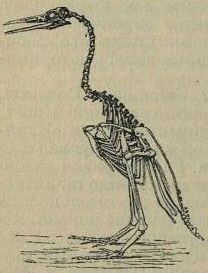
Odontornithes is one of the most influential paleontological monographs of the 19th century. Marsh assembles material accumulated over a decade of expeditions to the Niobrara, describes in detail the toothed skull of Hesperornis regalis and provides illustrated plates of every bone element. This is where the famous skeletal mount appears, still used as a reference. The work includes more than 30 lithographic plates, comparative anatomical layouts with modern birds, and the explicit thesis that Hesperornis and Ichthyornis fill the transition between theropod dinosaurs and modern birds. It was funded by the U.S. government as part of the Fortieth Parallel Geological Survey directed by Clarence King.
Birds with Teeth
Williston, S.W. · Kansas University Quarterly, vol. 7, no. 3
Samuel Wendell Williston, heir to Marsh's legacy at Yale and later professor at Kansas, publishes one of the first post-Odontornithes reviews dedicated exclusively to toothed birds. He works with KUVP material collected from the same Smoky Hill beds of the Niobrara. He confirms that Hesperornis teeth sit in continuous grooves rather than individual sockets as in non-avian theropods, and describes in more detail the ankle joint and the laterally compressed tarsometatarsus characteristic of foot-propelled diving. The paper consolidates Kansas as a second major center for the species' study and broadens the comparative specimen base beyond those collected by Marsh.
Notes on the osteology and relationship of the fossil birds of the genera Hesperornis, Hargeria, Baptornis, and Diatryma
Lucas, F.A. · Proceedings of the United States National Museum, vol. 26
Frederic A. Lucas, of the U.S. National Museum (now Smithsonian), publishes a detailed osteological review of the genus Hesperornis and its close relatives, including the then newly erected Hargeria gracilis. The work separates robust forms from gracile or juvenile forms, describes the elongate sternum with a vestigial keel and the pelvis strongly extended posteriorly, a configuration that aligns Hesperornis anatomy with the pattern of modern aquatic divers such as grebes and cormorants. Lucas also proposes that the diet was exclusively piscivorous and that the animal left the water only to breed, anticipating modern ecological interpretations. It is the first osteological synthesis of the clade outside Marsh's monograph.

A new partial mandible of Ichthyornis with comments on the systematics and stratigraphic range of the genus, and a brief revision of Hesperornithiformes
Gingerich, P.D. · Postilla, Yale Peabody Museum, no. 159
Philip Gingerich, then at Yale, publishes a systematic and stratigraphic revision of the Hesperornithiformes of the Niobrara Chalk, refining the vertical position of Hesperornis regalis within the Smoky Hill Member of the Late Cretaceous. The paper discusses the stratigraphic succession of specimens collected since the 1871 expedition, clarifies confusing 19th-century synonyms, and provides the first modern relative dating of the material based on inoceramid zones. Gingerich also suggests that the genus spanned at least 6 million years of the Late Cretaceous, from the Coniacian to the early Campanian, a stratigraphic baseline still used in current literature.
The skeleton of Baptornis advenus (Aves: Hesperornithiformes)
Martin, L.D. & Tate, J. · Smithsonian Contributions to Paleobiology, no. 27
Larry Martin and Jim Tate present the most complete osteological study to date of Baptornis advenus, a close relative of Hesperornis from the same Niobrara Chalk. The paper compares the two taxa joint by joint and establishes the anatomical template of the hesperornithiforms: posteriorly elongated pelvis, short and robust femur, very elongated tibia, laterally compressed tarsometatarsus, and a lateralized knee that forced the leg to operate in a sagittal stroke. The skeletal reconstruction in this publication is the basis of the modern image of Hesperornis swimming like a penguin, with the leg projected outside the body during the stroke. It is a central reference for any subsequent study of the group.

The Fossil Record of Birds
Olson, S.L. · Avian Biology, vol. 8 (Academic Press)
Storrs Olson, of the Smithsonian, publishes the most influential synthesis of the avian fossil record of the 20th century. The chapter dedicates a section to the Hesperornithiformes, with taxonomic treatment of Hesperornis regalis and the related genera Baptornis, Parahesperornis and Coniornis. Olson places the clade within Ornithurae, close to the origin of modern birds, and discusses the hypothesis that the entire toothed bird lineage went extinct at the end of the Cretaceous. The synthesis articulates osteological, stratigraphic and biogeographic evidence and establishes a canonical reference for any reader interested in paleornithology.


Mesozoic Birds: Above the Heads of Dinosaurs
Chiappe, L.M. & Witmer, L.M. (eds.) · University of California Press
The Mesozoic Birds volume gathers chapters by leading specialists in fossil birds and offers the first modern post-cladistic synthesis of the group. Chapters on Hesperornithiformes integrate data from Marsh, Martin, Olson and new phylogenetic analyses, positioning Hesperornis regalis as a specialized diver within Ornithurae. It discusses diving biomechanics, trophic ecology based on fossilized pellets, global distribution of the clade (North America, Sweden, Russia) and the ecological vulnerability of a lineage entirely dependent on shallow coastal seas. It is the standard entry point for any serious reader on the topic since 2002.
Morphology, phylogenetic taxonomy, and systematics of Ichthyornis and Apatornis (Avialae: Ornithurae)
Clarke, J.A. · Bulletin of the American Museum of Natural History, no. 286
Julia Clarke produces the most influential modern revision of the osteology and phylogeny of Ichthyornis and Apatornis, with a character matrix that includes Hesperornis regalis and the rest of Hesperornithiformes. The resulting cladogram places the clade as sister to more derived Carinatae, very close to the origin of modern birds (Neornithes). The paper establishes the phylogenetic framework used in current Hesperornis reconstructions and provides detailed argumentation on secondary flight loss in the clade from flying ancestors. It is the leading cladistic reference today for understanding where Hesperornis fits in the bird tree.


Mass extinction of birds at the Cretaceous-Paleogene (K-Pg) boundary
Longrich, N.R., Tokaryk, T. & Field, D.J. · Proceedings of the National Academy of Sciences, vol. 108, no. 37
Nick Longrich and colleagues gather bird fossils collected in rocks within centimeters of the K-Pg boundary in North America and show that at least four major lineages, including Hesperornithiformes, Ichthyornithes, Enantiornithes and Avisauridae, disappeared abruptly with the Chicxulub impact. The paper includes late records attributed to Hesperornithiformes in the last meters of the Maastrichtian, indicating that the lineage was still present at the end of the Cretaceous. The extinction is interpreted as a direct consequence of the collapse of marine and coastal food webs, exactly the niche occupied by Hesperornis regalis. It is the most direct empirical evidence that the toothed diving bird did not survive the asteroid.

A hesperornithiform regurgitate pellet from the Late Cretaceous Pierre Shale of Manitoba, Canada
Wilson, L.E., Chin, K., Cumbaa, S.L. & Dyke, G.J. · Journal of Vertebrate Paleontology, vol. 31, suppl. 2
Wilson and colleagues describe a fossilized regurgitate pellet from the Pierre Shale of Manitoba (Canada), attributed to a hesperornithiform from the same interval as Hesperornis regalis. The pellet contains identifiable remains of bony fishes: scales, cranial bones and partially digested vertebrae. The discovery provides the first direct evidence of piscivorous diet in the clade, previously inferred only from dental morphology and marine habitat. The authors compare the pellet to regurgitates of modern seabirds and conclude that Hesperornis regalis processed medium-sized prey in sequence, behavior typical of specialist divers such as penguins and cormorants.

Identification of a New Hesperornithiform from the Cretaceous Niobrara Chalk and Implications for Ecologic Diversity among Early Diving Birds
Bell, A. & Chiappe, L.M. · PLOS ONE, vol. 10, no. 11
Alyssa Bell and Luis Chiappe identify a new hesperornithiform from the Niobrara Chalk and compare it directly with Hesperornis regalis in a quantitative analysis of diving adaptations. The open-access PLOS ONE paper presents cladograms, morphometric analysis of the tarsometatarsus and bone density measurements, showing that H. regalis occupies the most specialized end of the diving spectrum within the clade, with denser bones, more lobed feet and more advanced loss of flight capability than contemporaneous hesperornithiforms. It confirms the interpretation of Hesperornis regalis as the most derived Cretaceous penguin in the Niobrara fauna.

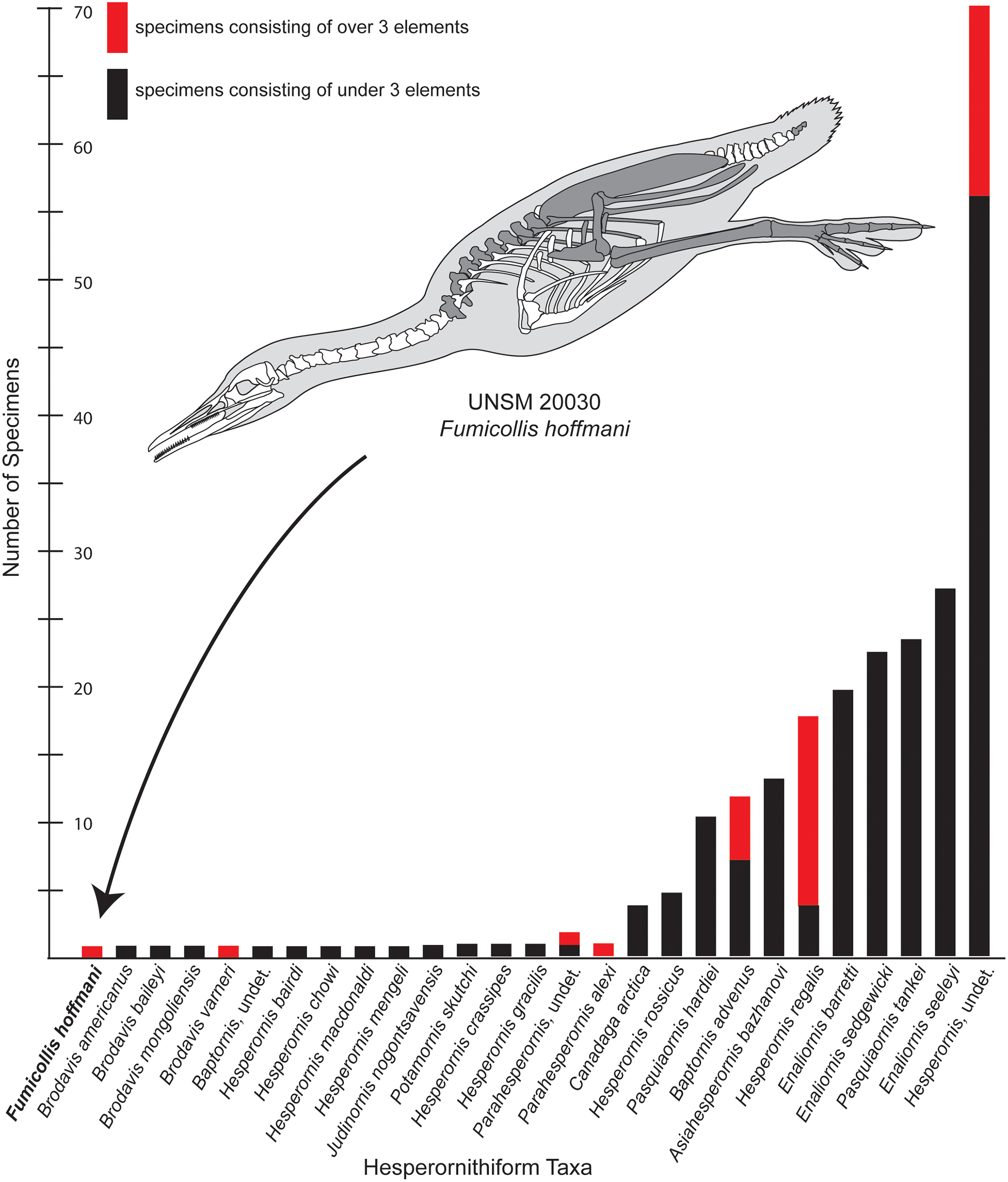
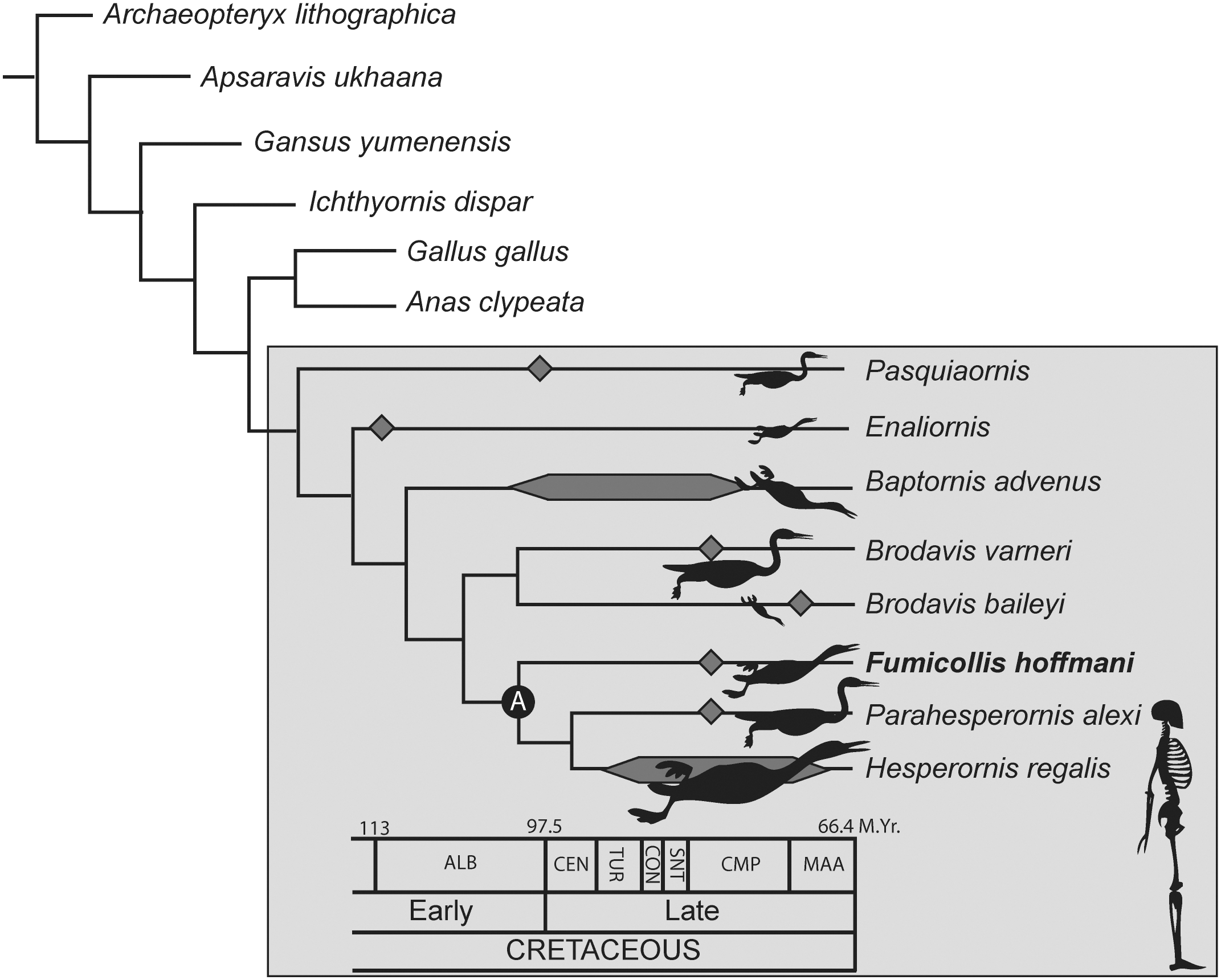
![Fig 3. Features of the right tarsometatarsus of UNSM 20030 that were identified by a phylogenetic analysis (see [ 8 ]) as uniting Fumicollis hoffmani , Parahesperornis , and Hesperornis in a clade.](/images/species/hesperornis-regalis/papers/88f199c9b2-02.png)
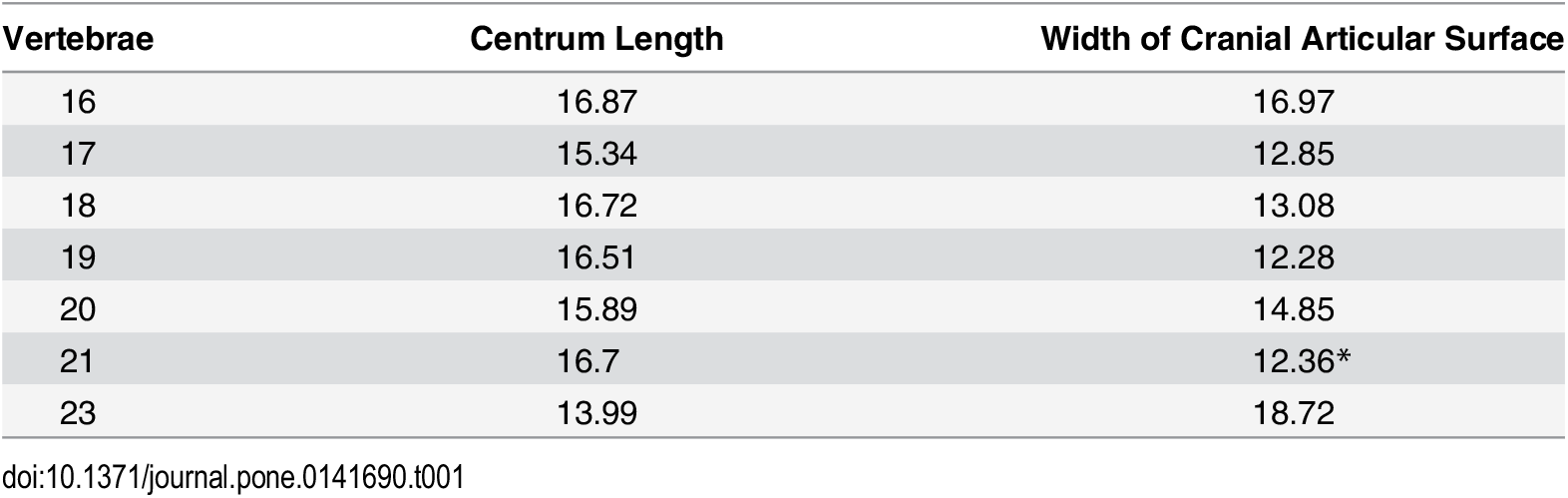
Hesperornithiformes (Aves: Ornithurae) from the Upper Cretaceous Pierre Shale of southern Manitoba, Canada
Aotsuka, K. & Sato, T. · Cretaceous Research, vol. 63
Aotsuka and Sato describe new Hesperornithiformes material collected in the Pierre Shale of southern Manitoba, Canada, and directly compare postcranial elements with those of the Hesperornis regalis holotype at Yale. The paper expands the Canadian record of the clade, refines the stratigraphic range of the species in the Western Interior Seaway and details tarsometatarsus anatomy. The authors propose that the Western Interior Seaway hosted continuously connected Hesperornithiformes populations from the Coniacian to the Maastrichtian, with Hesperornis regalis as the dominant taxon in the south-central portion of the inland sea.


Early evolution of modern birds structured by global forest collapse at the end-Cretaceous mass extinction
Field, D.J., Bercovici, A., Berv, J.S., Dunn, R., Fastovsky, D.E., Lyson, T.R., Vajda, V. & Gauthier, J.A. · Current Biology, vol. 28, no. 11
Daniel Field and colleagues integrate paleobotanical data from the K-Pg boundary with molecular phylogenies of modern birds and show that the global forest collapse after the Chicxulub impact acted as a selective evolutionary filter. Arboreal lineages went extinct en masse; the few surviving basal Neornithes lineages were small terrestrial or semiaquatic birds with generalist diets. The paper includes models of marine ecological collapse that affected Hesperornithiformes, including Hesperornis regalis, whose absolute dependence on shallow coastal seas and fish schools made them extremely vulnerable. It is the modern ecological explanation for the extinction of the clade.


Morphometric comparison of the Hesperornithiformes hindlimb and a new diagnostic character
Bell, A., Wu, Y.-H. & Chiappe, L.M. · Cretaceous Research, vol. 93
Bell, Wu and Chiappe publish the most complete morphometric analysis to date of the Hesperornithiformes hindlimb. The paper defines a new diagnostic character on the tarsometatarsus, separates subgroups by tibia/tarsometatarsus ratio and shows that Hesperornis regalis displays the most derived configuration of the clade, with a short, robust and strongly laterally compressed tarsometatarsus. The authors interpret this morphology as an adaptation for powerful strokes in deep water, efficient for chasing fish schools in extended dives. It provides a quantitative basis for modern anatomical reconstructions and for any subsequent biomechanical study of the species.

Famous museum specimens
YPM 1206 (holótipo)
Yale Peabody Museum, New Haven, Connecticut, EUA
Holotype described by Marsh in 1872, with additional material described in Odontornithes (1880). Includes toothed skull, vertebrae, pelvis, femur, tibia, tarsometatarsus and part of the pectoral girdle. It is the worldwide reference specimen of the species.
KUVP 71012
Kansas University Vertebrate Paleontology, Lawrence, Kansas, EUA
Nearly complete specimen collected in Smoky Hill beds of the Niobrara Chalk in western Kansas, with skull, jaw, sternum, pelvis and both hindlimbs articulated. It became the main reference for modern morphometric analyses, including those of Bell and Chiappe (2015) and Bell, Wu and Chiappe (2019).
AMNH FR 5100
American Museum of Natural History, Nova York, EUA
Specimen collected by an American Museum team in Smoky Hill beds of western Kansas in the late 19th century. Includes a reasonably complete postcranium, with vertebrae, pelvis, femur, tibia and tarsometatarsus. It is part of the classic Cretaceous bird exhibit at the AMNH and a frequent comparative reference.
In cinema and popular culture
Hesperornis regalis occupies a discreet but consistent niche in popular science cinema. It has appeared in three major documentaries: Sea Monsters: A Walking with Dinosaurs Trilogy (BBC, 2003), When Dinosaurs Roamed America (Discovery, 2001) and Prehistoric Planet (Apple TV+, 2022), plus the Birds with Teeth episode of the PBS Eons series (2018). In all of them, it is depicted as a toothed diving bird of the Western Interior Seaway, often in fishing scenes or fleeing from mosasaurs. Reconstructions evolved from the upright penguin-like posture of early 2000s productions to the modern horizontal posture in Prehistoric Planet, with dense plumage, lobed feet stroking laterally and colonial behavior. It does not appear in blockbuster films such as Jurassic Park because it is a specialized aquatic bird, outside the iconic visual standard of terrestrial dinosaurs. It maintains a permanent presence in natural history museums, especially Yale Peabody, Kansas University and the American Museum.
Classification
Discovery
Fun fact
Hesperornis regalis was essentially the toothed penguin of the Cretaceous. It dived like modern penguins, but had jaws with recurved teeth, and probably only left the water to lay eggs. It was so specialized for the sea that it lost the ability to fly, and when the impact destroyed coastal seas, its specialization became a death sentence.
Last reviewed: April 25, 2026