AR · 221–205 Ma
Mussaurus
Mussaurus patagonicus
"Mouse lizard from Patagonia"
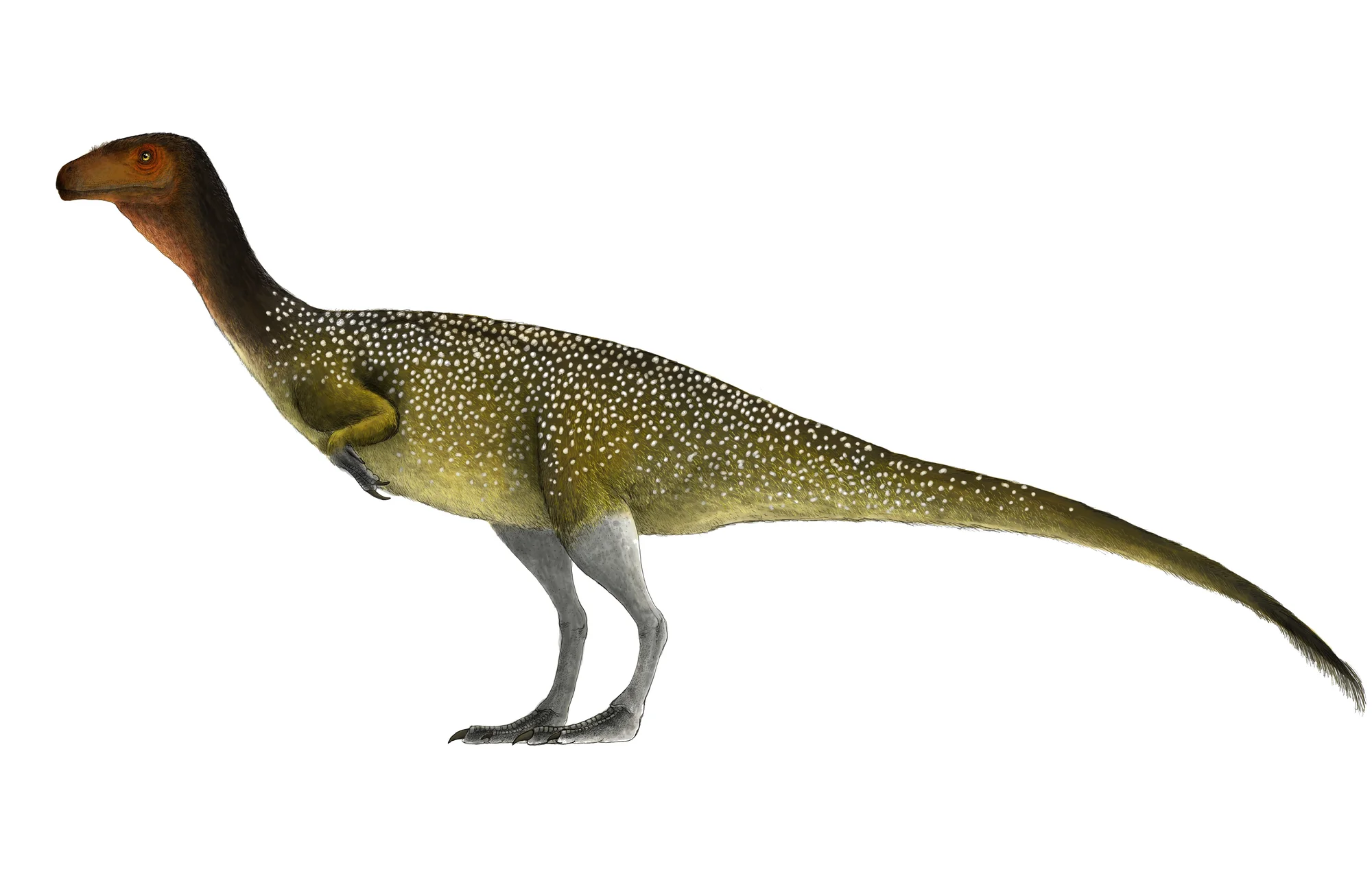
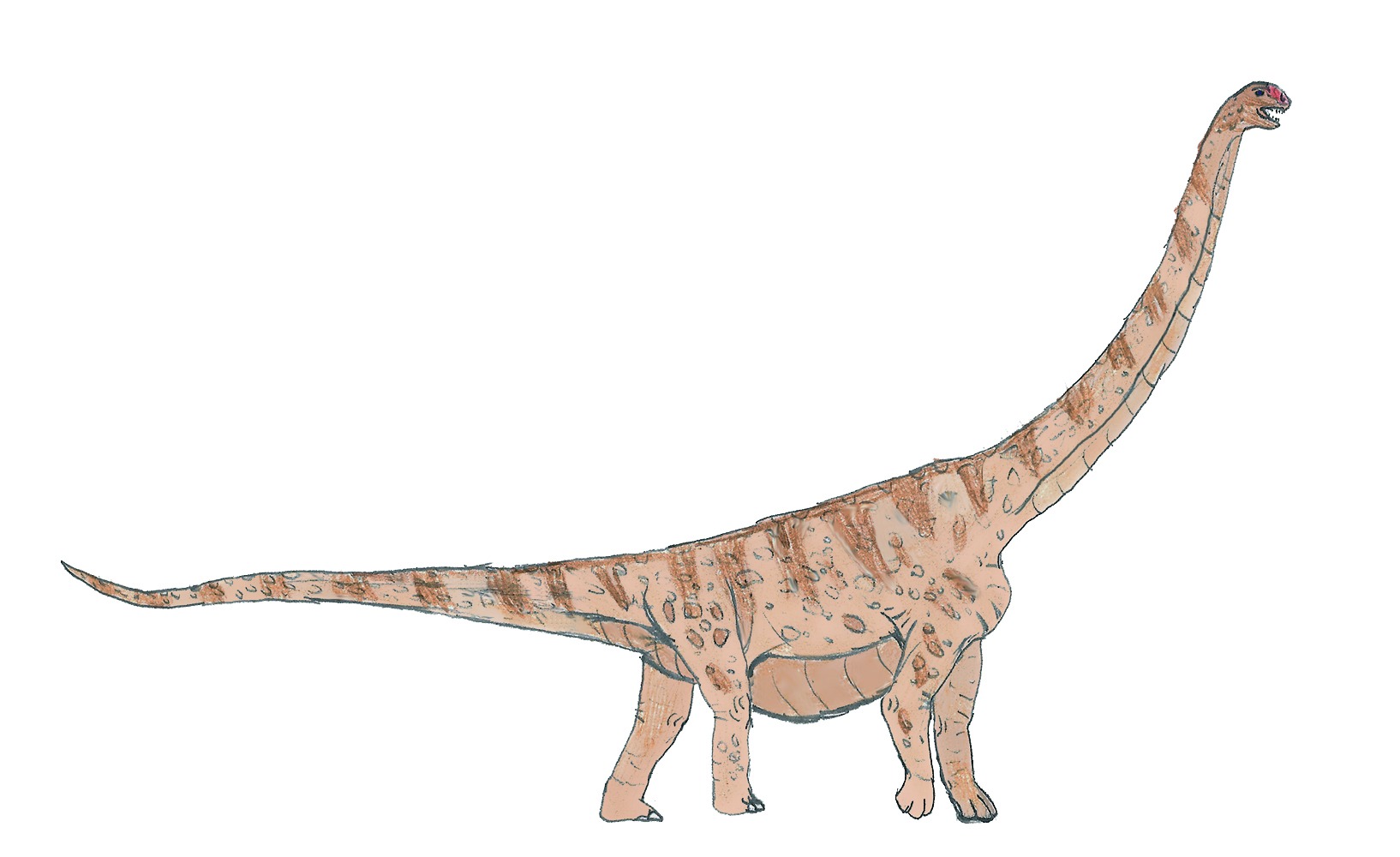
Mussaurus patagonicus is a Late Triassic sauropodomorph that stars in one of paleontology's most unusual stories: it was named the 'mouse lizard' because the first discovered specimens were tiny hatchlings only 20 centimeters long, small enough to fit in the palm of a hand. When José Bonaparte and Martín Vince described the species in 1979, based on these hatchlings from the Los Colorados Formation of Argentine Patagonia, they imagined a modestly sized adult. Decades later, when adult specimens were found and described in detail, it was revealed that Mussaurus grew to 6 meters in length and 1.5 tonnes: one of the largest terrestrial animals of the Late Triassic in South America.
This discrepancy between hatchlings and adults is biologically significant. It demonstrates that basal sauropodomorphs underwent dramatic ontogenetic changes not only in size but also in locomotor posture. Mussaurus hatchlings were facultative bipeds, with proportionally similar fore and hind limbs, while adults had more robust forelimbs and likely transitioned to a quadrupedal posture upon reaching large sizes. This pattern echoes what later became obligatory in the giant sauropods of the Jurassic and Cretaceous.
The most impactful publication on Mussaurus in recent years was the 2021 study by Otero et al. published in Scientific Reports. Analysis of multiple nests with eggs, neonatal hatchlings, and spatially grouped juveniles revealed strong evidence of gregarious behavior: the animals gathered in age-segregated groups, suggesting some form of parental care or structured social behavior. Mussaurus eggs were preserved in communal nests at a depth suggesting they were buried for incubation, similar to the behavior of crocodiles and some extant birds. This finding pushes the origin of gregarious behavior in sauropodomorphs back to the Triassic, more than 50 million years earlier than previously thought.
Phylogenetically, Mussaurus occupies a key position in the transition between solitary basal sauropodomorphs and the large gregarious sauropods of the Mesozoic. The most recent analyses place it within Massopoda, near the base of the clade that will give rise to true Sauropoda. Its body still preserves plesiomorphic features such as a moderately long neck, more robust hind limbs than forelimbs, and simple leaf-shaped teeth, but already shows derived features such as elongated cervical vertebrae and a sauropod-like tarsal formula. The exceptional fossil record of the Los Colorados Formation, with multiple age classes preserved together, makes Mussaurus the most important Triassic sauropodomorph for studies of growth, ontogeny, and social behavior.
Triassic Herbivore 6m