Dinosaurs from Mongolia

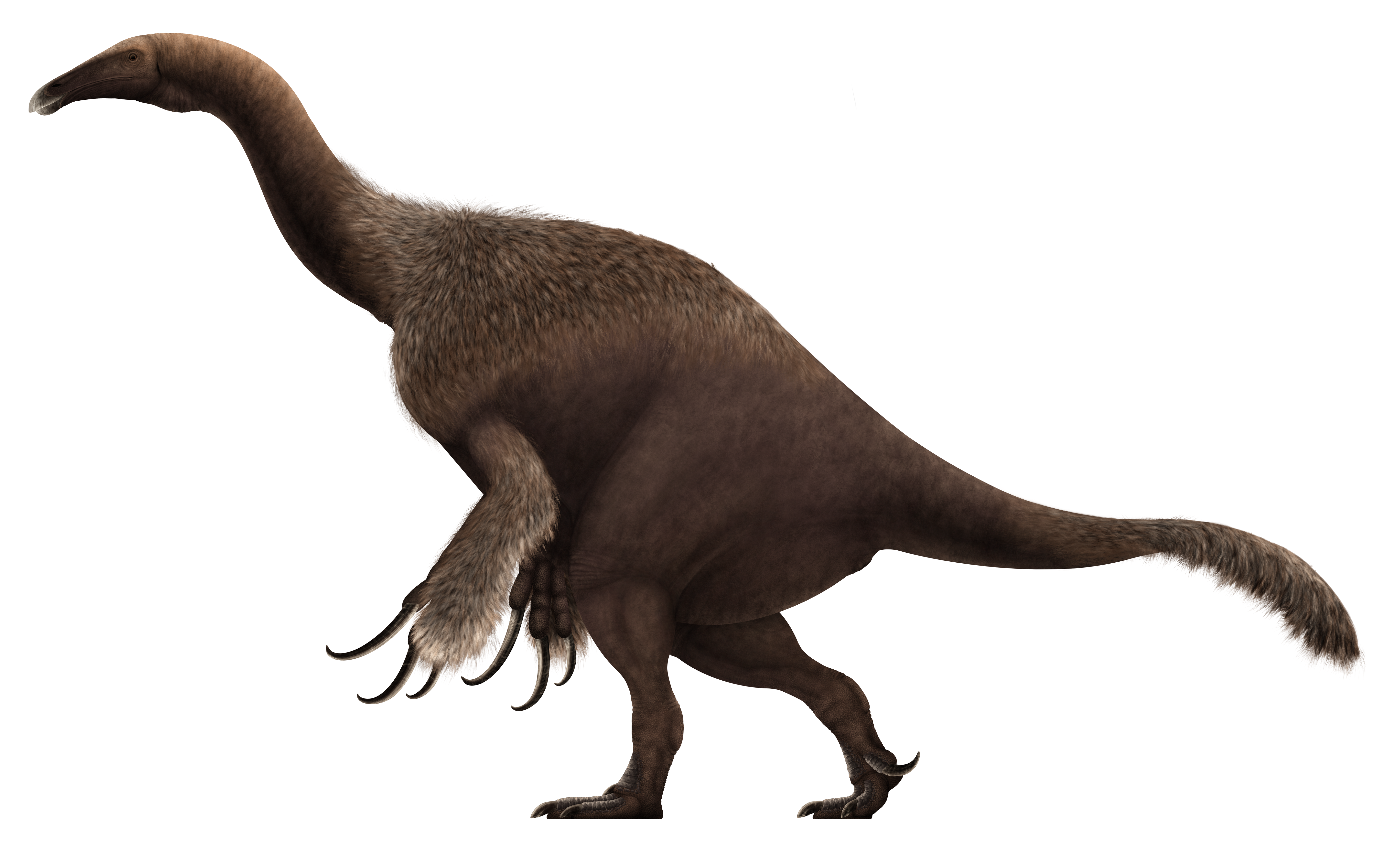
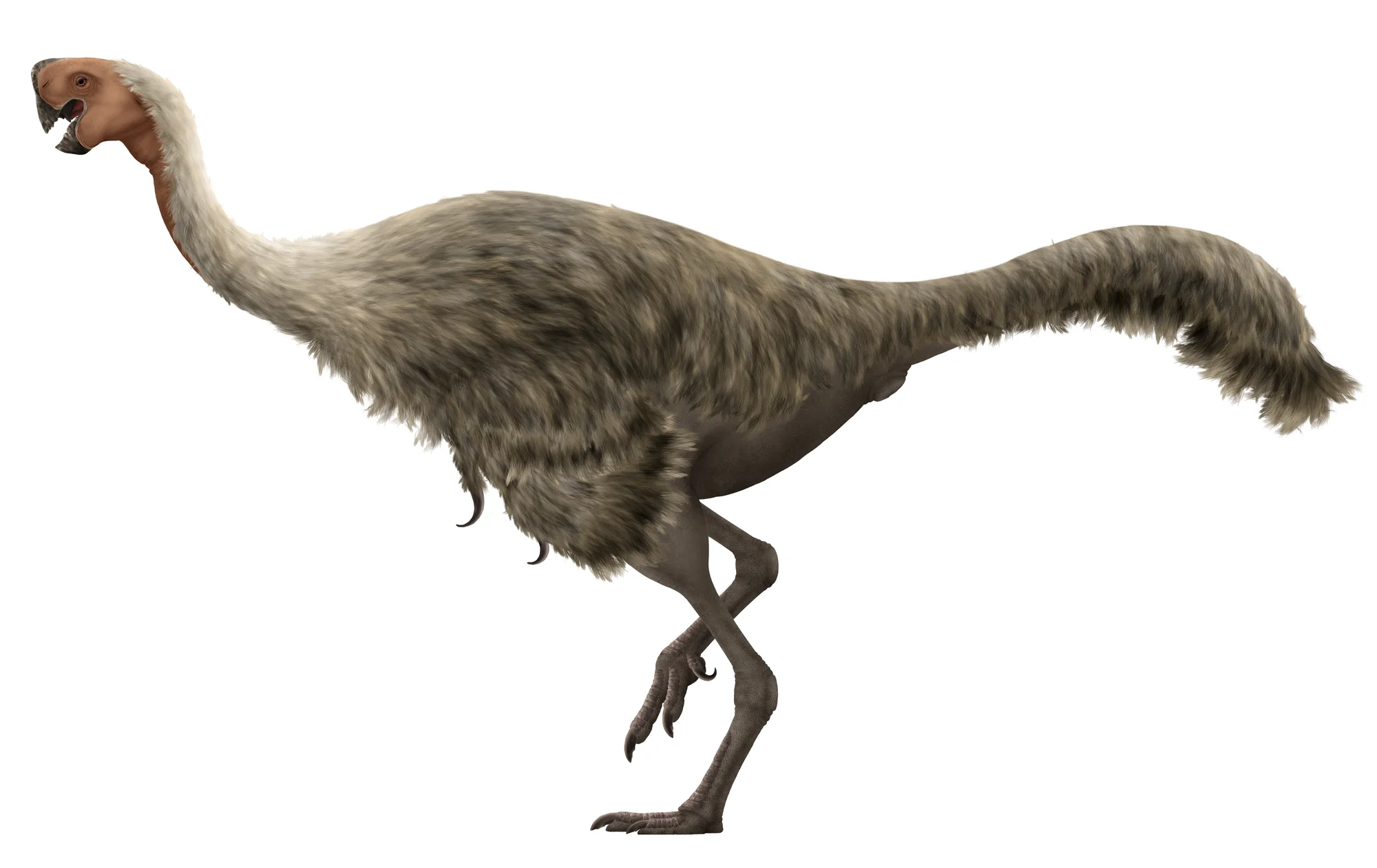
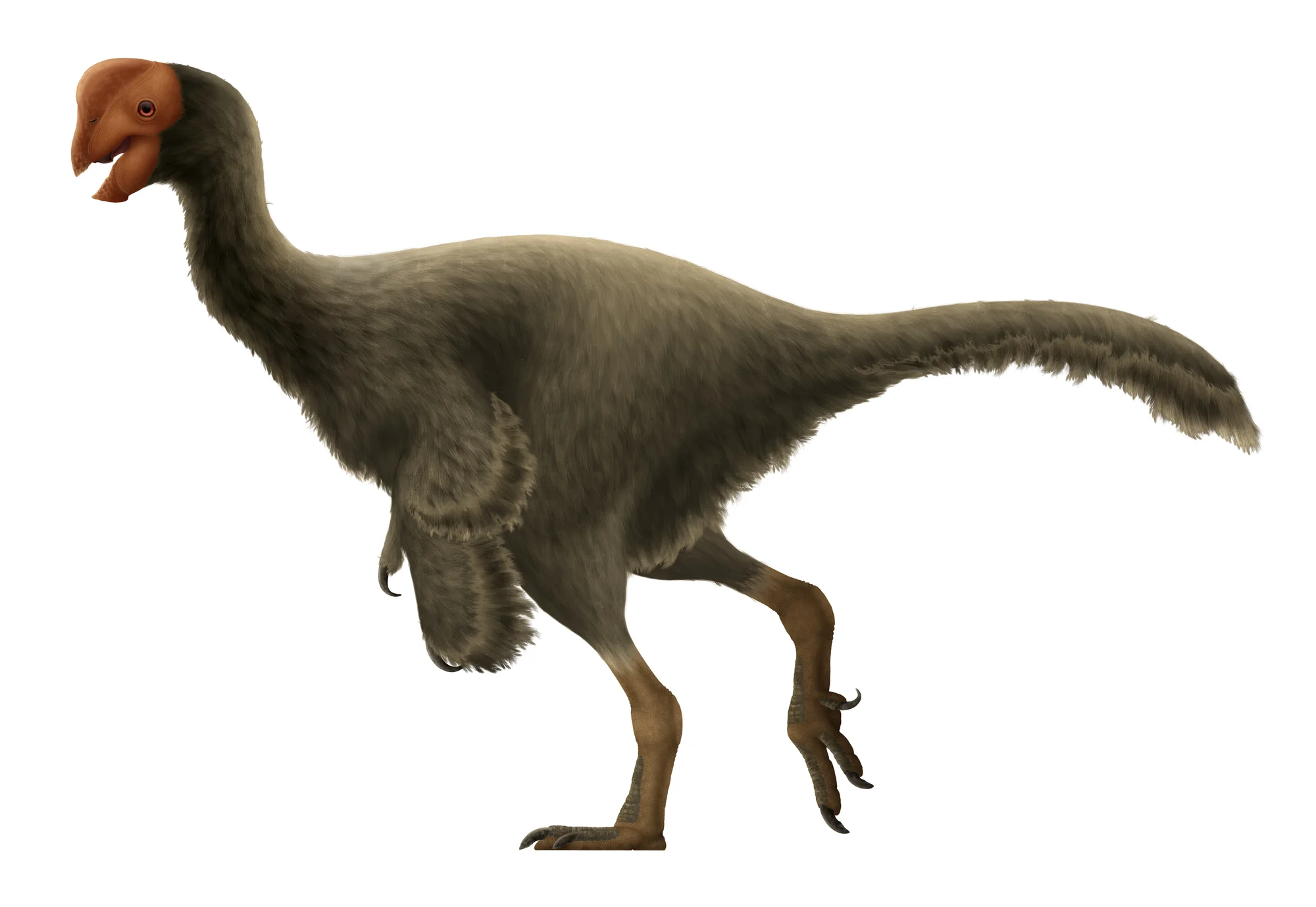
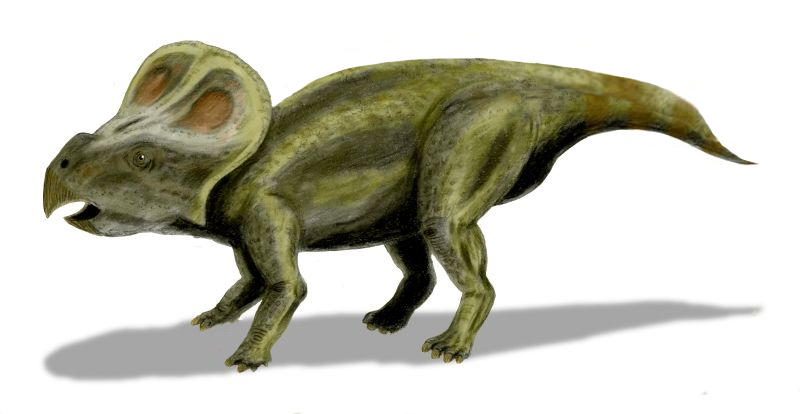
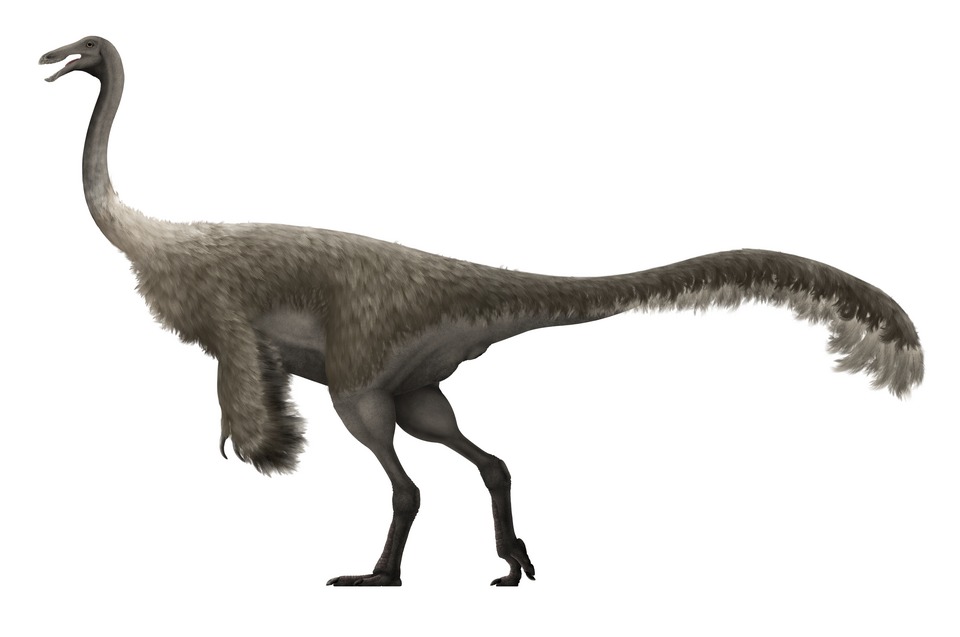
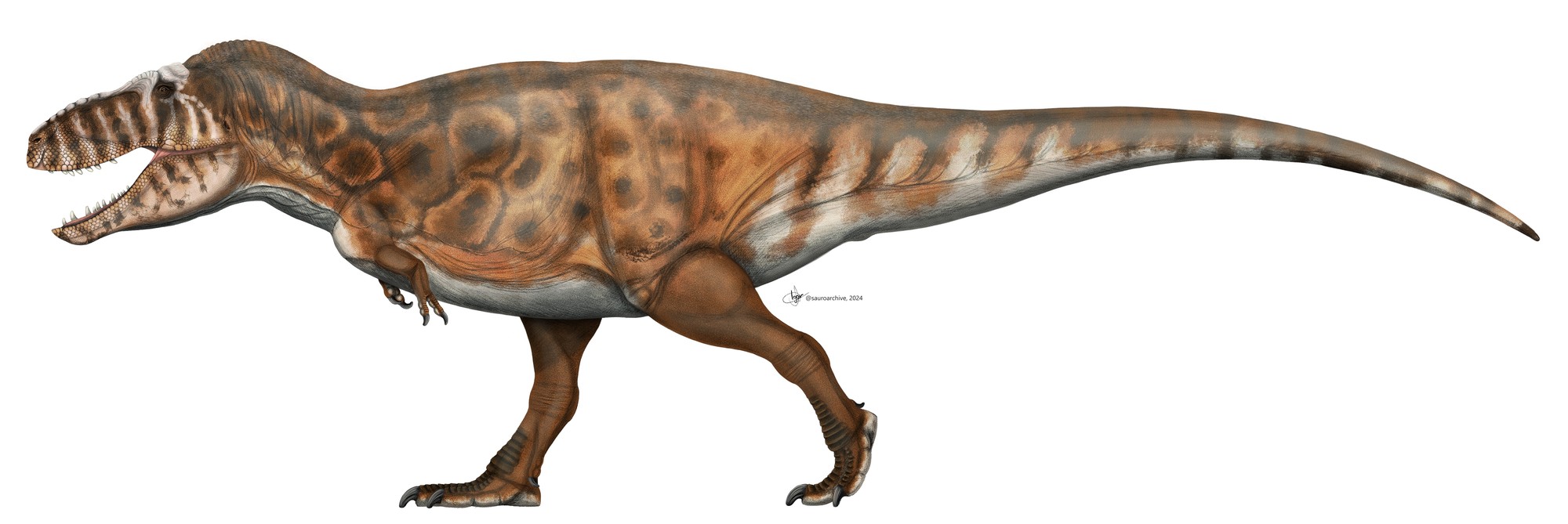
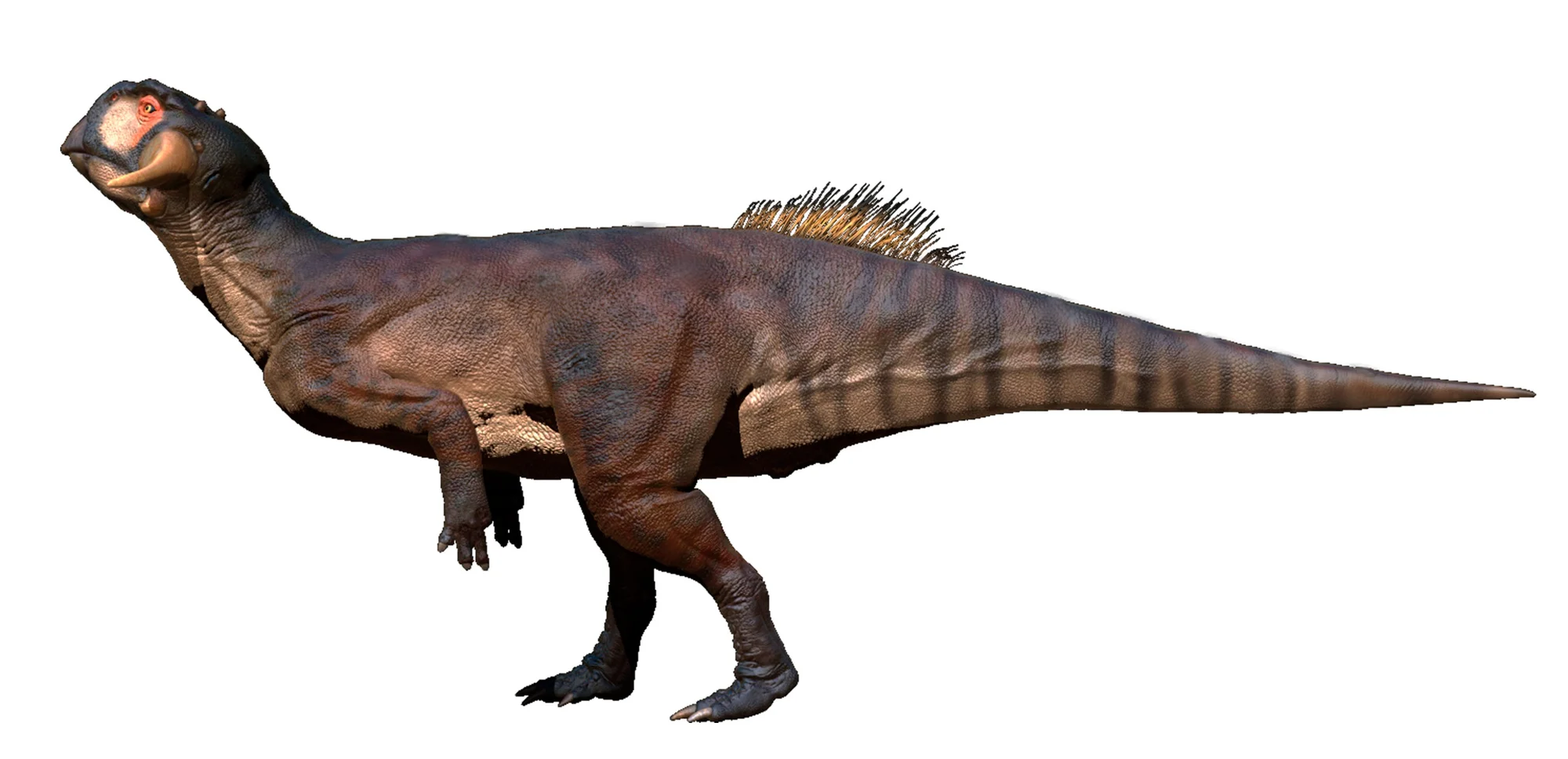
The Gobi Desert in southern Mongolia preserves some of the world's most iconic fossils, with formations spanning the entire Late Cretaceous. The Djadochta Formation (Campanian) produced the famous "Fighting Dinosaurs" specimen, a Velociraptor mongoliensis fossilized in combat with a Protoceratops andrewsi, and revealed the first scientifically identified dinosaur eggs in Citipati osmolskae nests. The Nemegt Formation (Maastrichtian) hosted Tarbosaurus bataar, the Asian equivalent of T-Rex, together with Therizinosaurus cheloniformis (with the largest claws of any known dinosaur), Gallimimus bullatus, and Deinocheirus mirificus. The older Bayan Shireh Formation recorded Pinacosaurus grangeri and the first Asian ankylosaurs. Preservation in the semi-arid desert climate enables exceptional detail conservation, including soft tissues, footprints, and complete nests, making Mongolia one of the world's most important regions for studying behavioral paleobiology of dinosaurs.
10 species in the catalog
10 Cretaceous
Filter by: 10 species
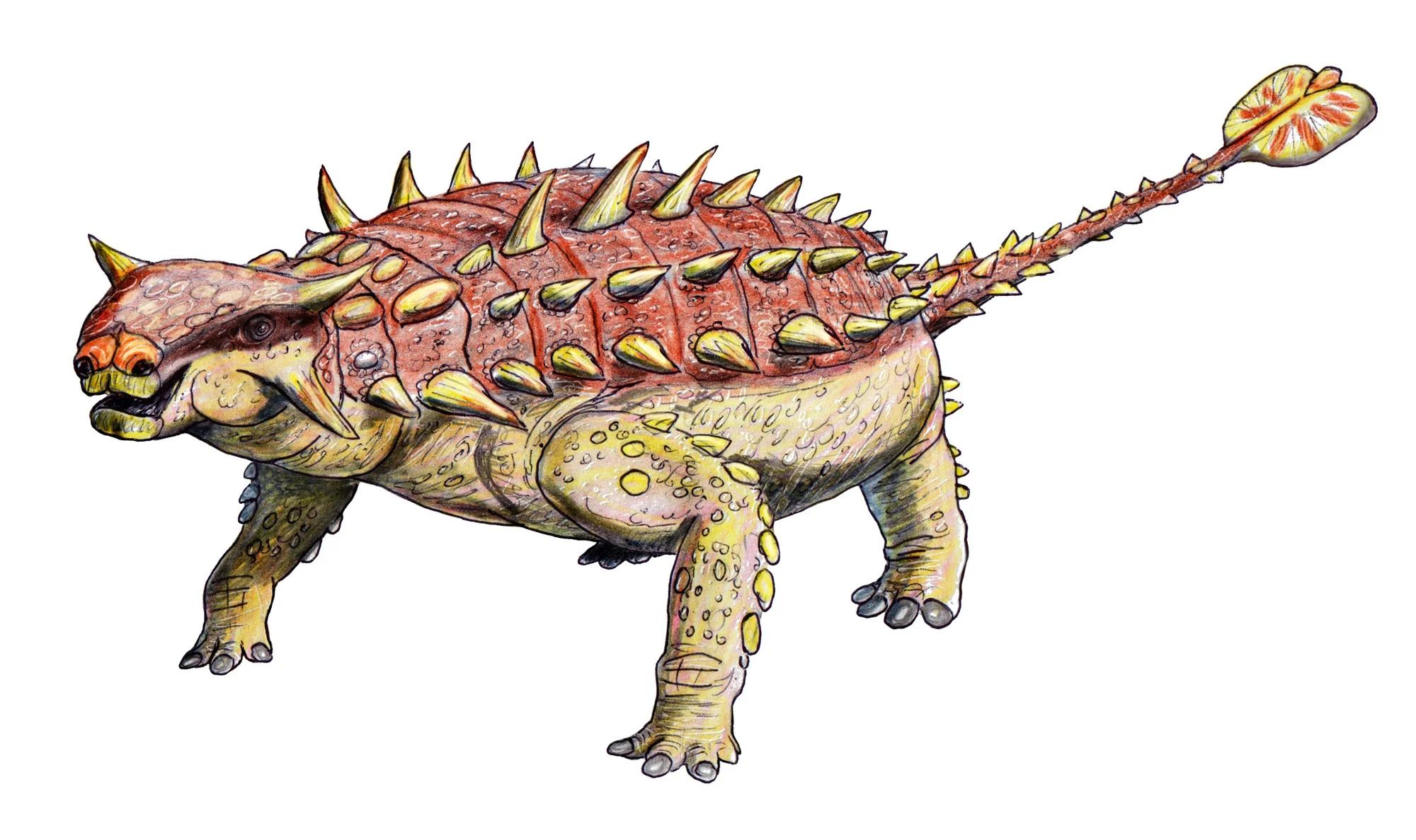
Pinacosaurus grangeri

MN · 80–75 Ma

Pinacosaurus

Pinacosaurus grangeri

"Plank lizard of Granger"

Pinacosaurus grangeri is a medium-sized ankylosaurid from the Late Cretaceous (Campanian, about 80 to 75 million years ago) of the Djadokhta Formation of Mongolia and the Bayan Mandahu Formation of Inner Mongolia, China, with older records from the Alagteeg Formation. It was described by Charles W. Gilmore in 1933 based on holotype AMNH 6523, collected in 1923 at Shabarakh Usu (today Bayn Dzak, 'Flaming Cliffs') by palaeontologist Walter Granger during the Central Asiatic Expeditions led by Roy Chapman Andrews. It reached about 5 metres in length and 1.9 tonnes in body mass. The skull was low and broad, with a toothless beak, weakly developed squamosal horns, four pyramidal occipital horns and a series of accessory narial openings perforating the premaxilla, a diagnostic feature of the genus. The body was covered with keeled polygonal osteoderms, with two cervical half rings protecting the neck and a tail ending in a bony club. The genus contains two valid species: P. grangeri (Mongolia and China) and P. mephistocephalus (Godefroit et al., 1999), distinguished by 'devil-like' squamosal horns projecting far beyond the skull roof. Pinacosaurus is best known for the extraordinary juvenile bonebeds of Alag Teeg (Mongolia) and Bayan Mandahu (China), with about 100 partially articulated immature skeletons preserved together, direct evidence of gregarious behaviour in young ankylosaurs. In 2023, Yoshida, Kobayashi and Norell described in Communications Biology the first preserved laryngeal apparatus in a non-avian dinosaur, also in Pinacosaurus, suggesting bird-like vocalisation.

Cretaceous Herbivore 5m
0 selected Compare →