Tudo que sabemos sobre dinossauros vem de pedra. Mas como uma pedra revela que um animal extinto há 76 milhões de anos tinha câncer, dormia como passarinho, ou caçava à noite? As 30 descobertas abaixo mostram três coisas para cada caso: o que o fóssil tinha de peculiar, qual técnica permitiu a inferência, e quais são os limites do que se pode realmente concluir.
#01 O Centrosaurus que tinha câncer ósseo
Diagnóstico definitivo de osteossarcoma (o mesmo tipo agressivo de câncer ósseo que afeta humanos hoje) num fóssil de 76 milhões de anos. Mostra que doença neoplásica não é fenômeno moderno: ela acompanha vertebrados há mais de 70 milhões de anos.
Técnica
Tomografia computadorizada de alta resolução combinada com histopatologia. Cortes finos do osso analisados ao microscópio óptico revelaram a desorganização tecidual característica do tumor.
Limites do que se sabe
É um caso único até hoje. Diagnosticar câncer em fóssil exige descartar deformações pós-morte, infecção e fratura mal cicatrizada, e a equipe demorou anos comparando o espécime com casos clínicos humanos. Replicação em outros fósseis ainda não foi feita.
#02 O Microraptor com um pássaro inteiro no estômago
Esqueleto de uma ave enantiornite preservado articulado dentro da cavidade abdominal de um Microraptor, com os pés posicionados na entrada do estômago. Indica que a presa foi engolida inteira e de cabeça pra baixo, igual aves predadoras modernas.
Técnica
Análise direta do conteúdo abdominal preservado, comparada com padrões de ingestão de aves de rapina vivas.
Limites do que se sabe
A interpretação favorita é caça ativa em árvores, mas carniçaria não está totalmente descartada. O grau de digestão sugere ingestão recente, o que reforça caça, mas não fecha o caso.
#03 A cor real do Anchiornis huxleyi
Primeira reconstrução completa de coloração de um dinossauro feita com base em evidência direta. Corpo cinza-escuro a preto, asas com listras brancas e crista ruiva no topo da cabeça com sardas na face. Fim da era do "chute artístico" para cores de dinossauros.
Técnica
Análise da forma e densidade de melanossomas (organelas que armazenam pigmento) em 29 amostras do fóssil, comparadas com aves modernas de cores conhecidas.
Limites do que se sabe
Melanossomas só revelam preto, marrom e ruivo. Cores baseadas em carotenoides (amarelos, vermelhos vivos) e cores estruturais (azuis, verdes iridescentes) não fossilizam, então a paleta verdadeira pode ter sido mais vibrante.
#04 O cocô de T. rex que provou que ele esmagava osso
Coprólito (fezes fossilizadas) de 2,4 litros, mais que o dobro de qualquer outro coprólito carnívoro conhecido, contendo entre 30% e 50% de fragmentos ósseos triturados de Triceratops e Edmontosaurus juvenis. Esmagamento de ossos é raro entre carnívoros vivos, hoje só hienas fazem isso de forma rotineira.
Técnica
Análise petrográfica e composicional do coprólito, identificação histológica dos fragmentos ósseos para determinar a espécie da presa.
Limites do que se sabe
Atribuição ao T. rex é por exclusão (tamanho, geografia, idade da rocha), não há identificação direta do produtor. Outro tiranossaurídeo gigante poderia, em tese, ser o autor.
#05 Quais dinossauros eram noturnos
O anel esclerótico (osso ao redor da pupila) prevê hábito diário de animais vivos com alta precisão. Aplicada a 33 fósseis: pequenos carnívoros tipo Velociraptor caçavam à noite, pterossauros eram diurnos, herbívoros grandes eram catemerais (ativos dia e noite, com pausa nas horas mais quentes).
Técnica
Medição das dimensões interna e externa do anel esclerótico mais o tamanho da órbita, calibrada com 164 espécies vivas de aves, lagartos e mamíferos.
Limites do que se sabe
O método foi contestado por Hall et al. 2011, que apontaram que algumas espécies vivas usadas como referência têm hábitos mais flexíveis do que assumido. A separação entre noturno e catemeral fica especialmente borrada.
#06 O dinossauro fossilizado dormindo como pássaro
Mei long preservado em postura idêntica ao "tuck-in" de aves modernas: cabeça enfiada sob o braço, pernas dobradas sob o corpo, pescoço curvado. Comportamento aviário documentado em dinossauro de 130 milhões de anos.
Técnica
Análise da postura de preservação e comparação com posturas estereotipadas de aves vivas em estado de sono ou descanso.
Limites do que se sabe
A postura pode representar morte súbita (soterramento por cinzas vulcânicas, comum no Yixian), não necessariamente sono. Mas o segundo espécime descrito em 2012 na mesma postura reforça que era comportamento real, não pose acidental.
#07 A vértebra de hadrossauro com dente de T. rex cravado e osso curado em volta
Resolveu uma briga de décadas: T. rex caçava ativamente, não era apenas carniceiro. A presa foi mordida na cauda, escapou e sobreviveu, e o osso cresceu em volta do dente como uma cicatriz óssea, prova de tempo de cura pós-ataque.
Técnica
Análise de marcas de mordida com sinais histológicos de cicatrização (calo ósseo). Apenas marcas com sinais de cura podem ser distinguidas de mordidas pós-morte feitas durante a alimentação.
Limites do que se sabe
Amostra de uma única vértebra, mas o fenômeno é categórico: dente embedido com osso curado em volta só pode ter ocorrido com a vítima ainda viva. A frequência da caça (vs carniçaria) ainda é debate.
#08 O fóssil literal de uma luta
Velociraptor com a garra do pé enfiada no pescoço de um Protoceratops, mão direita presa nas mandíbulas da presa, soterrados juntos por uma tempestade de areia 75 milhões de anos atrás. Único registro direto e inegável de comportamento agonístico em dinossauros não-aviários.
Técnica
Análise tafonômica (estudo do soterramento) dos sedimentos ao redor do par. A posição relativa dos corpos exclui a possibilidade de mistura pós-morte.
Limites do que se sabe
Há debate sobre se foi caça (Velociraptor atacando) ou predação acidental (Protoceratops surpreendido pelo dromeossaurídeo enquanto se defendia). O cenário do soterramento (duna em colapso ou tempestade) também é discutido.
#09 O Citipati que morreu chocando os ovos
Esqueleto adulto sentado sobre o ninho com braços estendidos cobrindo os ovos, postura idêntica ao gesto de aves chocando. Antes desse fóssil, acreditava-se que esses dinossauros estavam roubando ovos de outras espécies, e por isso o grupo recebeu o nome "Oviraptor" (ladrão de ovos), erro nunca corrigido.
Técnica
Análise da postura de preservação sobre ninhada de ovos identificáveis (oofamília Elongatoolithidae), comparada com aves modernas em postura de incubação.
Limites do que se sabe
Não dá pra distinguir comportamento regular de incubação de "morte tentando proteger". Mas múltiplos espécimes de Citipati e relacionados foram achados na mesma posição, o que sugere padrão.
Tecido medular (osso temporário rico em cálcio que aves fêmeas produzem só durante a postura de ovos) identificado dentro do fêmur do espécime MOR 1125. Permite sexar fósseis de dinossauro pela primeira vez, e confirma que a estratégia reprodutiva era análoga à das aves.
Técnica
Histologia óssea (cortes finos analisados ao microscópio) somada a análise química com anticorpos monoclonais para queratan-sulfato, comparada com tecido medular de avestruz e galinha.
Limites do que se sabe
A interpretação foi questionada por trabalhos posteriores que apontaram que tecido patológico pode mimetizar medullary bone. Em 2016 a equipe original publicou novo estudo confirmando a identificação por análise química, mas o debate persiste em parte da comunidade.
#11 Quanto tempo um T. rex levava para crescer
O consenso por 20 anos (Erickson 2004) era: virava adulto aos 20 anos, vivia até cerca de 30, com pico de crescimento de 2 kg por dia na adolescência. Em 2026, novo estudo reanalisou 17 espécimes com técnica histológica expandida e concluiu maturidade aos 35 a 40 anos, com crescimento mais lento e prolongado. Horner, coautor de ambos os papers, mudou de opinião sobre seu próprio trabalho de 2004.
Técnica
Histologia de cortes transversais de fêmur e tíbia, contagem de LAGs (linhas de crescimento interrompido, parecidas com anéis de árvore) e de bandas birrefringentes anuais visíveis em luz polarizada cruzada. Modelagem estatística por curvas sigmoides.
Limites do que se sabe
O paper de 2026 ainda precisa de replicação independente. Cada técnica de contagem (uma marca por ano vs. múltiplas marcas por estação seca) muda o resultado. Esse caso é o exemplo perfeito de como o consenso paleontológico pode virar quando a amostra cresce e a técnica melhora.
#12 Como calculamos a velocidade de um dinossauro extinto
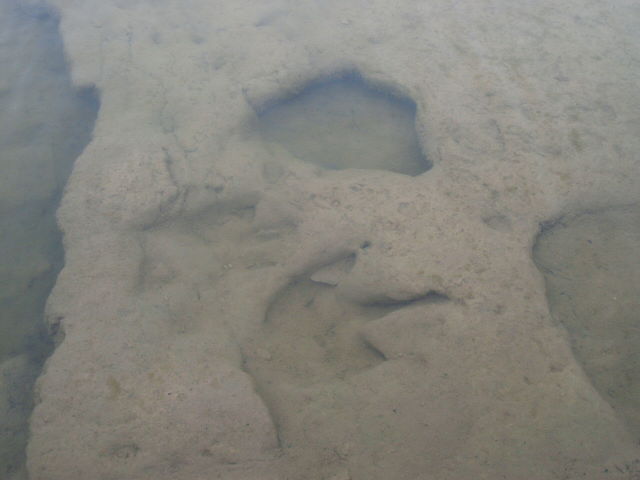
Fórmula que usa apenas o comprimento da pegada e a distância entre pegadas sucessivas para estimar velocidade de marcha. Aplicada a vários trackways: a maioria dos dinossauros andava entre 3,6 e 13 km/h. Velocidades de corrida de filme (T. rex correndo a 50 km/h atrás de um jipe) não têm respaldo nas pegadas.
Técnica
Biomecânica aplicada a icnofósseis (rastros). A fórmula v = 0,25 × √g × SL^1,67 × h^(-1,17) usa comprimento da passada (SL) e altura do quadril (h, estimada como 4 vezes o comprimento da pegada).
Limites do que se sabe
Pegadas mostram só o instante. O animal podia estar com fome, com sede, fugindo ou caminhando devagar. Substratos moles (lama) também distorcem a estimativa. A fórmula dá uma fotografia, não um vídeo.
#13 O embrião dentro do ovo, encolhido como passarinho
"Baby Yingliang", embrião de oviraptorossauro de 70 milhões de anos preservado dentro do ovo intacto, com a cabeça embaixo do corpo e os pés ao lado. Postura idêntica ao "tucking" pré-eclosão de aves modernas, comportamento que se acreditava exclusivo de aves.
Técnica
Análise tomográfica do ovo intacto, sem destruí-lo, comparada com posturas embrionárias de aves vivas próximas da eclosão.
Limites do que se sabe
Amostra única. A postura preservada pode refletir o instante da morte, não comportamento ativo de tucking. Mas a similaridade é forte demais pra ser coincidência tafonômica.
#14 A cauda de Spinosaurus que provou existir dinossauro nadador
Cauda em formato de leme com espinhos neurais altíssimos, distinta de qualquer outro terópode. Modelo robótico em água mostrou que essa cauda gera propulsão equivalente à de peixes e crocodilos modernos. Reescreveu o que se pensava sobre habitat de grandes terópodes.
Técnica
Modelagem física de tamanho real e biomecânica computacional comparativa entre formas de cauda de terópodes terrestres e animais aquáticos atuais.
Limites do que se sabe
Controvérsia ativa. Sereno et al. 2022 contestaram, argumentando que Spinosaurus era um vadeador (caçava na margem), não nadador pleno, e que a flutuabilidade do animal seria instável demais para mergulho. O debate segue aberto.
#15 A colônia de "boa-mãe-lagarto" de Montana
Maiasaura encontrada em ninhada coletiva, com filhotes de pernas pouco desenvolvidas (incapazes de andar) e dentes desgastados (sinal de que comiam). Combinação que só faz sentido se os adultos traziam comida ao ninho. Primeira evidência de cuidado parental em dinossauro.
Técnica
Análise do conjunto fóssil: tafonomia da nidada, ontogenia (desenvolvimento) dos filhotes e desgaste dentário precoce.
Limites do que se sabe
Dependência de filhotes não prova diretamente cuidado adulto: alguns autores sugerem que os filhotes apenas saíam pouco do ninho e os adultos mantinham vigília sem alimentação direta. Mas o conjunto de evidências converge para cuidado ativo.
#16 A cauda listrada de Sinosauropteryx
Padrão de coloração identificado: corpo ruivo com cauda listrada em anéis claros e escuros. Provável camuflagem disruptiva, comum em mamíferos modernos como guaxinins. Mostrou que padrões de pelagem aviária já existiam antes das aves.
Técnica
Distribuição espacial de melanossomas pelo corpo do fóssil, comparada com padrões de coloração de animais vivos.
Limites do que se sabe
O padrão depende da orientação dos melanossomas. Algumas regiões do corpo podem ter degradado de forma desigual, distorcendo a leitura.
#17 A força de mordida real do T. rex, calculada não medida
Aproximadamente 35.000 newtons na parte traseira da mandíbula, cinco vezes a força de mordida de um leão e equivalente à pressão de um pequeno carro caindo no objeto. O número não foi medido (impossível), foi computado por modelagem de elementos finitos.
Técnica
Modelagem de elementos finitos (MEF) aplicada a um modelo 3D do crânio, simulando a contração dos músculos mandibulares para calcular a força gerada.
Limites do que se sabe
O número depende fortemente do modelo de músculo assumido. Estudos diferentes chegam a valores que variam de 18.000 a 60.000 newtons. A ordem de grandeza é robusta, o número exato não.
#18 As "vesículas" no antebraço do Concavenator
Saliências regulares no osso da ulna interpretadas como pontos de ancoramento de penas, igual aos quill knobs de aves modernas. Se a interpretação está correta, indica que penas estavam presentes em terópodes não-aviários muito antes do surgimento dos dromeossaurídeos.
Técnica
Análise morfológica e comparação com pontos de inserção de penas em aves vivas.
Limites do que se sabe
Interpretação contestada. Foth, Tischlinger e Rauhut 2014 sugerem que as saliências podem ser ligamentos intermusculares, não suportes de penas. O debate segue aberto.
#19 Pegadas mostram que terópodes sabiam nadar
Conjuntos de pegadas só de pontas de dedos, em sequência paralela, encontrados em arenitos de antigos lagos rasos. Foram feitas por terópodes flutuando, empurrando o fundo com as garras pra impulsionar o corpo. Mata o estereótipo de que dinossauros eram aquafóbicos.
Técnica
Análise tafonômica de icnofósseis: profundidade, espaçamento e ausência de marcas do calcanhar diferenciam pegadas de marcha (corpo todo apoiado) de pegadas de natação (corpo flutuando, só dedos tocam o fundo).
Limites do que se sabe
Identificar a espécie do trackmaker é por exclusão (tamanho, idade da rocha, fauna local), não há identificação direta. Alguns sites debatidos podem ser artefatos de variação de profundidade da pegada normal, não natação.
#20 A cor real dos ovos de oviraptorossauro: azul-esverdeada
Identificação química direta de protoporfirina (vermelho-amarronzado) e biliverdina (azul-esverdeado) em cascas de ovo do oviraptorossauro Heyuannia huangi. Mostra que ovos coloridos não são novidade aviária, são herança de dinossauros não-aviários. Toda vez que você vê ovo de codorna ou de tinamu, está vendo bioquímica de 70 milhões de anos.
Técnica
Espectroscopia Raman não-destrutiva, capaz de identificar assinaturas moleculares de pigmentos preservados em casca calcária sem dissolver o material.
Limites do que se sabe
Raman pode dar falsos positivos por contaminação orgânica do sedimento. A intensidade exata da cor (azul mais ou menos saturado) não é reconstruível, só a presença do pigmento.
#21 Borealopelta: o anquilossauro com pele e cor preservadas em 3D
Fóssil mumificado tridimensional de nodossaurídeo, com escamas, queratina e padrão de cor preservados. Análise química revela contracoloração: dorso escuro avermelhado, ventre claro. Esse padrão (igual cervo moderno) só evolui em animais que precisam se camuflar contra predadores. Animal de 1.300 kg com armadura completa que ainda assim era caçado.
Técnica
Imageamento de superfície + análise química (espectrometria de massas) de melanossomas e produtos de degradação de queratina preservados na pele fossilizada.
Limites do que se sabe
Countershading é inferido pelo padrão de melanossomas. Alguns autores apontam que distribuição diferencial de pigmento pós-morte pode imitar contracoloração. A pressão de predação é inferência ecológica, não evidência direta.
#22 A cloaca preservada de Psittacosaurus
Único fóssil de orifício reprodutivo de dinossauro não-aviário descrito até hoje. Forma e contorno sugerem cloaca única (excreção e reprodução combinadas), pigmentação intensa nas bordas indica display visual provável, igual aves e répteis modernos. Não dá pra sexar o indivíduo, mas dá pra ver a anatomia básica.
Técnica
Análise morfológica do fóssil 3D combinada com mapeamento químico de melanossomas residuais nas bordas do orifício.
Limites do que se sabe
Amostra única até hoje. A preservação é parcialmente bidimensional, o que dificulta reconstrução 3D completa. Não permite identificar sexo nem confirmar uso para display.
#23 A manada de mil Centrosaurus afogados em Hilda
Bone bed gigante (2,3 km²) em Alberta com restos de centenas a milhares de Centrosaurus apertus mortos juntos por uma enchente catastrófica há 76 milhões de anos. Maior cemitério de dinossauro conhecido, e prova categórica de comportamento de manada em ceratopsídeos: animais solitários não morrem em massa juntos.
Técnica
Mapeamento estratigráfico de 14 sub-bonebeds + análise tafonômica do estado dos ossos (transporte mínimo, mortalidade simultânea) + sedimentologia indicando enchente costeira tropical.
Limites do que se sabe
A causa exata (tempestade tropical específica vs sequência de eventos) é especulação informada. Se a manada estava migrando, descansando ou se reunindo pra reprodução não pode ser inferido das ossadas.
Análise comparativa de desgaste dentário e textura óssea facial de tiranossaurídeos com varanos vivos, jacarés e crocodilianos. Conclusão: dentes lisos sem desgaste exposto, foramina facial em padrão de lagarto e não de crocodilo. Os dentes ficavam cobertos por lábios em repouso, igual lagartos modernos. O T. rex sorrindo de Jurassic Park está zoologicamente errado.
Técnica
Comparação morfológica de tecido facial e desgaste dentário entre fósseis e amostra de répteis modernos. Análise filogenética de caracteres anatômicos.
Limites do que se sabe
É uma extrapolação de varanos para tiranossaurídeos baseada em homologia. Críticos defendem que crocodilianos seriam analogia melhor por proximidade ecológica (apesar da distância filogenética). O debate ainda está quente.
#25 Parasaurolophus tinha um trompete na cabeça
Tomografia computadorizada da crista oca do hadrossauro mostra anatomia idêntica a um instrumento de sopro. Modelagem digital reconstruiu o som: graves entre 30 e 720 Hz (similar a trombone). Adultos faziam graves para comunicação a longa distância, juvenis faziam agudos. Provavelmente comunicavam reprodução, alarme e identidade individual.
Técnica
Tomografia computadorizada do crânio + modelagem acústica computacional dos canais nasais como ressonadores.
Limites do que se sabe
A reconstrução acústica assume que o tecido mole das vias nasais era análogo ao de aves vivas. A função social do som (alarme vs cortejo vs identificação) é inferência por analogia, não dado direto.
#26 A temperatura corporal real dos saurópodes
Análise química do esmalte dental de saurópodes e terópodes mostra temperatura corporal entre 32 e 38 °C. Saurópodes em torno de 36 °C, próximo de mamíferos. Resolveu décadas de briga "endotérmicos vs ectotérmicos" mostrando que dinossauros eram mesotérmicos (estratégia metabólica intermediária, sem análogo vivo perfeito).
Técnica
Termometria por isotopologia clumped: a proporção de pares específicos de isótopos (¹³C ligado a ¹⁸O) no carbonato do esmalte depende da temperatura de formação do mineral, que reflete temperatura corporal.
Limites do que se sabe
A equação de calibração foi refinada várias vezes desde 2011, mudando os números absolutos em alguns graus. Os valores relativos entre grupos são robustos, os absolutos têm incerteza.
#27 A velocidade real do T. rex adulto: trote, não corrida
Simulação multibody (modelo musculoesquelético + dinâmica computacional) revela que T. rex adulto não conseguia correr. No máximo, trote acelerado de 18 a 20 km/h. Acima disso, o estresse nos ossos das pernas excederia a resistência mecânica e o animal quebraria o próprio fêmur. Confirma estudos anteriores (Hutchinson 2002) e mata definitivamente a cena do jipe em Jurassic Park.
Técnica
Simulação dinâmica multicorpos com restrições de estresse ósseo. O modelo testa cada velocidade possível e calcula o pico de força em cada osso, comparando com a resistência conhecida de osso fossilizado.
Limites do que se sabe
Depende de assunções sobre massa muscular, distribuição de carga e propriedades do osso vivo extrapoladas de animais modernos. Um T. rex juvenil (mais leve) provavelmente corria de verdade, e isso muda a ecologia do gênero.
#28 Majungasaurus comia Majungasaurus
Marcas de mordida em ossos de Majungasaurus crenatissimus em Madagascar correspondem perfeitamente, em espaçamento e formato, aos dentes do mesmo Majungasaurus. Primeiro caso documentado de canibalismo em dinossauro não-aviário. Comportamento provavelmente oportunista, não regular.
Técnica
Análise comparativa de marcas de mordida em ossos de Majungasaurus com dentes do próprio Majungasaurus, descartando outras espécies presentes na fauna local.
Limites do que se sabe
Marcas de mordida não distinguem predação ativa de canibalismo de carniçaria de cadáver de coespecífico. A primeira é raríssima entre vertebrados, a segunda é mais comum. O paper aceita a ambiguidade.
#29 Pterossauros tinham penas, e antes dos dinossauros
Quatro tipos morfológicos distintos de pycnofibers (estruturas filamentosas) em anurognatídeos analisados com microscopia eletrônica revelam estrutura ramificada idêntica a penas primitivas. Empurra a origem das penas pra trás de 70 milhões de anos: ancestral comum de pterossauros e dinossauros já tinha estruturas tipo-pena há ~240 milhões de anos.
Técnica
Microscopia eletrônica de varredura (MEV) de estruturas filamentosas preservadas na pele de pterossauros, comparada com penas primitivas conhecidas em terópodes.
Limites do que se sabe
Identificar essas estruturas como "homólogas" às penas de dinossauros é contestado por morfologistas que veem convergência evolutiva (estruturas parecidas que evoluíram independentemente), não herança comum. Resolver isso exigirá mais espécimes.
#30 A cauda de Apatosaurus podia bater na velocidade do som
Modelagem mecânica da cauda diplodocídea (75 vértebras, ~13 metros de chicote afunilado) mostra que a ponta podia atingir Mach 1, gerando um estampido sônico audível a quilômetros. Provável uso: comunicação intra-manada ou intimidação acústica, não defesa contra predadores (a ponta é frágil demais pra impactar).
Técnica
Modelagem matemática de cauda como série de pêndulos articulados, calculando velocidade da ponta em função de movimento da base.
Limites do que se sabe
O modelo assume distribuição específica de massa e flexibilidade. Estudos posteriores apontaram que a tração necessária excederia a resistência dos tendões caudais conhecidos, então pode ser que cause fratura antes de Mach. Hipótese plausível, não confirmada.